



Metro-North replaces nearly 100K rail ties during track renewal work
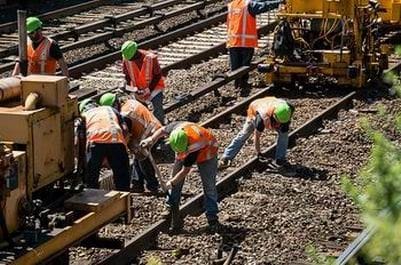
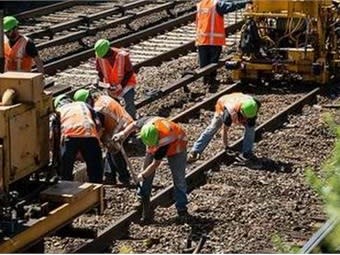
Since May 2013, Metro-North workers have replaced 97,961 ties, laid 16.5 miles of continuous welded rails, rebuilt 88 switches, renewed and/or upgraded 32 railroad crossings, and performed 2,905 welds on joints that connect stretches of track with one another.

N.Y. MTA/Metro-North Railroad
N.Y. MTA/Metro-North Railroad
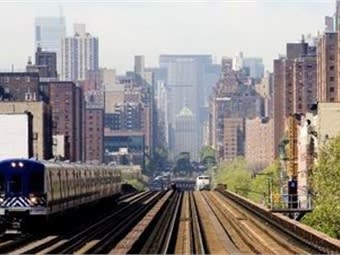
MTA Metro-North Railroad today announced the latest results of a systemwide track reconstruction effort that has rebuilt miles of the railroad in the last two and a half years.
Since May 2013, Metro-North workers have replaced 97,961 ties, laid 16.5 miles of continuous welded rails, rebuilt 88 switches, renewed and/or upgraded 32 railroad crossings, and performed 2,905 welds on joints that connect stretches of track with one another.
“The reconstruction work has significantly enhanced the state of our infrastructure,” said Joseph Giulietti, president of Metro-North Railroad. “Our rails are safer today as a result of this concerted increase in track renewal work. This is a team effort that requires the coordination of dispatch operations and the dedication of our employees to be able to accomplish.”
N.Y. MTA/Metro-North Railroad
In addition to visual track inspections, which are conducted twice a week by inspectors who are positioned within the track being inspected, Metro-North’s track reconstruction and renewal efforts have been guided by an industry-leading spectrum of detailed track inspections.
Information about the range of high-tech inspections:
Track Geometry
To measure a variety of geometric parameters of its track, including the position, curvature, alignment, smoothness, and the cross level of the two running rails, Metro-North employs track geometry cars operated by the Federal Railroad Administration and Mermec. The cars use a variety of sensors, measuring systems, and data management systems to create a profile of the track being inspected.
Internal Metal Defects and Fatigue
To detect flaws, defects and metal fatigue inside the steel running rails that trains roll over, Metro-North employs the Sperry Rail Service, which operates a specialized car over rails and measures them with ultrasonic and induction test equipment.
Mismatched Joint Bars
To identify any instances where the end of a rail does not match up precisely with the beginning of the following rail, Metro-North has employed the Georgetown Rail Equipment Company’s Aurora System, which makes rail measurements of joint bars that are accurate to within two hundredths of an inch.
Track Loading
Metro-North uses a track loading vehicle to give rails a stress test, applying forces close to the strength limits of the rails, track ties, rail fasteners, and stone ballast.
Subsurface Flaws
Metro-North uses ground-penetrating radar to accurately show potential problem areas in the structural layers below the track’s surface.
If and when any of these inspections and tests identify defects along the rails, crews assess the magnitude of defect and make immediate repairs or, for minor defects, institute speed restrictions over selected segments of track until the repairs are made.
More Rail
Amtrak, CN Reach Agreements to Strengthen Passenger Rail Service, Safety
The agreement resolves a more than decade-long proceeding before the Surface Transportation Board concerning the terms and conditions for Amtrak services, such as the City of New Orleans, Illini/Saluki, and Wolverine.
Read More →
New York MTA Advances Final Contract for Second Avenue Subway Expansion
Contract Four is the largest in the Second Avenue Subway Phase 2 project and includes construction of station infrastructure, tracks, and signals for the subway expansion, MTA officials said. Work on Contract Four will begin in 2027.
Read More →
San Diego MTS Breaks Monthly Trolley Ridership Record
Agency officials said July’s ridership indicates MTS’s continued recovery from the pandemic.
Read More →
Report Examines NJ TRANSIT Reliability, Funding Challenges
The Garden State Initiative analysis examines the roles of Amtrak infrastructure, fleet management, and agency operations while recommending a more performance-based approach to improving reliability.
Read More →
Stadler, CapMetro Sign Long-Term Rail Fleet Support Agreement
Beginning in 2027, Stadler will provide on-site technical expertise, spare parts support, training, and obsolescence management to help extend the reliability and longevity of CapMetro’s GTW fleet.
Read More →
Biz Briefs: Alstom Lands Canadian Contract, LYT to Supply California TSP, and More
In METRO's latest installment, we take a look at recent news from Complete Coach Works, Beep, FlixBus, and more partnerships making headlines across the transportation sector.
Read More →
CATS Gold Line Marks 5 Years of Service, 2.8M Passenger Trips
With a six-mile expansion planned, the Charlotte streetcar is positioned to connect more neighborhoods and major transit hubs across the region.
Read More →
Why Simulating Pedestrian Movement Has Become Essential for Modern Rail Stations
Pedestrian microsimulation is helping rail planners identify bottlenecks, test station designs, and prepare complex transit hubs for growing passenger volumes.
Read More →
Amtrak Begins Major Construction at New York’s Sunnyside Yard
The new maintenance facility will support Amtrak’s Airo trainsets while improving maintenance efficiency and turnaround times in New York.
Read More →
Chicago Leaders Unveil Plans for O’Hare Airport Express Train
The privately developed project would offer a 15-minute trip between downtown and O’Hare’s Terminal 2, with trains operating every 15 minutes on a dedicated track. The service would use battery-electric trains and three existing freight rail rights-of-way.
Read More →