



Metrolink Extends CEO's Contract Through '29
As CEO, Darren Kettle's passion and expertise have guided Metrolink through an unprecedented industry-wide shift in ridership triggered by the coronavirus pandemic.

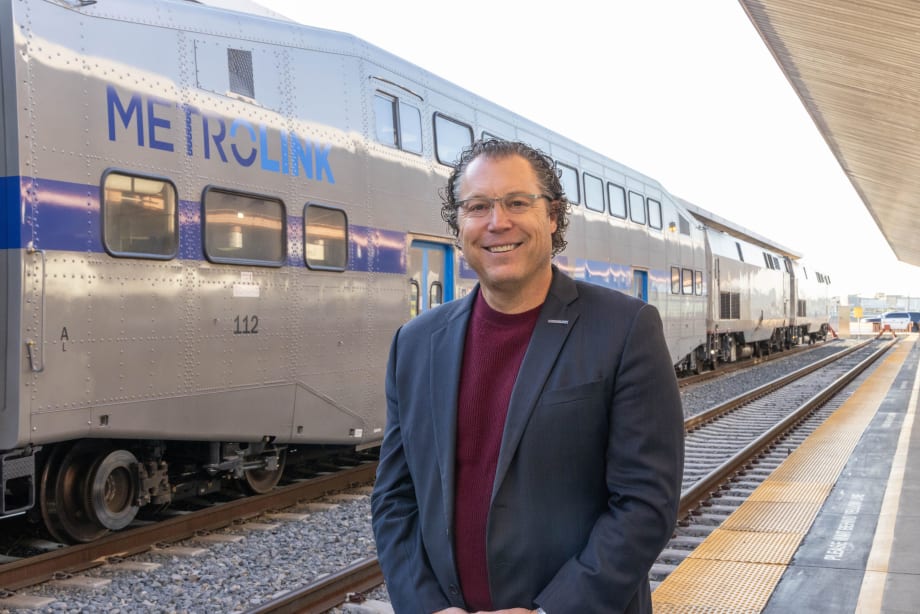
Darren Kettle joined Metrolink in September 2021 with more than two decades of public transportation experience in Southern California.
Photo: Metrolink
Southern California’s Metrolink and CEO Darren Kettle agreed to a five-year contract extension, which will run through September 2029.
The Metrolink board unanimously approved the extension in May.
“With Darren at the helm, Metrolink has transformed beyond its commuter rail roots into a more versatile and equitable service that better aligns with the needs of today’s public transportation customers,” said Metrolink Board Chair Larry McCallon. “We are confident that Darren’s strategic vision and oversight will position the agency for continued growth and success as Metrolink and our region prepare to host a series of high-profile events culminating with the Los Angeles Summer Olympic Games in 2028. We’re thrilled that Darren has agreed to extend his tenure and lead Metrolink into the future.”
Building A Legacy at Metrolink
Kettle joined Metrolink in September 2021 with more than two decades of public transportation experience in Southern California.
As CEO, his passion and expertise have guided Metrolink through an unprecedented industry-wide shift in ridership triggered by the coronavirus pandemic. Kettle has been the leading force behind Metrolink’s evolution from a commuter rail line to a robust regional connector with increased midday and evening service that have made Metrolink a better resource for leisure riders and workers with non-traditional schedules.
From the beginning of his tenure, Metrolink’s ridership has grown by 88% while still trending toward pre-pandemic levels.
“The 2028 Olympic Games have created a transformative opportunity to expand and improve our region’s public transportation system, and I’m thrilled that Metrolink — through the efforts of our incredible staff and in cooperation with our member agencies and transit partners — will play a critical role in LA28’s vision of a car-free event,” said Kettle. “I’m even more excited that the changes we are making to our system will benefit Southern Californians in the lead up to and well beyond the Olympics. I’m honored to continue the work and look forward to seeing Metrolink through its next chapters.”
Making an Impact
Kettle has also overseen significant investment in Metrolink’s infrastructure, including state-of-good-repair rehabilitation and capital construction projects, the addition of five stations, and the launch of the Arrow service connecting the city of Redlands to Metrolink’s vast service area.
On multiple occasions, he has worked in concert with state and local officials to restore service along the coastal tracks near San Clemente after natural events obstructed the route. He also worked collaboratively with the LOSSAN Rail Corridor Agency and Amtrak Pacific Surfliner to implement a reciprocal codeshare agreement along the Ventura County Line that provides more flexibility for passengers of both services.
As a resident of Ventura County, Kettle is a regular Metrolink user and prioritizes connecting with fellow passengers while onboard the system.
Prior to joining Metrolink, Kettle worked for three of the five regional transportation agencies that comprise the joint powers authority that governs Metrolink. From 2007 until 2021, he served as executive director of the Ventura County Transportation Commission.
More Rail

New York MTA Advances Final Contract for Second Avenue Subway Expansion
Contract Four is the largest in the Second Avenue Subway Phase 2 project and includes construction of station infrastructure, tracks, and signals for the subway expansion, MTA officials said. Work on Contract Four will begin in 2027.
Read More →
San Diego MTS Breaks Monthly Trolley Ridership Record
Agency officials said July’s ridership indicates MTS’s continued recovery from the pandemic.
Read More →
Report Examines NJ TRANSIT Reliability, Funding Challenges
The Garden State Initiative analysis examines the roles of Amtrak infrastructure, fleet management, and agency operations while recommending a more performance-based approach to improving reliability.
Read More →
Stadler, CapMetro Sign Long-Term Rail Fleet Support Agreement
Beginning in 2027, Stadler will provide on-site technical expertise, spare parts support, training, and obsolescence management to help extend the reliability and longevity of CapMetro’s GTW fleet.
Read More →
Biz Briefs: Alstom Lands Canadian Contract, LYT to Supply California TSP, and More
In METRO's latest installment, we take a look at recent news from Complete Coach Works, Beep, FlixBus, and more partnerships making headlines across the transportation sector.
Read More →
CATS Gold Line Marks 5 Years of Service, 2.8M Passenger Trips
With a six-mile expansion planned, the Charlotte streetcar is positioned to connect more neighborhoods and major transit hubs across the region.
Read More →
Why Simulating Pedestrian Movement Has Become Essential for Modern Rail Stations
Pedestrian microsimulation is helping rail planners identify bottlenecks, test station designs, and prepare complex transit hubs for growing passenger volumes.
Read More →
Amtrak Begins Major Construction at New York’s Sunnyside Yard
The new maintenance facility will support Amtrak’s Airo trainsets while improving maintenance efficiency and turnaround times in New York.
Read More →
Chicago Leaders Unveil Plans for O’Hare Airport Express Train
The privately developed project would offer a 15-minute trip between downtown and O’Hare’s Terminal 2, with trains operating every 15 minutes on a dedicated track. The service would use battery-electric trains and three existing freight rail rights-of-way.
Read More →
OCTA Maps Out 30-Year Strategy to Protect Coastal Rail Corridor
The draft feasibility report identifies strategies to protect the coastal rail line for decades as the agency continues near-term stabilization and sand placement efforts.
Read More →