



More Portland State students using alternative transportation
The most popular way to get to the university is by bus, MAX train and Portland Streetcar, which together accounted for 44 percent of trips to campus by staff and faculty and 40 percent by students in fall 2010.

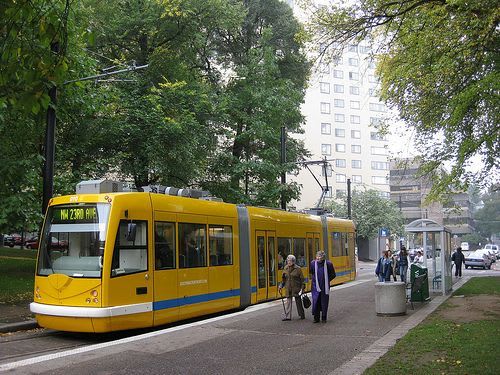
The most popular way to get to PSU is by bus, MAX train and Portland Streetcar (shown), which together accounted for 44 percent of trips to campus by staff and faculty and 40 percent by students in fall 2010. Photo courtesy neighborhoods.org via Flickr
[IMAGE]Portland-State-U-streetcar-2.jpg[/IMAGE]A new Portland State University (PSU) transportation survey shows that significantly more students, faculty and staff are choosing to take public transit, walk, bike and carpool to the Oregon-based campus than 10 years ago.
The most popular way to get to PSU is by bus, MAX train and Portland Streetcar, which together accounted for 44 percent of trips to campus by staff and faculty and 40 percent by students in fall 2010.
"When you look at these numbers, it's not alternative transportation for us anymore," said Ian Stude, PSU's transportation options manager. "Portland is known as a bicycle-friendly city and, likewise, we have one of the best transit systems in the nation. Both of those networks are well connected to the university by design, creating some really attractive and convenient options other than driving."
The fastest growing way to get to campus is by bicycle. Last fall, 12 percent of trips were made by bike, up from 3 percent for students and 5 percent for employees in 2000. Students and employees driving alone made about one quarter of the trips to campus last fall, about one-half as many as 10 years ago.
PSU distributed the electronic survey about transportation choices and perceptions to all 5,000 employees and a random sample of 8,000 of its 30,000 students. The survey was completed by 960 employees and 1,109 students. Survey respondents were asked to recall the transportation mode used to travel the greatest distance to PSU each day of the previous week.
PSU, an urban university located in downtown, is taking a lead in promoting alternatives to cars by offering:
More than 2,000 bicycle parking spots, including indoor spots in two new bike garages.
A new on-campus bike repair shop called the PSU Bike Hub.
Portland's first Cycle Track, an enhanced bike lane through campus.
Discounted student and employee transit passes.
The new MAX Green Line train to PSU, making the campus a hub for light-rail trains, streetcars, and multiple bus lines.
In addition, PSU's Center for Transportation Studies in the College of Urban Planning and Public Affairs is a leader in multidisciplinary transportation research and education. Faculty and students are breaking new ground in transportation research areas such as electronic vehicles, bicycles, transit, land use, finance and planning.
METRO TV: To see how PSU students are getting to campus, watch its video "Roads Rails Trails," here.
More Bus

New York MTA Plans Largest Bus Fleet Upgrade in More Than a Decade
The agency is seeking manufacturers for 650 new CNG buses to replace aging vehicles, improve reliability, and advance its broader fleet modernization strategy.
Read More →
Building a Flexible Path to Transit Electrification
John Hroncich discusses BAE Systems’ modular and scalable approach, lessons learned from decades of real-world operations, and how agencies can identify electrification strategies that fit their fleets.
Read More →
Bus Tech Talk: Keeping Transit Technicians Ahead of the Technology Curve
LA Metro’s Obed Mejia discusses technician training, evolving maintenance technology, fleet replacement, and strategies for getting the most out of today’s transit fleets.
Read More →
Biz Briefs: RIPTA Unveils New Frontrunners, Clevland RTA Adds New Siemens, and More
In METRO's latest installment, we take a look at recent news from Siemens, Prevost, Dodge, and more partnerships making headlines across the transportation sector.
Read More →
People Movement: Holly Arnold Joins Transdev and More
In this edition, we also cover recent appointments and announcements at Pace, CamTran, MCI, and more, showcasing the individuals helping to shape the future of transportation.
Read More →
The High Cost of Transit Buses: Industry Leaders Look to Procurement Reform
Transit leaders and policymakers examine how standardized bus designs, streamlined procurement, and predictable funding could help agencies stretch budgets and deliver better service.
Read More →
The Business Voice Behind Public Transportation
As chair of APTA’s Business Members Board of Governors, Ray Melleady explains how more than 850 business members are partnering with transit agencies to advance funding, innovation, and industry-wide collaboration.
Read More →
From Surviving to Thriving: Building Stronger Transportation Organizations
Bus Business Consultants founder Brian Dickson shares lessons on leadership, organizational health, and creating options for long-term success in a changing transportation industry.
Read More →
Finding the ‘Happy Medium’: Optimizing Maintenance Without Sacrificing Reliability
The key to maintenance optimization isn’t doing less work—it’s doing the right work at the right time on the right assets.
Read More →
LA Metro, City of West Hollywood, and Partners Advance Smarter Bus Lane Enforcement
The award-winning partnership combines AI-powered detection with human oversight to improve bus reliability, accessibility, and enforcement efficiency.
Read More →