




RELATED: Automated vehicle deployments gaining in popularity
MSU transforming campus into advanced mobility ecosystem
Ideal for testing 5G data transmission, “first mile/last mile” solutions and automated and connected vehicle systems.
November 2, 2018
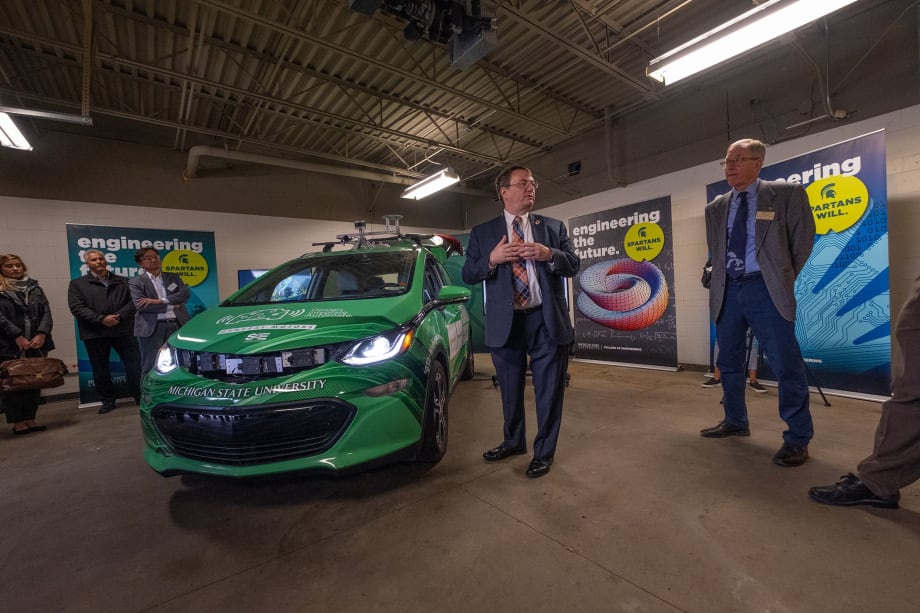
Michigan State University is transforming its 5,200-acre campus into a live, connected ecosystem to drive mobility research and development to advance smart-vehicle technology and better understand the human element. Photo by Derrick Turner
3 min to read
Michigan State University is transforming its 5,200-acre campus into a live, connected ecosystem to drive mobility research and development to advance smart-vehicle technology and better understand the human element. Photo by Derrick Turner
Michigan State University is transforming its 5,200-acre campus into a live, connected ecosystem to drive mobility research and development to advance smart-vehicle technology and better understand the human element.
With much of the transformation already complete across its urban, suburban, industrial and rural zones, MSU’s controlled infrastructure and active campus make it ideal to test emerging technologies for new mobility solutions. Those include 5G data transmission, solutions for “first mile/last mile” transportation and validation of technologies for automated and connected vehicle systems.
In addition to advancing technology, MSU is taking a broad, interdisciplinary approach to the many complex factors associated with evolving transportation. Keeping people at the center of the mobility conversation, MSU is focused on sociomobility, which means understanding individual and societal effects.
Adoption of new transportation technology raises many questions. Research and real-world testing is crucial to understand how different populations, businesses and urban planning, for example, could be affected, according to MSU officials. Planners need to ensure the right policies, laws, practices and communication are in place before “smart city” features are introduced at large scale.
“Studying mobility on football or basketball game days, for example, will provide great insights on solutions for safely and efficiently navigating through densely crowded areas,” said Leo Kempel, dean of MSU’s College of Engineering. “In addition to using campus as an ecosystem for research and development of technologies, we are looking to develop the future of human-centric, multi-modal mobility.”
The autonomous vehicle technologies developed by MSU feature state-of-the-art sensors as part of the CANVAS, or Connected and Autonomous Networked Vehicles for Active Safety, initiative. MSU CANVAS researchers are developing multi-modal sensor fusion using radars, lidars, cameras and advanced algorithms designed to create “super-human” artificial intelligence for autonomous driving in four seasons of weather. They also include the university’s advanced-sensing-and-processing technology, which at 97 percent detection accuracy currently, is industry-leading in anticipating pedestrian behaviors.
MSU’s connected campus also includes other leading technology, such as:
V2X, or ongoing vehicle-to-vehicle and vehicle-to-infrastructure communication
Embedded pavement sensors charged through vibrations;
Sensor and data fusion
Biometrics for passenger identification, theft protection and owner personalization
Cybersecurity and data updates
ATSC 3.0 television broadcasting made available exclusively to MSU through an experimental FCC license
Ongoing anonymous data collection of campus mobility to understand how people walk, drive, ride and park
Connected traffic signals
Emergency vehicle prioritization, with a goal toward automated operation
Smart parking systems
Electric vehicle charging systems.
These smart systems will work 24/7, sending and receiving ongoing data on how more than 100,000 people move around different environments. MSU’s campus features:
5,200 acres (8.1 square miles) of urban, suburban, industrial and rural zones
Nearly 60 lane miles of roads
More than 120 miles of pedestrian walkways and sidewalks
Nearly 20 miles of bike lanes
Nearly 40 traffic signals, with a planned system for real-time traffic control
Diverse population with 70,000 students and faculty, and more than 100,000 people on game days
545 occupied buildings
26,000 parking spaces
30,000 vehicles on campus daily
85-member police force, providing flexibility in traffic management
Spartan Mobility Village, the new home of MSU’s mobility labs where roadways and parking lots can be closed for testing of new technologies. In the future, unoccupied buildings will be used as a background for sensing technologies, including radar clutter simulating the sub/urban environment.
The technology, solutions and processes tested and validated using MSU’s campus will help ensure the future of mobility creates safe, reliable, convenient and accessible transportation for all.
More New Mobility

From Hardware to Digital Partner: Luminator Charts Its Next Chapter
CEO Magnus Friberg discusses Luminator’s shift toward becoming a digital partner, the growing importance of software and interoperability, and how AI can help agencies improve operations and passenger experience.
Read More →
Biz Briefs: Alstom Lands Canadian Contract, LYT to Supply California TSP, and More
In METRO's latest installment, we take a look at recent news from Complete Coach Works, Beep, FlixBus, and more partnerships making headlines across the transportation sector.
Read More →
CharterUP’s Armir Harris on Technology, AI, and the Future of Group Mobility
In a recent episode of METROspectives, CharterUP Founder/CEO Armir Harris discussed the company’s evolution from an online charter bus marketplace into a technology platform supporting public- and private-sector mobility and much more.
Read More →
Jacksonville’s NAVI Project Charts a New Course for Autonomous Public Transportation
Through its NAVI program, JTA is showing how autonomous vehicles, intelligent infrastructure, and coordinated operations can work together to deliver everyday public transportation.
Read More →
Biz Briefs: Luminator Marks Milestone and More
From manufacturers and suppliers to transit agencies and motorcoach operators, these updates offer a snapshot of the projects, partnerships and business moves driving the industry forward.
Read More →
New Tricks for Old Bureaucracies: Joshua Schank on Making Transit Innovation Stick
Former LA Metro Chief Innovation Officer Joshua Schank discusses why good ideas aren't enough, how transit agencies can overcome resistance to change, and why today's challenges demand more innovation.
Read More →
How DART's GoPass Is Redefining Regional Mobility
Serving 14 transit agencies, GoPass simplifies multimodal travel by allowing riders to plan, pay for, and manage an entire trip through one app.
Read More →
Biz Briefs: OCTA Taps Clean Energy for Hydrogen Station, Stadler to Supply Via Rail Vehicles, and More
From manufacturers and suppliers to transit agencies and motorcoach operators, these updates offer a snapshot of the projects, partnerships and business moves driving the industry forward.
Read More →CharterUP Expands Into New Mobility and Autonomous Transportation
Vice President of New Mobility Stephen Joos discusses how CharterUP is leveraging its nationwide transportation network, technology platform, and autonomous vehicle partnerships to expand into workforce mobility, campus shuttles, and transit solutions.
Read More →
METRO Magazine Announces 2026 Innovative Solutions Awards Winners
Projects Recognized for Advancing Mobility Through Technology, Accessibility, Workforce Innovation, and Operational Excellence
Read More →