



MTI Report Examines Economic, Environmental Gains of High-Speed Rail
Many countries and regions — including Germany, Spain, and the UK in Europe; China, Japan, and South Korea in Asia; and many more — have had HSR systems in place for many years or even decades.

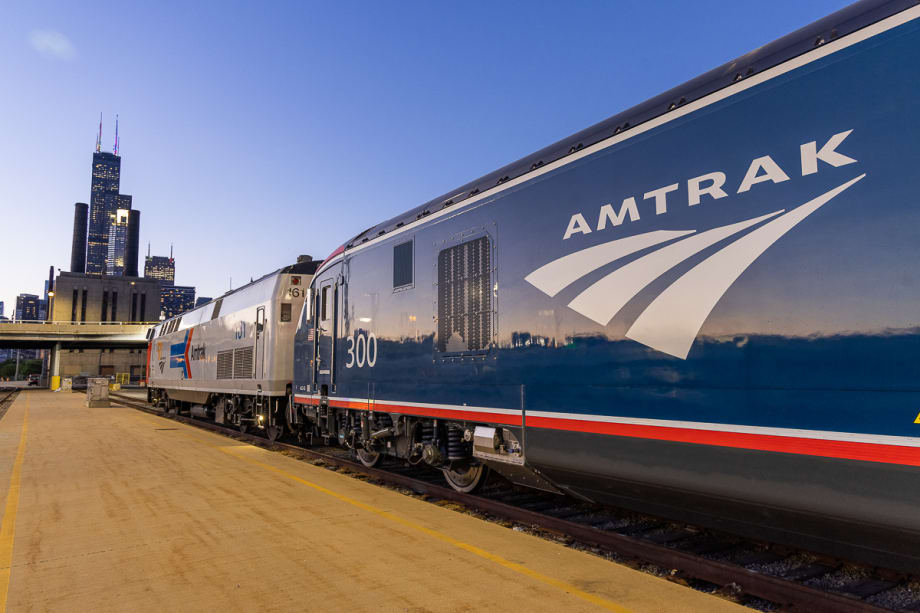
In the U.S., Amtrak’s Acela is the only system presently capable of operating at such speeds, but several HSR systems are in progress or in the planning stages.
Photo: Amtrak
The latest Mineta Transportation Institute (MTI) perspective, “The Economic and Environmental Potential of High-Speed Rail,” outlines the potential economic and environmental benefits of high-speed rail (HSR) in the U.S., which includes job growth and increased economic activity; creation of an entirely new domestic manufacturing base; station area development and improved regional connectivity; and reduced GHG emissions and better land use.
High-speed rail is a passenger rail system that operates at speeds greater than 150 miles per hour (mph). Many countries and regions — including Germany, Spain, and the UK in Europe; China, Japan, and South Korea in Asia; and many more — have had HSR systems in place for many years or even decades.
MTI’s HSR Report
MTI’s perspective outlines the many potential benefits of HSR, which include:
Job Creation and Economic Output - For example, the California High-Speed Rail Authority (CHSRA) estimates that HSR has generated an estimated 74,000 to 80,000 job years, $5.6 billion to $6.0 billion in labor income, and $15 billion to $16 billion in economic output between 2006 and 2022.
Domestic Manufacturing - As of 2015, it was estimated that the rail manufacturing industry supports 90,000 jobs and that more than 750 companies in at least 39 states manufactured components for passenger rail and transit.
Station Area Development, Regional Connectivity, and Smart Growth - Multiple studies show that HSR in the U.S. could connect megaregions, forming the corridors of housing, employment, and recreation in more densely populated areas of the country.
Greenhouse Gas (GHG) Emissions Reduction - One study estimates high-speed rail in the U.S. can save up to 800 million tons of CO2 emissions over a 40-year period, or approximately 2 trillion miles traveled in a typical 22 MPG gas-based car.
Cost Savings Associated with Foregone Infrastructure Improvements - One study found that it would cost an estimated $122-199 billion to provide the equivalent highway and airport capacity that the San Francisco to Los Angeles high-speed rail network would provide.
HSR Making Inroads in U.S.
In the U.S., Amtrak’s Acela is the only system presently capable of operating at such speeds, but several HSR systems are in progress or in the planning stages. These include Brightline West (Las Vegas to Southern California), the California High-Speed Rail Authority (Los Angeles to San Francisco), Texas Central (Dallas to Houston), and the Cascadia Project (Portland, Ore. to Vancouver, BC).
The paper provides important insight into the impacts of these and future HSR projects, which with additional research and policy, can help the U.S. leverage these benefits, according to MTI.
More Rail

New York MTA Advances Final Contract for Second Avenue Subway Expansion
Contract Four is the largest in the Second Avenue Subway Phase 2 project and includes construction of station infrastructure, tracks, and signals for the subway expansion, MTA officials said. Work on Contract Four will begin in 2027.
Read More →
San Diego MTS Breaks Monthly Trolley Ridership Record
Agency officials said July’s ridership indicates MTS’s continued recovery from the pandemic.
Read More →
Report Examines NJ TRANSIT Reliability, Funding Challenges
The Garden State Initiative analysis examines the roles of Amtrak infrastructure, fleet management, and agency operations while recommending a more performance-based approach to improving reliability.
Read More →
Stadler, CapMetro Sign Long-Term Rail Fleet Support Agreement
Beginning in 2027, Stadler will provide on-site technical expertise, spare parts support, training, and obsolescence management to help extend the reliability and longevity of CapMetro’s GTW fleet.
Read More →
Biz Briefs: Alstom Lands Canadian Contract, LYT to Supply California TSP, and More
In METRO's latest installment, we take a look at recent news from Complete Coach Works, Beep, FlixBus, and more partnerships making headlines across the transportation sector.
Read More →
CATS Gold Line Marks 5 Years of Service, 2.8M Passenger Trips
With a six-mile expansion planned, the Charlotte streetcar is positioned to connect more neighborhoods and major transit hubs across the region.
Read More →
Why Simulating Pedestrian Movement Has Become Essential for Modern Rail Stations
Pedestrian microsimulation is helping rail planners identify bottlenecks, test station designs, and prepare complex transit hubs for growing passenger volumes.
Read More →
Amtrak Begins Major Construction at New York’s Sunnyside Yard
The new maintenance facility will support Amtrak’s Airo trainsets while improving maintenance efficiency and turnaround times in New York.
Read More →
Chicago Leaders Unveil Plans for O’Hare Airport Express Train
The privately developed project would offer a 15-minute trip between downtown and O’Hare’s Terminal 2, with trains operating every 15 minutes on a dedicated track. The service would use battery-electric trains and three existing freight rail rights-of-way.
Read More →
OCTA Maps Out 30-Year Strategy to Protect Coastal Rail Corridor
The draft feasibility report identifies strategies to protect the coastal rail line for decades as the agency continues near-term stabilization and sand placement efforts.
Read More →