



N.Y. MTA launches ‘Weekender’ app
The first iPhone app the MTA has developed itself can also be used on for iPod Touch and iPad. Key features include overviews of line service changes, as well as text summaries of the changes; text-based information about any service changes impacting a borough; and details on any service changes impacting that station.

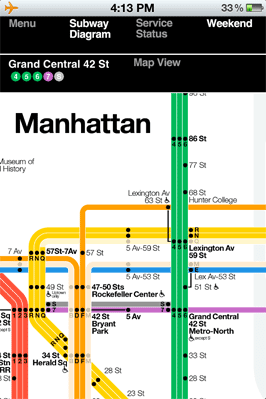
Building on the popularity of "The Weekender" feature on mta.info that helps weekend subway riders navigate around construction-related service diversions, the New York Metropolitan Transportation Authority (MTA) launched The Weekender for Mobile in the Apple App Store. It’s the first iPhone app the MTA has developed itself, and it can also be used on for iPod Touch and iPad. An Android version is in development.
The app is free to download here. It shares the same features as the web-based desktop version, including a subway diagram that displays the service to be provided each weekend, and all service changes. Using the most popular features of the iOS platform, users can pinch or expand the map to multiple zoom levels, and tap to view service diversions by line, station, or borough.
Key features of the Weekender App include:
• Service by Line: Click on a subway line symbol to get a line diagram showing an overview of the line's service changes, as well as text summaries of the changes.
• Service by Borough: Click on a borough for text-based information about any service changes impacting a borough.
• Service by Station: Select a station for details on any service changes impacting that station, or click on the map to zoom to a detailed area.
Due to the large amount of data and mapping involved in the mobile version of The Weekender, MTA developers have smartly "packeted" the data, so the initial download includes the basic functions needed to get started. Then, each time the user plans a trip or taps to view a particular neighborhood map, only those images are added to the app, so the app gets smarter with every use without hogging device memory.
The Weekender for Mobile was created by MTA developers following initial design concepts from Vignelli Associates. The diagram used as the base of The Weekender both online and in the mobile app is designed to illustrate service diversions at a glance. It is inspired by the 1972 New York City subway map designed by world renowned map maker and designer Massimo Vignelli, and was recently updated by Vignelli, Beatriz Cifuentes and Yoshiki Waterhouse.
As with the web-based version, The Weekender for Mobile also provides the popular Neighborhood Maps that are posted inside subway stations. These maps show the precise locations of subway station entrances within the street grid, along with locations of popular area destinations.
Subsequent versions of The Weekender for Mobile will incorporate updates such as Trip Planner+, the MTA’s popular trip planning feature, as well as improvements gleaned from customer feedback.
While more than 100 apps have been developed by private app developers using open machine-readable data released to the public, the Weekender is the first native app developed by the MTA itself. The MTA has previously developed a number of innovative web-based digital tools that increase customers’ access to real-time service-related information: MTA Bus Time, Metro-North Train Time, LIRR Train Time, MTA Bridges and Tunnels Travel Time, and Trip Planner+.
More Rail

New York MTA Advances Final Contract for Second Avenue Subway Expansion
Contract Four is the largest in the Second Avenue Subway Phase 2 project and includes construction of station infrastructure, tracks, and signals for the subway expansion, MTA officials said. Work on Contract Four will begin in 2027.
Read More →
San Diego MTS Breaks Monthly Trolley Ridership Record
Agency officials said July’s ridership indicates MTS’s continued recovery from the pandemic.
Read More →
Report Examines NJ TRANSIT Reliability, Funding Challenges
The Garden State Initiative analysis examines the roles of Amtrak infrastructure, fleet management, and agency operations while recommending a more performance-based approach to improving reliability.
Read More →
Stadler, CapMetro Sign Long-Term Rail Fleet Support Agreement
Beginning in 2027, Stadler will provide on-site technical expertise, spare parts support, training, and obsolescence management to help extend the reliability and longevity of CapMetro’s GTW fleet.
Read More →
Biz Briefs: Alstom Lands Canadian Contract, LYT to Supply California TSP, and More
In METRO's latest installment, we take a look at recent news from Complete Coach Works, Beep, FlixBus, and more partnerships making headlines across the transportation sector.
Read More →
CATS Gold Line Marks 5 Years of Service, 2.8M Passenger Trips
With a six-mile expansion planned, the Charlotte streetcar is positioned to connect more neighborhoods and major transit hubs across the region.
Read More →
Why Simulating Pedestrian Movement Has Become Essential for Modern Rail Stations
Pedestrian microsimulation is helping rail planners identify bottlenecks, test station designs, and prepare complex transit hubs for growing passenger volumes.
Read More →
Amtrak Begins Major Construction at New York’s Sunnyside Yard
The new maintenance facility will support Amtrak’s Airo trainsets while improving maintenance efficiency and turnaround times in New York.
Read More →
Chicago Leaders Unveil Plans for O’Hare Airport Express Train
The privately developed project would offer a 15-minute trip between downtown and O’Hare’s Terminal 2, with trains operating every 15 minutes on a dedicated track. The service would use battery-electric trains and three existing freight rail rights-of-way.
Read More →
OCTA Maps Out 30-Year Strategy to Protect Coastal Rail Corridor
The draft feasibility report identifies strategies to protect the coastal rail line for decades as the agency continues near-term stabilization and sand placement efforts.
Read More →