



N.Y. MTA report finds subway can speed up by as much as 50%
An agency task force initiated a study that would lead to faster trains while prioritizing customer and employee safety.

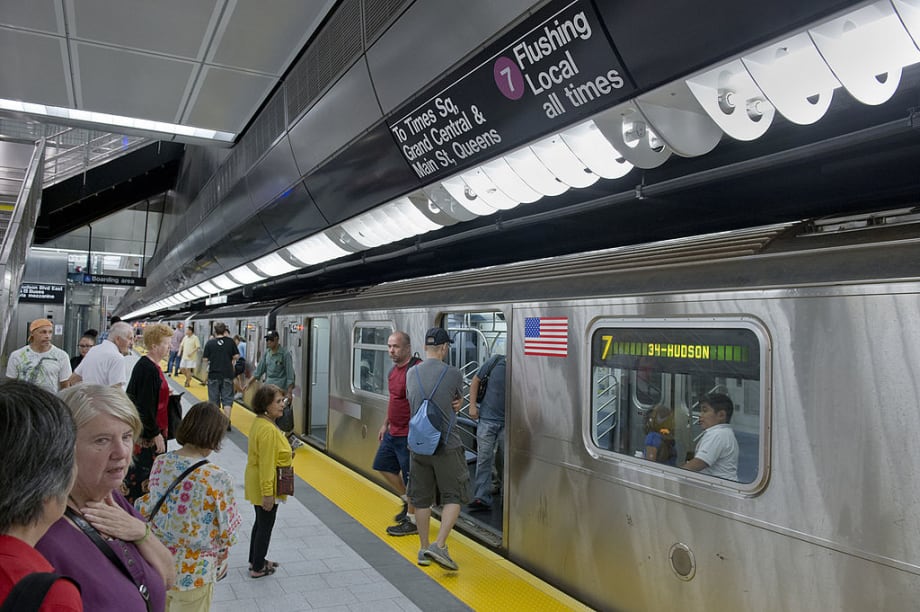
The next step for the MTA's task force is to examine appropriate and safe speed limits using train operation testing in actual conditions to determine running speeds in different configurations.
MTA/Patrick Cashin
The next step for the MTA's task force is to examine appropriate and safe speed limits using train operation testing in actual conditions to determine running speeds in different configurations.
MTA/Patrick Cashin
New York’s Metropolitan Transportation Authority (MTA) announced preliminary findings of the Train Speed and Safety Task Force, which demonstrates subway train speeds on certain sections of track can be increased by as much as 50%. The task force initiated a study with engineering firm STV, with the help of Transport Workers Union, that remains ongoing but has already determined four core areas of focus that would lead to faster trains while prioritizing customer and employee safety.
The task force determined the following areas of focus to identify tracks where speeds could be safely raised: reducing running times through straight tracks and interlockings, improving running times through curves, alleviating bottlenecks and fine-tuning schedules to optimize train movement, and updating speed signage to increase train operator confidence.
The next step is for the task force to examine appropriate and safe speed limits using train operation testing in actual conditions to determine running speeds in different configurations.
The New York subway system was built more than 100 years ago, and to provide for safe operations, various measures were implemented to ensure that trains did not go faster than the conditions they could handle.
Two fatal incidents at 14 St-Union Square in 1991 and on the Williamsburg Bridge in 1995 cumulatively led to subway trains operating at slower speeds. Later, the NTSB concluded in both cases the accidents were mainly due to operator error, however, localized system and signal issues were also discovered.
At the same time, the MTA never completed the comprehensive speed and safety review they had commenced and thus the trains remained operating at slower speeds with actual devices installed to limit train acceleration.
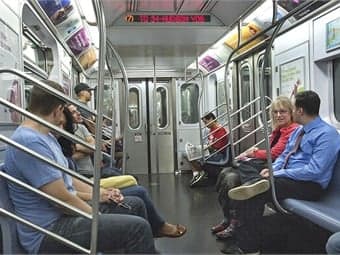
The New York subway system was built more than 100 years ago, and to provide for safe operations, various measures were implemented to ensure that trains did not go faster than the conditions they could handle.
MTA/Patrick Cashin
The slowdown was further compounded by the practice of train operators controlling trains, some of whom believed that the signal system was not properly calibrated, at speeds below the posted limits due to the perception they would be unfairly penalized. The result led to operators driving even slower than posted speed limits. Over the decades, car design and track geometry have improved, allowing cars to maintain stability and safe operation at higher speeds, but the speed limits were not changed to reflect these advancements in safety and comfort.
Under the task force’s preliminary recommendations, NYC Transit will coordinate with the TWU to ensure that mis-calibrated timed signal timers have been fixed and that operators will not be penalized. Overall, the task force’s findings build on the success of NYC Transit’s Save Safe Seconds effort to increase subway speed limits by locating and fixing mis-calibrated signals in parts of the system. The task force’s continuing work will expand the number of locations where speeds could be raised and increase operator confidence thanks to coordinated efforts with transit’s labor partners.
Final recommendations from the task force will be sent to MTA Chairman Patrick Foye for review and approval by the end of 2019.
More Rail

New York MTA Advances Final Contract for Second Avenue Subway Expansion
Contract Four is the largest in the Second Avenue Subway Phase 2 project and includes construction of station infrastructure, tracks, and signals for the subway expansion, MTA officials said. Work on Contract Four will begin in 2027.
Read More →
San Diego MTS Breaks Monthly Trolley Ridership Record
Agency officials said July’s ridership indicates MTS’s continued recovery from the pandemic.
Read More →
Report Examines NJ TRANSIT Reliability, Funding Challenges
The Garden State Initiative analysis examines the roles of Amtrak infrastructure, fleet management, and agency operations while recommending a more performance-based approach to improving reliability.
Read More →
Stadler, CapMetro Sign Long-Term Rail Fleet Support Agreement
Beginning in 2027, Stadler will provide on-site technical expertise, spare parts support, training, and obsolescence management to help extend the reliability and longevity of CapMetro’s GTW fleet.
Read More →
Biz Briefs: Alstom Lands Canadian Contract, LYT to Supply California TSP, and More
In METRO's latest installment, we take a look at recent news from Complete Coach Works, Beep, FlixBus, and more partnerships making headlines across the transportation sector.
Read More →
CATS Gold Line Marks 5 Years of Service, 2.8M Passenger Trips
With a six-mile expansion planned, the Charlotte streetcar is positioned to connect more neighborhoods and major transit hubs across the region.
Read More →
Why Simulating Pedestrian Movement Has Become Essential for Modern Rail Stations
Pedestrian microsimulation is helping rail planners identify bottlenecks, test station designs, and prepare complex transit hubs for growing passenger volumes.
Read More →
Amtrak Begins Major Construction at New York’s Sunnyside Yard
The new maintenance facility will support Amtrak’s Airo trainsets while improving maintenance efficiency and turnaround times in New York.
Read More →
Chicago Leaders Unveil Plans for O’Hare Airport Express Train
The privately developed project would offer a 15-minute trip between downtown and O’Hare’s Terminal 2, with trains operating every 15 minutes on a dedicated track. The service would use battery-electric trains and three existing freight rail rights-of-way.
Read More →
OCTA Maps Out 30-Year Strategy to Protect Coastal Rail Corridor
The draft feasibility report identifies strategies to protect the coastal rail line for decades as the agency continues near-term stabilization and sand placement efforts.
Read More →