




RELATED: [Video] Caltrans Takes Steps to Combat Copper Crooks
N.Y. subway train suspension caused by massive theft of copper cable
At least 500 feet of the valuable cable was discovered stolen from roughly 12 locations along the A train tracks near Howard Beach, and some signal equipment and track components were damaged as well by electrical current that could not flow through the cable.
May 27, 2015
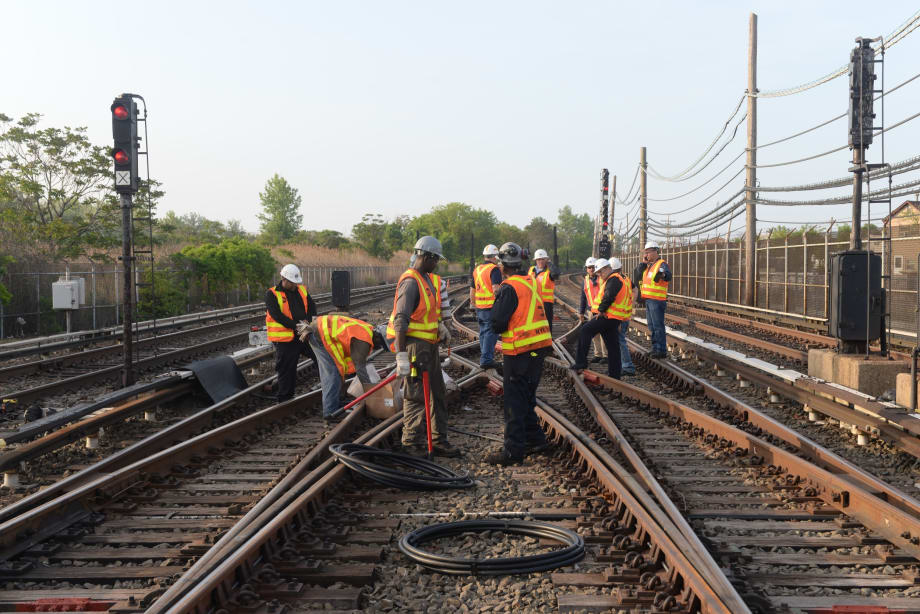
Photo courtesy: N.Y. MTA
3 min to read
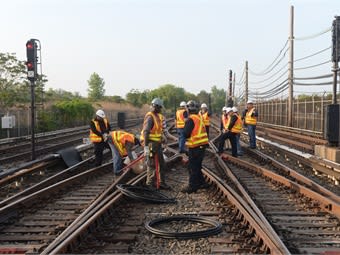
Photo courtesy: N.Y. MTA
Hundreds of thousands of Metropolitan Transportation Authority (MTA) New York City Transit subway customers were victimized this morning by a massive theft of copper cable from A line subway tracks near Howard Beach, Queens. Limited A train service is being restored at this moment but residual delays will persist throughout the day.
“This morning’s service disruption was directly caused by the theft of cable from along the subway right of way. This led to delays and crowding along all 31 miles of the A train, and forced thousands of Rockaways customers to use shuttle buses to get to work,” said MTA New York City Transit President Carmen Bianco. “We are working closely with the NYPD Transit Bureau to help them investigate this crime and identify the culprits responsible.”
The loss of the subway power cables forced the MTA to suspend service between Rockaway Boulevard and Broad Channel stations and replace it with shuttle buses during the morning rush. While limited A train service is being restored, shuttle buses will continue until service fully resumes through the Rockaways. Service will be suspended and replaced by shuttle buses again tonight for more emergency repair work overnight.
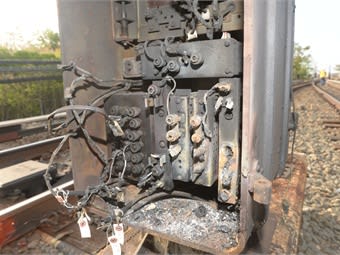
Photo courtesy: N.Y. MTA
This crime also disrupted service along the entire length of the A and C lines. Subway trains stored in the Rockaway Park yard are trapped there and cannot be used for service. Trains in service on the A line cannot use the terminals at Far Rockaway-Mott Av and Rockaway Park-Beach 116 St to turn around, further limiting capacity along the line. Some A trains are terminating at Euclid Av, where the C usually terminates, forcing a reduction in C service as well.
The A and C lines carry 775,000 approximately customers per day, including 100,000 in the morning rush hour. The majority of those customers experienced delays and/or crowding due to this crime. The A train carries about 40,000 customers to and from the Rockaways each day, including 3,700 to Manhattan during the morning rush, none of whom were able to use the subways.
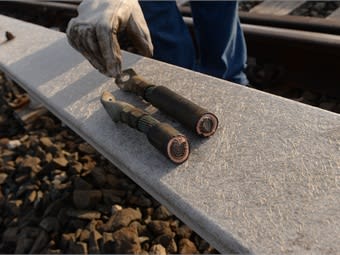
Photo courtesy: N.Y. MTA
The cable theft was discovered at 11:22 p.m. Tuesday night when a northbound A train lost power north of the Howard Beach station. Crews brought in another train behind it, and the estimated 150 customers on board were able to walk through the trains to get back to the Howard Beach station at 12:09 a.m.
The power cable was presumably stolen to be sold as scrap. At least 500 feet of the valuable cable was discovered stolen from roughly 12 locations along the A train tracks near Howard Beach, and some signal equipment and track components were damaged as well by electrical current that could not flow through the cable. Crews are working to rebuild the damaged infrastructure as quickly as possible.
More Rail

New York MTA Advances Final Contract for Second Avenue Subway Expansion
Contract Four is the largest in the Second Avenue Subway Phase 2 project and includes construction of station infrastructure, tracks, and signals for the subway expansion, MTA officials said. Work on Contract Four will begin in 2027.
Read More →
San Diego MTS Breaks Monthly Trolley Ridership Record
Agency officials said July’s ridership indicates MTS’s continued recovery from the pandemic.
Read More →
Report Examines NJ TRANSIT Reliability, Funding Challenges
The Garden State Initiative analysis examines the roles of Amtrak infrastructure, fleet management, and agency operations while recommending a more performance-based approach to improving reliability.
Read More →
Stadler, CapMetro Sign Long-Term Rail Fleet Support Agreement
Beginning in 2027, Stadler will provide on-site technical expertise, spare parts support, training, and obsolescence management to help extend the reliability and longevity of CapMetro’s GTW fleet.
Read More →
Biz Briefs: Alstom Lands Canadian Contract, LYT to Supply California TSP, and More
In METRO's latest installment, we take a look at recent news from Complete Coach Works, Beep, FlixBus, and more partnerships making headlines across the transportation sector.
Read More →
CATS Gold Line Marks 5 Years of Service, 2.8M Passenger Trips
With a six-mile expansion planned, the Charlotte streetcar is positioned to connect more neighborhoods and major transit hubs across the region.
Read More →
Why Simulating Pedestrian Movement Has Become Essential for Modern Rail Stations
Pedestrian microsimulation is helping rail planners identify bottlenecks, test station designs, and prepare complex transit hubs for growing passenger volumes.
Read More →
Amtrak Begins Major Construction at New York’s Sunnyside Yard
The new maintenance facility will support Amtrak’s Airo trainsets while improving maintenance efficiency and turnaround times in New York.
Read More →
Chicago Leaders Unveil Plans for O’Hare Airport Express Train
The privately developed project would offer a 15-minute trip between downtown and O’Hare’s Terminal 2, with trains operating every 15 minutes on a dedicated track. The service would use battery-electric trains and three existing freight rail rights-of-way.
Read More →
OCTA Maps Out 30-Year Strategy to Protect Coastal Rail Corridor
The draft feasibility report identifies strategies to protect the coastal rail line for decades as the agency continues near-term stabilization and sand placement efforts.
Read More →