




RELATED: Database provides alternative ride info for seniors, ADA clientele
New app to help people with disabilities navigate public transit
Using the "Connect" app enables users to gain three-meter accuracy to pick-up or drop off locations for fixed and paratransit service.
March 13, 2019
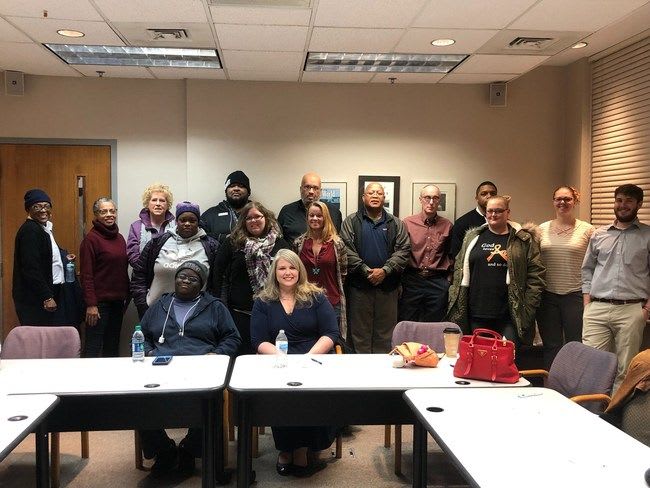
Focus Group at the Ann Arbor Area Transportation Authority in Ann Arbor, Michigan. Photo: Feonix Mobility Rising
2 min to read

Focus Group at the Ann Arbor Area Transportation Authority in Ann Arbor, Michigan. Photo: Feonix Mobility Rising
Feonix - Mobility Rising and its partners, the Ann Arbor Area Transportation Authority (TheRide) and Ann Arbor Center for Independent Living (AACIL) are setting out to create supportive technology providing step-by-step assistance for people with disabilities in navigating transit.
Using the state-of-the-art locational platform, what3words, Feonix is developing an app, called "Connect," that will provide turn-by-turn audio and visual directions for passengers navigating public transportation, as well as nuanced information most helpful for people with disabilities.
"New mobility tech like Feonix's Connect app are needed now more than ever," says Julia Roberts, TheRide Regional Planner. "By helping customers to age in place with increasing rates of visual, hearing, and other cognitive impairments, TheRide can aid in improving each individual's transport experience, as well as the quality of life for their family, friends, and community."
The aging population in the Ann Arbor area and across the country are growing at unprecedented rates, especially as baby boomers retire. Specifically, with regard to vision and hearing disabilities, the 2016 US Census indicated that:
7.5 million Americans identify as having "significant vision loss," encompassing both near or total blindness, and "trouble seeing, even when wearing glasses or contact lenses."
11.5 million individuals report significant hearing difficulty.
The what3words technology will be utilized with the "Connect" app, will enable users to gain three-meter accuracy to pick-up or drop off locations for fixed and paratransit service- providing a better experience and less stress for both passengers and drivers. Traditionally, addresses can cover an entire block or even several acres. With what3words, users can precisely schedule pickups and drop-offs at a specific entrance, landmark, or facility.
The project is set to launch the prototype for demonstration this summer and is expected to be released in the app stores this fall. Feonix plans to bring this innovative technology to public transit agencies across the U.S. and around the world.
More New Mobility

ENC Unveils ZAVIR Medium-Duty Electric Shuttle at APTA EXPO
The new ZAVIR brand targets shuttle and paratransit operations with battery-electric and range-extended electric vehicle options.
Read More →
Public Transit Conference Returning to GFX in 2027, Call for Papers Now Open
The Call for Papers is now open, allowing transit agency professionals and industry experts to help shape the PTC educational program by submitting session ideas for consideration.
Read More →
Everett Transit, Community Transit Outline Consolidation Agreement
The proposed agreement calls for a 50% increase in bus service in Everett, a new microtransit zone, continued paratransit service, and the transfer of Everett Transit operations to Community Transit.
Read More →
What Multimodal Data Can Tell Transit Agencies About Rider Demand
See how bike-on-bus data is giving transit agencies new insight into rider demand, capacity constraints, and gaps in first- and last-mile connections.
Read More →
From Hardware to Digital Partner: Luminator Charts Its Next Chapter
CEO Magnus Friberg discusses Luminator’s shift toward becoming a digital partner, the growing importance of software and interoperability, and how AI can help agencies improve operations and passenger experience.
Read More →
Biz Briefs: Alstom Lands Canadian Contract, LYT to Supply California TSP, and More
In METRO's latest installment, we take a look at recent news from Complete Coach Works, Beep, FlixBus, and more partnerships making headlines across the transportation sector.
Read More →
CharterUP’s Armir Harris on Technology, AI, and the Future of Group Mobility
In a recent episode of METROspectives, CharterUP Founder/CEO Armir Harris discussed the company’s evolution from an online charter bus marketplace into a technology platform supporting public- and private-sector mobility and much more.
Read More →
Jacksonville’s NAVI Project Charts a New Course for Autonomous Public Transportation
Through its NAVI program, JTA is showing how autonomous vehicles, intelligent infrastructure, and coordinated operations can work together to deliver everyday public transportation.
Read More →
Biz Briefs: Luminator Marks Milestone and More
From manufacturers and suppliers to transit agencies and motorcoach operators, these updates offer a snapshot of the projects, partnerships and business moves driving the industry forward.
Read More →
New Tricks for Old Bureaucracies: Joshua Schank on Making Transit Innovation Stick
Former LA Metro Chief Innovation Officer Joshua Schank discusses why good ideas aren't enough, how transit agencies can overcome resistance to change, and why today's challenges demand more innovation.
Read More →