



New Flyer unveils electric bus simulator
The simulator, designed and installed by FAAC Incorporated using a 180-degree screen display and 4K projection system, is one of the first in the world to use full-scale OEM components to control the bus simulator.

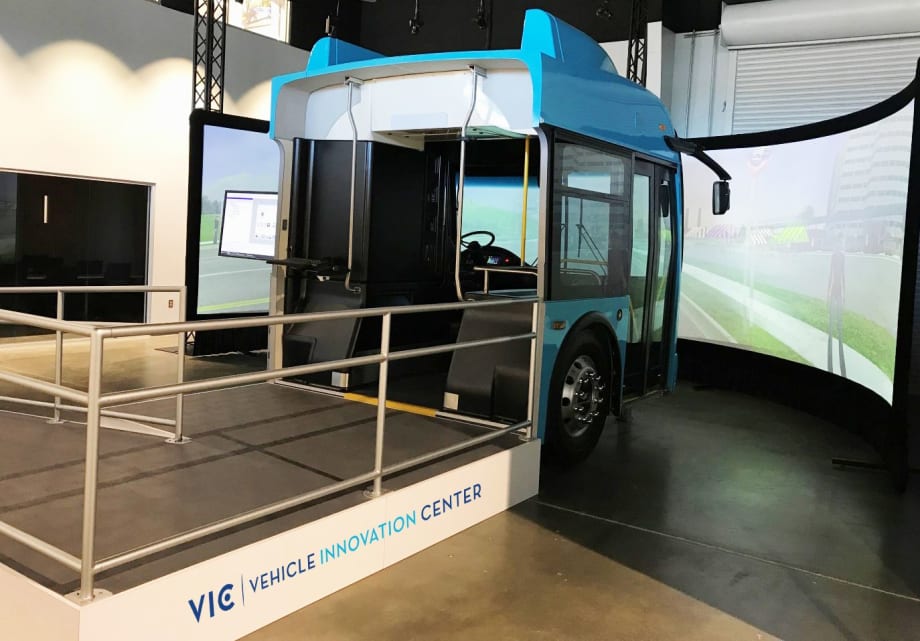
The simulator’s main objective is to support driver training specific to regenerative braking, an energy-saving technique drivers can employ in conserving battery-electric energy.
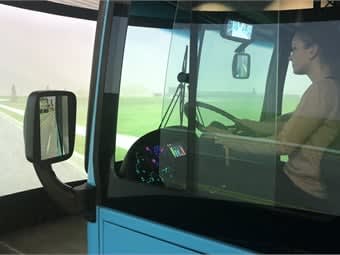
The simulator is the world’s first application of the Digital Projection E-Vision 4K projector.
All photos courtesy New Flyer
New Flyer of America Inc. commissioned the Xcelsior CHARGE™ Bus Simulator at New Flyer of America’s Vehicle Innovation Center (VIC), North America’s first and only innovation lab opened in October 2017 and dedicated to advancing bus technology.
The simulator, designed and installed by FAAC Incorporated using a 180-degree screen display and 4K projection system, is one of the first in the world to use full-scale original equipment manufacturer (OEM) components to control the bus simulator. Drivers of the simulator will experience a bus environment with hardware operating just as it would in a zero-emission, battery-electric Xcelsior CHARGE™ transit bus. Drivers familiar with traditional bus systems will notice a working door and ramp, lights, mirrors, air-brake system, and adjustable driver’s seat inside a full-scale CHARGE™ front cabin.
“The Xcelsior CHARGE™ Bus Simulator at the VIC features an eight-foot-tall screen with 180-degree field of view screen, the largest screen FAAC has ever installed,” stated Derek Fulk, sr. project manager at FAAC. “The screen was critical in providing a realistic experience for the bus operator, and delivering a learning experience complete with audio, visual, and tactile details.”
The simulator is the world’s first application of the Digital Projection E-Vision 4K projector. The display system projects 4K (high definition) resolution onto a cylindrical screen through ultra-short throw lenses. The effect is full-visibility of the virtual environment, creating a near-identical driving experience, complete with tactile sensations reflecting curb and roadside jostling.
The simulator’s main objective is to support driver training specific to regenerative braking, an energy-saving technique drivers can employ in conserving battery-electric energy.
The simulator’s main objective is to support driver training specific to regenerative braking, an energy-saving technique drivers can employ in conserving battery-electric energy. Operating techniques and skills gained from the simulator will improve bus operation, including extended range, reduced energy consumption, and less brake system maintenance. Engineers, maintenance technicians, drivers, transportation representatives, business leaders, and regulatory officials are among those expected to gain insight into operating electric buses through the simulator.
“The simulator is just one element of the VIC featuring modern technology to support research and development in advanced public transit solutions,” stated Wayne Joseph, president of New Flyer of America. “New Flyer is committed to leading advancement of bus and coach technology in America, and working with FAAC helps bring this vision to life, while benefiting Americans through training that leverages electric and autonomous bus technology. A skilled driver of an electric bus can have as much as a 15% impact on the energy use, so critical skills training of this type can dramatically reduce transit authorities operating costs.”
More Technology

From Hardware to Digital Partner: Luminator Charts Its Next Chapter
CEO Magnus Friberg discusses Luminator’s shift toward becoming a digital partner, the growing importance of software and interoperability, and how AI can help agencies improve operations and passenger experience.
Read More →
Beyond the Checklist: A Structured Approach to Transit Maintenance
Reliability-Centered Maintenance helps transit agencies move beyond routine checklists to focus limited resources on the assets and failures that have the greatest impact on safety, reliability, and service.
Read More →
NJ TRANSIT Advances Bus Technology Upgrades Across Statewide Fleet
More than 1,500 buses now feature upgraded technology designed to improve arrival predictions and provide free Wi-Fi, with deployment expected to reach nearly 2,000 buses by the end of 2026.
Read More →

Building a Flexible Path to Transit Electrification
John Hroncich discusses BAE Systems’ modular and scalable approach, lessons learned from decades of real-world operations, and how agencies can identify electrification strategies that fit their fleets.
Read More →
Biz Briefs: Alstom Lands Canadian Contract, LYT to Supply California TSP, and More
In METRO's latest installment, we take a look at recent news from Complete Coach Works, Beep, FlixBus, and more partnerships making headlines across the transportation sector.
Read More →
From Legacy Silos to Conversational Intelligence
What if transit leaders could ask any operational question and get a trusted answer in seconds? Conversational AI is transforming how agencies use their data.
Read More →
USDOT Announces Rail Vehicle Replacement Grants, Chattanooga AV Shuttle Funding
More than $191 million in federal funding will help three transit agencies replace aging rail vehicles and support a new autonomous shuttle service in Chattanooga.
Read More →
Bus Tech Talk: Keeping Transit Technicians Ahead of the Technology Curve
LA Metro’s Obed Mejia discusses technician training, evolving maintenance technology, fleet replacement, and strategies for getting the most out of today’s transit fleets.
Read More →
Biz Briefs: RIPTA Unveils New Frontrunners, Clevland RTA Adds New Siemens, and More
In METRO's latest installment, we take a look at recent news from Siemens, Prevost, Dodge, and more partnerships making headlines across the transportation sector.
Read More →
Why Simulating Pedestrian Movement Has Become Essential for Modern Rail Stations
Pedestrian microsimulation is helping rail planners identify bottlenecks, test station designs, and prepare complex transit hubs for growing passenger volumes.
Read More →