



New York City Transit testing all-electric BYD bus
The test will determine if this type of bus can meet the twin challenges of operating in the stop-and-go traffic of Manhattan while maintaining high levels of passenger comfort and operational performance.

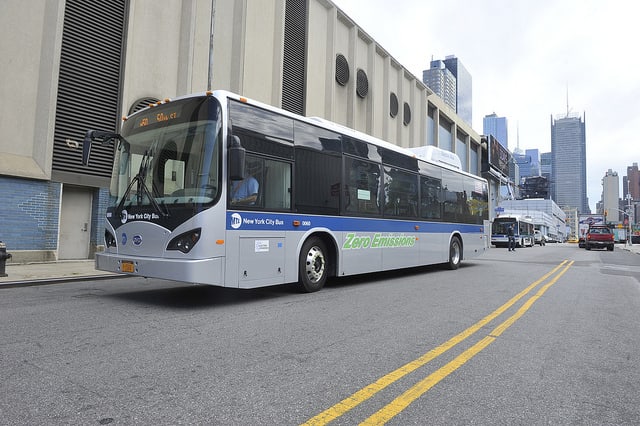
A prototype all-electric bus rolled out of the Michael J. Quill Depot on the West Side of Manhattan and performed a test run on the M42 line on Friday, September 13, 2013. Photo: Marc A. Hermann / MTA New York City Transit
A prototype all-electric bus rolled out of the Michael J. Quill Depot on the West Side of Manhattan and performed a test run on the M42 line on Friday, September 13, 2013. Photo: Marc A. Hermann / MTA New York City Transit
MTA New York City Transit is currently testing a new design of an all-electric bus manufactured by BYD. Scheduled to run for two months, the testing will evaluate the feasibility of using an all-electric vehicle along some of the City’s busiest bus routes.
The BYD all-electric bus runs strictly on a bank of electric powered batteries that can be charged and ready for service in as few as four hours.
“This test continues the MTA’s commitment to examine new, cleaner and more efficient bus propulsion technologies that include hybrids, CNG, clean diesel and now potentially all-electric battery drive,” said Darryl Irick, president of MTA Bus and sr. VP, MTA NYC Transit’s Department of Buses.
The test will determine if this type of bus can meet the twin challenges of operating in the stop-and-go traffic of Manhattan while maintaining high levels of passenger comfort and operational performance.
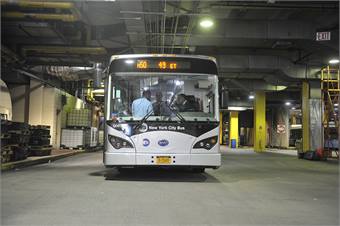
MTAPhotos/ Marc Hermann
The current version of the bus has a stated operating range of 150 miles, according to manufacturer, BYD. The bus features a new battery technology of iron phosphate which promises to be more rugged. The idea that sparks the electric bus is a promise of a quieter, more energy efficient and cleaner bus with absolutely zero emissions.
This continues the recent testing of all-electric buses for New York City Transit, initiated with the testing of a bus from Complete Coachworks earlier this year. Although all-electric buses may not be practical for every type of operation, with these tests the agency hope to prove their practicality and efficiency for certain Manhattan routes.
RELATED: "Electric buses make strong showing at BusCon."
More Bus
Report: Transit Bus Manufacturing Supports 34,100 Jobs, $5.1B in GDP
The “Buses Mean Business” report examines the transit bus manufacturing industry’s economic footprint, supply chain, and rising demand for vehicle replacements.
Read More →
Biz Briefs: New Flyer Delivers in Columbus, Houston, Beep and Freebee Merge, and More
In this edition of Biz Briefs, we spotlight the latest developments shaping the future of mobility.
Read More →
People Movement: Dan Dipert Coaches Adds Third-Generation Leader, Keolis Names New Valley Metro VP/GM, and More
In this edition, we also cover recent appointments and announcements at the Wabtec, SilverRide, HNTB, and more, showcasing the individuals helping to shape the future of transportation.
Read More →
New York MTA Plans Largest Bus Fleet Upgrade in More Than a Decade
The agency is seeking manufacturers for 650 new CNG buses to replace aging vehicles, improve reliability, and advance its broader fleet modernization strategy.
Read More →
Building a Flexible Path to Transit Electrification
John Hroncich discusses BAE Systems’ modular and scalable approach, lessons learned from decades of real-world operations, and how agencies can identify electrification strategies that fit their fleets.
Read More →
Bus Tech Talk: Keeping Transit Technicians Ahead of the Technology Curve
LA Metro’s Obed Mejia discusses technician training, evolving maintenance technology, fleet replacement, and strategies for getting the most out of today’s transit fleets.
Read More →
Biz Briefs: RIPTA Unveils New Frontrunners, Clevland RTA Adds New Siemens, and More
In METRO's latest installment, we take a look at recent news from Siemens, Prevost, Dodge, and more partnerships making headlines across the transportation sector.
Read More →
People Movement: Holly Arnold Joins Transdev and More
In this edition, we also cover recent appointments and announcements at Pace, CamTran, MCI, and more, showcasing the individuals helping to shape the future of transportation.
Read More →
The High Cost of Transit Buses: Industry Leaders Look to Procurement Reform
Transit leaders and policymakers examine how standardized bus designs, streamlined procurement, and predictable funding could help agencies stretch budgets and deliver better service.
Read More →
The Business Voice Behind Public Transportation
As chair of APTA’s Business Members Board of Governors, Ray Melleady explains how more than 850 business members are partnering with transit agencies to advance funding, innovation, and industry-wide collaboration.
Read More →