




Read More: New York MTA Activates Bus Lane Enforcement Cameras
New York MTA Launches E-Hail Expansion
E-Hail is an on-demand service that offers Access-A-Ride (AAR) customers the opportunity to book trips in real-time through existing taxi or for-hire vehicle service.
June 27, 2023
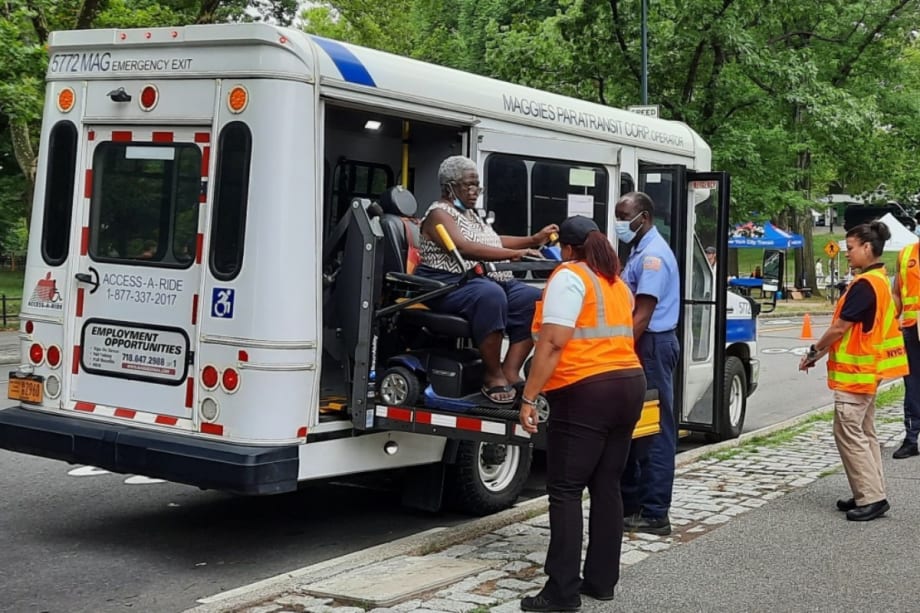
The next phase of this program is set to run through February 2024 and could be extended through August 2024 after a six-month review.
Photo: MTA
4 min to read
The Metropolitan Transportation Authority (MTA) announced an expansion of the E-Hail pilot, tripling its participants to 3,600 paratransit customers beginning August 2023.
What is MTA's E-Hail?
E-Hail is an on-demand service that offers Access-A-Ride (AAR) customers the opportunity to book trips in real-time through existing taxi or for-hire vehicle service.
The next phase of this program is set to run through February 2024 and could be extended through August 2024 after a six-month review.
This expansion will be launched with a larger, more representative sample of Access-A-Ride customers with a $4 co-pay and has two programs: one with a greater per-trip subsidy, the Distance option, and the other with a greater number of subsidized trips per month, the High- Volume option.
The distance-based program will provide up to 25 trips a month for up to $40 each and the high volume-based program will provide up to 40 trips a month for up to $25 each.
Customers can travel further than their allocation of $25 or $40 and pay the balance of the trip cost.
The customer co-pay for each program is $4 and will be fully applied to the cost of the trip, allowing customers to take a $29 trip or $44 trip before paying any additional cost.
E-Hail trips will be provided by Uber, Arro, Corporate Transportation Group (CTG), and the Drivers Cooperative, with the potential for one or two more on-demand providers to be brought on soon.
“We recognize the convenience greater flexibility in scheduling trips provides for Access-A-Ride customers,” said NYC Transit President Richard Davey. “We established the goal to make improvements to the E-Hail program in the Faster, Cleaner, Safer plan and this next step will allow us to further evaluate how we can offer alternative options to Access-A-Ride customers to improve the paratransit experience.”
Next Phase for E-Hail
The parameters set for the second phase are based on the findings from Phase 1 and structured comparably to on-demand paratransit services from agencies across the country making this a more fiscally sustainable pilot.
The trip and subsidy allocations will impact a minority of Phase 1 participants, with only 14% of participants having taken 40 or more trips per month on average in spring 2023 and 22% having taken 25 trips or more.
By establishing a set number of trips per month and MTA subsidy per trip, the Authority is able to expand the benefits of E-Hail to 2,400 additional customers, with an adjusted budget of $17.6 million for the E-Hail pilot, compared to the estimated $16 million allocated in the first phase.
Additionally, the majority of Phase 1 participants will continue to benefit from the on-demand service with little to no modification in their travel patterns. Phase 1 participants will be assigned to a program based on their travel patterns in the first phase.
Participants in the E-Hail pilot will continue to have access to the standard Access-A-Ride service, which has no limit on travel within the AAR service area at the current transit fare of $2.75.
The on-demand service is intended to serve as an additional option to traditional paratransit service, enhancing flexibility and spontaneity for customers.
This next phase of the E-Hail on-demand pilot aims to provide a more reliable forecast of the cost of expanding the E-Hail program and more detailed data for program evaluation through testing of a distance-based program and frequency-based program.
Phase 1 Findings
The E-Hail pilot originally launched in 2017 to 200 customers and expanded to 1,200 customers shortly thereafter, allowed paratransit customers to book rides on-demand through the app for $2.75 a trip with no limits on trips or cost.
The pilot was launched to explore how to provide additional, flexible transportation options for paratransit customers above and beyond what is federally mandated.
From Phase 1, the median number of trips per month was 17.5 and the median cost per trip was $40. Out of the 1,200 customers in the pilot, as many as 21 people took over 150 trips in one month, and the top 6% of participants used 50% of the pilot's budget.
More New Mobility

From Hardware to Digital Partner: Luminator Charts Its Next Chapter
CEO Magnus Friberg discusses Luminator’s shift toward becoming a digital partner, the growing importance of software and interoperability, and how AI can help agencies improve operations and passenger experience.
Read More →
Biz Briefs: Alstom Lands Canadian Contract, LYT to Supply California TSP, and More
In METRO's latest installment, we take a look at recent news from Complete Coach Works, Beep, FlixBus, and more partnerships making headlines across the transportation sector.
Read More →
CharterUP’s Armir Harris on Technology, AI, and the Future of Group Mobility
In a recent episode of METROspectives, CharterUP Founder/CEO Armir Harris discussed the company’s evolution from an online charter bus marketplace into a technology platform supporting public- and private-sector mobility and much more.
Read More →
Jacksonville’s NAVI Project Charts a New Course for Autonomous Public Transportation
Through its NAVI program, JTA is showing how autonomous vehicles, intelligent infrastructure, and coordinated operations can work together to deliver everyday public transportation.
Read More →
Biz Briefs: Luminator Marks Milestone and More
From manufacturers and suppliers to transit agencies and motorcoach operators, these updates offer a snapshot of the projects, partnerships and business moves driving the industry forward.
Read More →
New Tricks for Old Bureaucracies: Joshua Schank on Making Transit Innovation Stick
Former LA Metro Chief Innovation Officer Joshua Schank discusses why good ideas aren't enough, how transit agencies can overcome resistance to change, and why today's challenges demand more innovation.
Read More →
How DART's GoPass Is Redefining Regional Mobility
Serving 14 transit agencies, GoPass simplifies multimodal travel by allowing riders to plan, pay for, and manage an entire trip through one app.
Read More →
Biz Briefs: OCTA Taps Clean Energy for Hydrogen Station, Stadler to Supply Via Rail Vehicles, and More
From manufacturers and suppliers to transit agencies and motorcoach operators, these updates offer a snapshot of the projects, partnerships and business moves driving the industry forward.
Read More →CharterUP Expands Into New Mobility and Autonomous Transportation
Vice President of New Mobility Stephen Joos discusses how CharterUP is leveraging its nationwide transportation network, technology platform, and autonomous vehicle partnerships to expand into workforce mobility, campus shuttles, and transit solutions.
Read More →
METRO Magazine Announces 2026 Innovative Solutions Awards Winners
Projects Recognized for Advancing Mobility Through Technology, Accessibility, Workforce Innovation, and Operational Excellence
Read More →