



New York MTA Names Criminal Justice Advocate
An experienced criminal attorney, Kathryn Falasca will work with law enforcement agencies, prosecutorial agencies, and community-based organizations to ensure offender accountability.

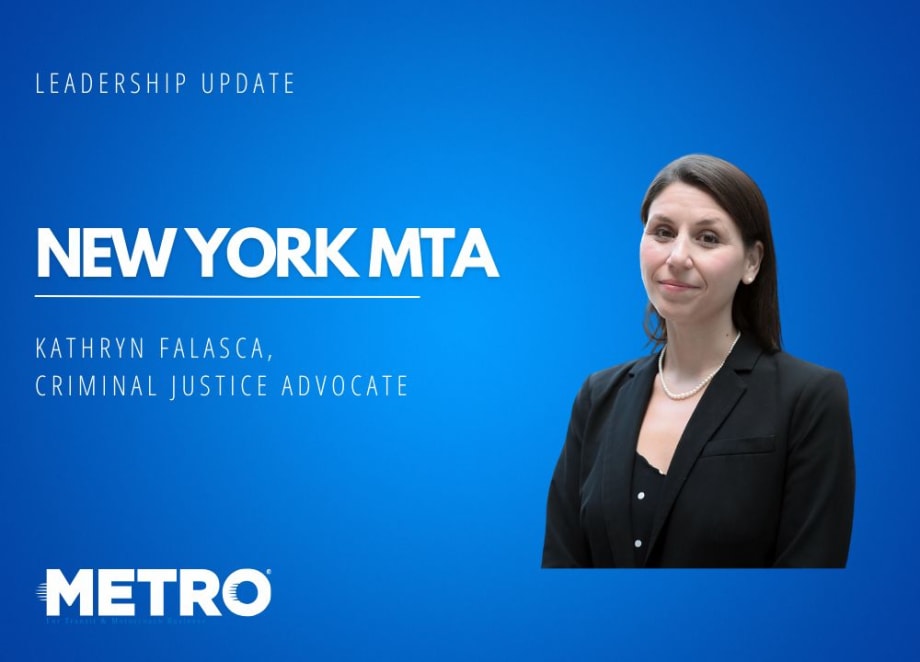
Kathryn Falasca’s appointment as criminal justice advocate comes as crime in the subway has steadily decreased year-over-year since the pandemic.
Photo: Marc A. Hermann
New York’s
(MTA) Chair/CEO Janno Lieber appointed Kathryn Falasca as the MTA’s first Criminal Justice Advocate.
An experienced criminal attorney, she will work with law enforcement agencies, prosecutorial agencies, and community-based organizations to ensure offender accountability through the strongest possible investigation and prosecution of those who commit crimes against MTA customers and employees.
Additionally, she will work to advocate and provide support for crime victims in the system.
“Our customers say they want to be safe and feel safe and keeping repeat offenders — who disproportionately commit much of the subway crime — out of transit is essential,” said Lieber. “Katie Falasca is the right person with the right background to work with the justice system on behalf of both riders and transit employees.”
Falasca’s History
Falasca most recently served as director, strategic initiatives bureau, at the New York City Police Department (NYPD), where she provided policy recommendations and oversaw projects to enhance prosecutions while working with city and state agencies, hospitals, and survivor groups to ensure that NYPD’s investigative practices were victim-centered and informed by the trauma experienced by survivors.
Prior to the Strategic Initiatives Bureau, she served as director and special counsel in NYPD’s Department Advocate Office, where she oversaw several projects related to members of service who were crime survivors. She began her career in public service as an asst. district attorney in the Bronx County District Attorney’s Office.
During her tenure there, she prosecuted hundreds of misdemeanor and felony cases, specializing in domestic violence, rape, arson, homicide, and other cases of heightened sensitivity. She has worked with the National Center for Victims of Crimes as well as the U.S. Department of Justice, Office for Victims of Crimes.
MTA Adding to Safety Measures
Falasca’s appointment as criminal justice advocate comes as crime in the subway has steadily decreased year-over-year since the pandemic.
The latest transit crime statistics from the NYPD show that major crimes decreased by 7.7% year-to-date through July 2024 in the subway system. July was the sixth consecutive month with a double-digit decrease in subway crime.
Last year, overall crime in the transit system fell nearly 3% compared to 2022, as the
increased by 14%. This year, transit crime was down 15.4% in February, 23.5% in March, 23% in April, 10.6% in May, and 15.3% in June, compared to the same months a year earlier.
More Security and Safety

Transit Agencies Highlight Safety Gains at National Summit
Leaders from 15 major transit systems shared crime-reduction results and safety initiatives while discussing the role of continued federal support.
Read More →
DART Launches Major Security, Fare Enforcement Initiative
The 90-day demonstration will deploy coordinated security teams at five light rail stations while testing controlled access and gathering data to guide future investments.
Read More →
RTD Launches NextRide App to Consolidate Trip Planning, Fares, Security Reporting
The app expands on RTD’s existing NextRide web application and allows customers to view real-time vehicle locations and service alerts, purchase and store digital fares, and access customer support.
Read More →

TAPTCO Updates OSHA Compliance Training for Transit Maintenance Operations
The revamped program addresses 26 OSHA standards for maintenance facilities, with TAPTCO pointing to training, documentation, and everyday shop hazards as continuing challenges for transit operations.
Read More →
How VaporVision Adds Value to Transit Door Systems
Wabtec engineers explain how the system improves doorway detection, strengthens diagnostics and gives transit agencies and OEMs greater operating flexibility.
Read More →
FRA Announces $5.3B in Rail Investments, Including $2B for Amtrak
Funding will support grade-crossing improvements, infrastructure upgrades, and new Amtrak equipment in 23 states.
Read More →
Chicago, Maryland Expand Non-Law-Enforcement Safety, Rider Support
The CTA and MTA are launching new programs aimed at de-escalation, crisis response, rider assistance, and greater transparency.
Read More →
LA Metro, City of West Hollywood, and Partners Advance Smarter Bus Lane Enforcement
The award-winning partnership combines AI-powered detection with human oversight to improve bus reliability, accessibility, and enforcement efficiency.
Read More →
LA Metro Reports 57% Decline in Homelessness on Transit System Since 2024
The agency's latest homelessness count offers new data on how care-based services and cross-sector partnerships can complement traditional transit security strategies.
Read More →
FTA Launches 'Transit Moves America' Dashboard to Highlight Agency Safety and Performance
The online dashboard transforms National Transit Database information into a public-facing resource that allows users to compare transit agencies on key operational and safety metrics.
Read More →