




RELATED: Lhota unveils NYC subway action plan
New York MTA unveils customer-focused subway performance dashboard
In developing the new metrics dashboard in-house, New York City Transit reviewed global standards for publicly reported performance data and opted to surpass those standards in the interest of increased transparency.
October 3, 2017
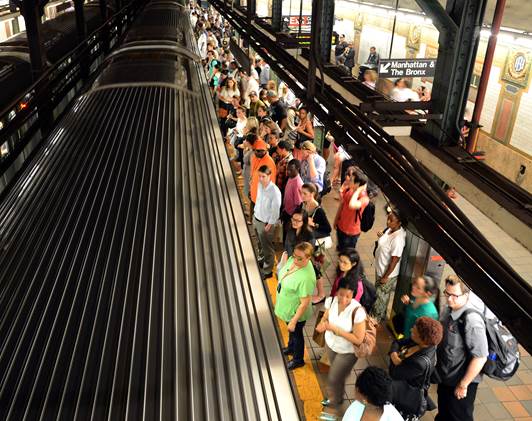
The new performance dashboard provides more data than ever in a dynamic, user-friendly interface that shows analytical information, such as customer wait times, subway car performance, and station environment standards, from a computer at any time.
MTA/Marc Hermann
3 min to read
The new performance dashboard provides more data than ever in a dynamic, user-friendly interface that shows analytical information, such as customer wait times, subway car performance, and station environment standards, from a computer at any time.
MTA/Marc Hermann
New York’s Metropolitan Transportation Authority launched a new online dashboard providing customer-focused, detailed performance metrics across the subway system as part of New York City Transit’s Subway Action Plan to improve service and make communication more clear and transparent for the millions of customers who travel on the subways daily.
MTA Chairman Joseph Lhota announced the creation of a new subway performance metrics dashboard for the riding public in July 2017, when he unveiled the multi-phase Subway Action Plan to stabilize the century-old subway system. The new performance dashboard provides more data than ever in a dynamic, user-friendly interface that shows analytical information, such as customer wait times, subway car performance, and station environment standards, from a computer at any time.
In developing the new metrics dashboard in-house, New York City Transit reviewed global standards for publicly reported performance data and opted to surpass those standards in the interest of increased transparency. While many transit systems around the world continue to report performance based on antiquated metrics that apply to freight and commuter railroads, such as terminal on-time performance, New York City Transit’s new performance dashboard provides data that paints a clearer picture of the customer’s commuting experience down to the subway line or the class of cars used on a subway line. Other transit systems, such as Transport for London, publicly report data such as journey times based on computer models. NYC Transit uses data culled from actual MetroCard entries and actual operations data to provide meaningful analyses of travel times and customer experiences.
“We have been working hard to implement our new Subway Action Plan by increasing maintenance and adding crews to respond quickly to emergencies that can severely affect service. We have been able to respond to those problems quicker than ever, sometimes restoring service in half the time or less than we could have done just a few years ago, and even though the plan has only been in effect for two months we are already seeing results,” said MTA Chairman Joseph Lhota. “With this new subway performance dashboard, we are continuing to hold ourselves accountable to the promises we made in July by letting our customers see for themselves when and where those improvements are happening.”
Metrics such as train capacity, customer wait time, train travel time and station environment altogether show the entirety of the customers’ experience from their home subway station, on the platform, traveling on the train, all the way to their final destination.
“The MTA’s new metrics are a significant step forward improving the way they measure and monitor subway service from the customer point of view,” said Alex Barron, head of Metro Benchmarking and associate director at the Railway and Transport Strategy Centre (RTSC) at Imperial College. “They are in line with the best measures in use across the globe, and the MTA should be commended for finding ways to use new technology and data sources to better measure the customer experience. Based on our experience working with the global Community of Metros (CoMET), we believe that these metrics should be adopted.”
More Management

METRO Opens Submissions for 2026 Motorcoach Awards
Nominations are now being accepted for METRO Magazine’s Operator of the Year and Innovative Operator of the Year awards.
Read More →
New York MTA Advances Final Contract for Second Avenue Subway Expansion
Contract Four is the largest in the Second Avenue Subway Phase 2 project and includes construction of station infrastructure, tracks, and signals for the subway expansion, MTA officials said. Work on Contract Four will begin in 2027.
Read More →
Transit Agencies Highlight Safety Gains at National Summit
Leaders from 15 major transit systems shared crime-reduction results and safety initiatives while discussing the role of continued federal support.
Read More →

NITA Names New Leadership, Expands Reduced-Fare Program at First Board Meeting
The new regional transit authority appointed its first board chair and interim executive director while extending reduced fares across CTA, Metra, and Pace for eligible riders.
Read More →
Beyond the Checklist: A Structured Approach to Transit Maintenance
Reliability-Centered Maintenance helps transit agencies move beyond routine checklists to focus limited resources on the assets and failures that have the greatest impact on safety, reliability, and service.
Read More →
APTA 2026 Nominating Committee Selects Leadership Slate, Names Chair and Vice Chair Nominees
Leadership changes will help shape the association’s priorities and its representation of the transportation industry during the 2026–2027 term.
Read More →
DART Launches Major Security, Fare Enforcement Initiative
The 90-day demonstration will deploy coordinated security teams at five light rail stations while testing controlled access and gathering data to guide future investments.
Read More →
Sponsored•September 9, 2026
Advancing Fare Collection Through Technology and Innovation
Learn about delivering 1300 gates at 91 stations while managing fare evasion. Explore the large scale deployment, solution customization and real-world results that affect the region. Prepare for deployment in your region now.
Read More →
Game Day in Motion: Moving Millions During the 2026 World Cup
Between packed transit stations and team motorcoaches, see how agencies and operators across North America tackled the transportation demands of the 2026 FIFA World Cup.
Read More →
Surface Transportation Extension Averts Shutdown, Leaves Transit Funding Gap
The stopgap keeps federal transportation programs moving, but missing advance funding could complicate the transit and rail projects agencies are planning next.
Read More →