




Keep Reading: The Benefits of Rethinking Resilient Infrastructure for Transit
NFI 2024 Sustainability Report Highlights Zero-Emission Growth and Community Impact
The report details NFI’s strides in clean transportation, workforce development, and community programs shaping a sustainable future.
August 13, 2025
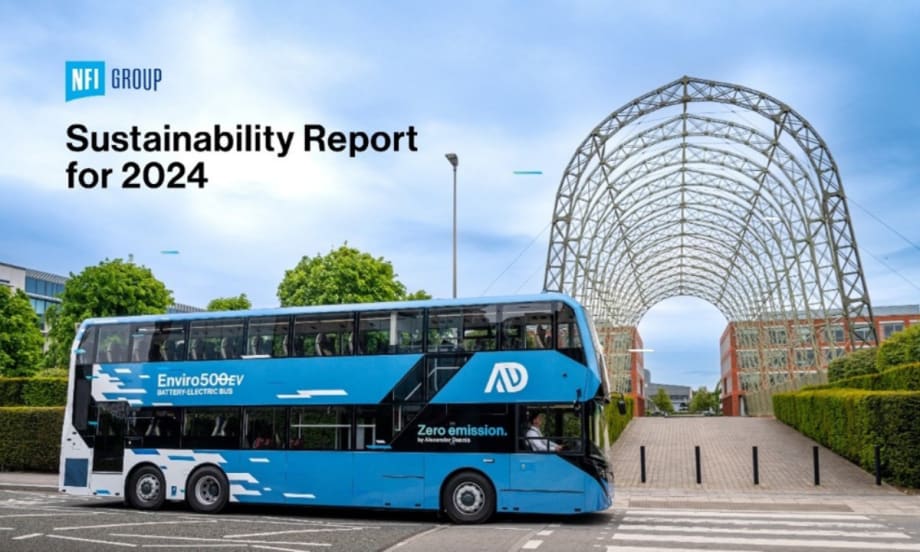
NFI’s Sustainability Report highlights its pledge to deliver better products, workplaces, and community impact worldwide.
Photo: NFI Group Inc.
2 min to read
NFI Group Inc. recently released its Sustainability Report for 2024, which offers an annual summary of its products and operations, including highlights of its sustainability initiatives, evolving priorities, and areas of impact.
The report focuses on the three main components of NFI’s Sustainability Pledge, “A Better Product. A Better Workplace. A Better World,” which guides the company’s daily actions, long-term planning, and drives ongoing improvement.
A Better Product: In 2024, NFI expanded its low- to zero-emission product and services portfolio, received a record number of new orders, and delivered its highest number of zero-emission buses (ZEBs), accounting for 23% of total deliveries.
A Better Workplace: In 2024, NFI expanded its Community Benefits Framework across all subsidiaries to guide hiring and workforce development efforts, while facilitating programs focused on unique community needs. The company also invested $12.9 million and over 365,000 hours in NFI team member career development in 2024.
A Better World: NFI contributed to community well-being through company and employee-led programs, and in 2024, NFI continued to build on its partnership with United Way agencies, supporting 21 communities across North America.
“At NFI, sustainability is more than a core value — it’s a guiding principle that shapes how we operate across our value chain,” said Janice Harper, executive VP of people and culture. “In 2024, our team took important steps in our sustainability journey by working to strengthen environmental practices, support social initiatives, and enhance system resilience. We’re proud to share these efforts in the seventh edition of our annual Sustainability Report.”
Report Consults Stakeholder Engagement and Performance Metrics
To develop this report, NFI consulted with a broad range of internal and external stakeholders on regional and global levels, including key internal departments, customers, suppliers, investors, creditors, and community partners, to present a clear and balanced disclosure of NFI’s sustainability activities and performance identified as most relevant to NFI and its stakeholders.
“Sustainability is a strategic driver of our performance and long-term growth. By continuously improving how we innovate, operate, and engage across our value chain, we aim to strengthen our business and contribute meaningful value to our people, our communities, and the environment,” said Paul Soubry, president and chief executive officer at NFI. “Our purpose is to move people, and that begins with prioritizing the safety, health, and success of our team to deliver dependable, high-quality products and services.”
According to a company release, this report has been reviewed and published with the approval of NFI’s senior executives, NFI’s Sustainability Council, and the Board of Directors. The performance data within has been validated by internal management and is for certain jurisdictional regulatory authorities in the form required by such authorities.
More Management

METRO Opens Submissions for 2026 Motorcoach Awards
Nominations are now being accepted for METRO Magazine’s Operator of the Year and Innovative Operator of the Year awards.
Read More →
New York MTA Advances Final Contract for Second Avenue Subway Expansion
Contract Four is the largest in the Second Avenue Subway Phase 2 project and includes construction of station infrastructure, tracks, and signals for the subway expansion, MTA officials said. Work on Contract Four will begin in 2027.
Read More →
Transit Agencies Highlight Safety Gains at National Summit
Leaders from 15 major transit systems shared crime-reduction results and safety initiatives while discussing the role of continued federal support.
Read More →

NITA Names New Leadership, Expands Reduced-Fare Program at First Board Meeting
The new regional transit authority appointed its first board chair and interim executive director while extending reduced fares across CTA, Metra, and Pace for eligible riders.
Read More →
Beyond the Checklist: A Structured Approach to Transit Maintenance
Reliability-Centered Maintenance helps transit agencies move beyond routine checklists to focus limited resources on the assets and failures that have the greatest impact on safety, reliability, and service.
Read More →
APTA 2026 Nominating Committee Selects Leadership Slate, Names Chair and Vice Chair Nominees
Leadership changes will help shape the association’s priorities and its representation of the transportation industry during the 2026–2027 term.
Read More →
DART Launches Major Security, Fare Enforcement Initiative
The 90-day demonstration will deploy coordinated security teams at five light rail stations while testing controlled access and gathering data to guide future investments.
Read More →
Sponsored•September 9, 2026
Advancing Fare Collection Through Technology and Innovation
Learn about delivering 1300 gates at 91 stations while managing fare evasion. Explore the large scale deployment, solution customization and real-world results that affect the region. Prepare for deployment in your region now.
Read More →
Game Day in Motion: Moving Millions During the 2026 World Cup
Between packed transit stations and team motorcoaches, see how agencies and operators across North America tackled the transportation demands of the 2026 FIFA World Cup.
Read More →
Surface Transportation Extension Averts Shutdown, Leaves Transit Funding Gap
The stopgap keeps federal transportation programs moving, but missing advance funding could complicate the transit and rail projects agencies are planning next.
Read More →