



NTSB completes Las Vegas autonomous shuttle crash investigation
There were no injuries to the seven passengers and one attendant aboard the shuttle or to the driver of the truck.

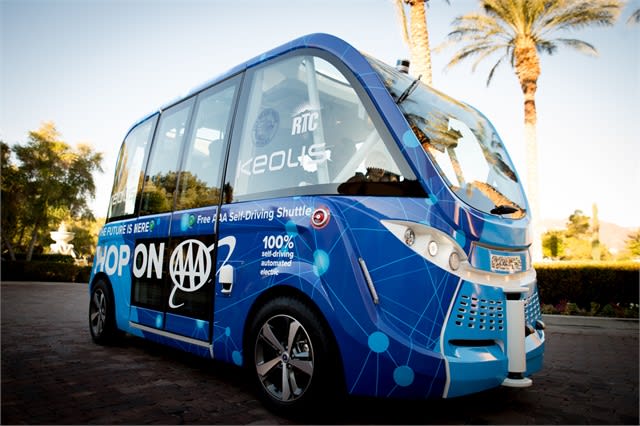
The shuttle was equipped with numerous sensing devices that provided a 360-degree view of the environment with hazard detection capabilities.
Keolis
The shuttle was equipped with numerous sensing devices that provided a 360-degree view of the environment with hazard detection capabilities.
Keolis
The National Transportation Safety Board released Highway Accident Brief 19/06, detailing the agency’s investigation of the Nov. 8, 2017, minor collision between a commercial truck and an autonomous shuttle in Las Vegas.
The truck driver’s actions and the autonomous vehicle attendant’s lack of easy access to a manual controller are cited in the probable cause for the collision. There were no injuries to the seven passengers and one attendant aboard the shuttle or to the driver of the truck. The accident caused minor damage to the lower left front of the shuttle’s body and a minor abrasion to the truck’s tire.
“The NTSB would normally not investigate a minor collision, but the involvement of a highly automated vehicle warranted having our investigators examine the circumstances surrounding the collision,” said Kris Poland, deputy director of the NTSB’s Office of Highway Safety. “We wanted to examine the process of introducing an autonomous shuttle onto public roads as well as the role of the operator, the vehicle manufacturer, and the city. The NTSB also examined the technology and the safety considerations that were in place at that time.”
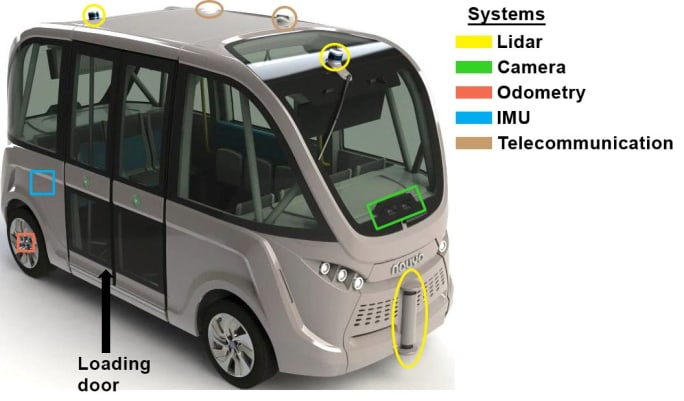
(Detailed in this graphic are the locations of external sensors and communication devices that guided the autonomous vehicle involved in the Nov. 8, 2017, collision in Las Vegas. NTSB graphic adapted from Navya’s owner’s manual)
The autonomous shuttle was a two-axle, battery-powered, test vehicle designed primarily for autonomous operation and therefore did not have a steering wheel, brake pedal, or accelerator pedal. The shuttle allowed for manual operation using a hand-held controller. The shuttle could operate autonomously only on a predetermined route that had been fully mapped. The route was planned by Keolis, Navya, and AAA with input from the city. Navya and Keolis had the required state and federal approval to test autonomous shuttle operations on public roads.
The collision happened after the shuttle turned from Carson Avenue onto South 6th Street, where the truck was backing into an alley. The truck driver said he saw the shuttle turn onto 6th Street and assumed it would stop a “reasonable” distance from the truck. According to Navya’s incident report, the shuttle’s sensor system detected the truck at 147.6 feet and tracked it continuously as it backed up. Programmed to stop 9.8 feet from any obstacle, the shuttle began to decelerate when it was 98.4 feet from the truck. When the shuttle was 10.2 feet from the truck and nearly stopped, the attendant pressed one of the emergency stop buttons. The attendant and passengers waved to gain the truck driver’s attention but 11 seconds after the shuttle stopped, the right front tire of the slow-moving truck struck the shuttle.
The shuttle was equipped with numerous sensing devices that provided a 360-degree view of the environment with hazard detection capabilities. Some of the sensing devices included eight light detection and ranging (lidar) sensors, two stereoscopic cameras, and a differential global positioning system.
The shuttle was also equipped with a dedicated short-range communication system and a long-term evolution antenna that communicated with traffic signals along the route. Navya could monitor the shuttle’s performance in real time from its control center in Lyon, France. The shuttle was equipped with a Lytx DriveCam monitoring and recording device that tracked driving metrics and recorded telematic and visual information triggered by critical events.
Prior to the collision the hand-held controller for manual operation was stored in an enclosed space at one end of the passenger compartment and the attendant did not retrieve the controller during the event. Since the accident, Keolis implemented a new policy to make the controller more accessible, allowing attendants to remove the controller from storage at the start of a trip and keep the controller available throughout a trip.
The full highway accident brief is available here.
More Security and Safety

Transit Agencies Highlight Safety Gains at National Summit
Leaders from 15 major transit systems shared crime-reduction results and safety initiatives while discussing the role of continued federal support.
Read More →
DART Launches Major Security, Fare Enforcement Initiative
The 90-day demonstration will deploy coordinated security teams at five light rail stations while testing controlled access and gathering data to guide future investments.
Read More →
RTD Launches NextRide App to Consolidate Trip Planning, Fares, Security Reporting
The app expands on RTD’s existing NextRide web application and allows customers to view real-time vehicle locations and service alerts, purchase and store digital fares, and access customer support.
Read More →
TAPTCO Updates OSHA Compliance Training for Transit Maintenance Operations
The revamped program addresses 26 OSHA standards for maintenance facilities, with TAPTCO pointing to training, documentation, and everyday shop hazards as continuing challenges for transit operations.
Read More →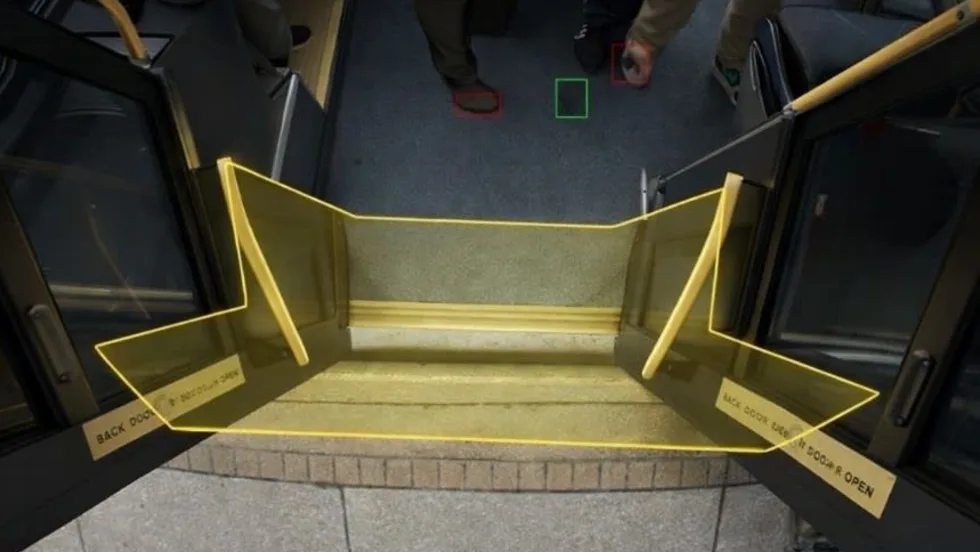
How VaporVision Adds Value to Transit Door Systems
Wabtec engineers explain how the system improves doorway detection, strengthens diagnostics and gives transit agencies and OEMs greater operating flexibility.
Read More →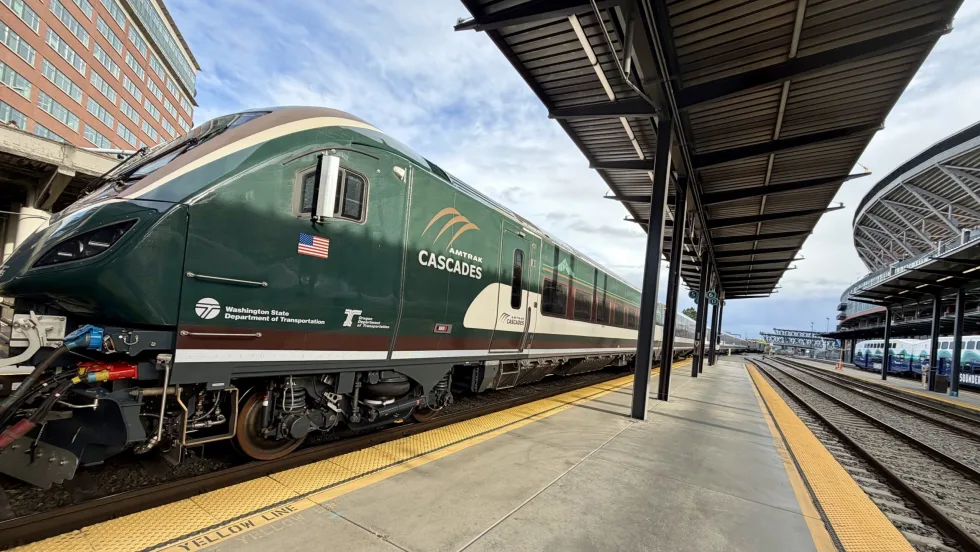
FRA Announces $5.3B in Rail Investments, Including $2B for Amtrak
Funding will support grade-crossing improvements, infrastructure upgrades, and new Amtrak equipment in 23 states.
Read More →
Chicago, Maryland Expand Non-Law-Enforcement Safety, Rider Support
The CTA and MTA are launching new programs aimed at de-escalation, crisis response, rider assistance, and greater transparency.
Read More →
LA Metro, City of West Hollywood, and Partners Advance Smarter Bus Lane Enforcement
The award-winning partnership combines AI-powered detection with human oversight to improve bus reliability, accessibility, and enforcement efficiency.
Read More →
LA Metro Reports 57% Decline in Homelessness on Transit System Since 2024
The agency's latest homelessness count offers new data on how care-based services and cross-sector partnerships can complement traditional transit security strategies.
Read More →
FTA Launches 'Transit Moves America' Dashboard to Highlight Agency Safety and Performance
The online dashboard transforms National Transit Database information into a public-facing resource that allows users to compare transit agencies on key operational and safety metrics.
Read More →