



NTSB Issues Safety Alert Warning of Wheel Movement on Rail Transit Trains, Commuter Railroads
Safety Alert 083 “Passenger Railcar Wheelset Alert” urges transit agencies and commuter railroads to address a condition in which wheels on certain railcars in the Washington Metro system moved outward from their mounted position on the axle.

The National Transportation Safety Board (NTSB) issued a Safety Alert calling on rail transit agencies and commuter railroads across the nation to assess its fleets for wheelsets that do not meet gage specifications and to take immediate action to correct the problem.
Safety Alert 083 “Passenger Railcar Wheelset Alert” urges transit agencies and commuter railroads to address a condition in which wheels on certain railcars in the Washington Metro system moved outward from their mounted position on the axle.
“The Safety Alert identifies the issue of wheelset movement on transit railcars and commuter railroads as a serious problem that has the potential to create a catastrophic event,” said Robert Hall, director, Office of Railroad, Pipeline, and Hazardous Materials Investigations. “As we continue to conduct the investigation of this derailment, it is imperative that the safety issues identified are addressed immediately to protect the American public traveling daily on our transit system.”
An out-of-specification wheelset is not easily identifiable with a routine visual inspection, consequently, the condition could exist on wheel and axle assemblies of other transit or commuter railcars, NTSB noted.
The wheelset movement issue was identified during NTSB’s ongoing investigation of the Oct. 12 derailment involving a WMATA train traveling southbound on Metro’s Blue line between the Rosslyn and Arlington Cemetery stations in Arlington, Virginia. Of the 187 passengers onboard, one passenger was transported to the hospital for treatment.
In the preliminary report also issued Wednesday on the Oct. 12 accident, NTSB investigators said the train had departed the Rosslyn station when one wheelset on the fourth car of the train, car 7200, derailed. After it derailed, the train traveled about 1,800 feet before stopping in the tunnel. All railcars remained upright and inline.

This graphic illustration shows the map of the WMATA blue and silver lines and marks the locations where car 7200 derailed.
NTSB
A preliminary review of data from an onboard event recorder revealed the train speed was about 33 mph at the time of the derailment. Based on physical evidence and station video review, between the Arlington Cemetery and Rosslyn stations, one of car 7200’s wheelsets derailed and rerailed while moving through a pair of switches. The train continued traveling toward the Largo Town Center station. NTSB found that when the train departed the Largo Town Center station, the same wheelset on car 7200 derailed and rerailed again while moving through a pair of switches, and the train continued inbound through Washington, D.C., toward Arlington, Va., where the accident occurred.
The NTSB investigation is ongoing. Additional investigative activities will focus on failure analysis of the wheelsets, evaluation of the response from rail traffic controllers, internal and external oversight of the WMATA system, and identification of similar wheelset issues on passenger railcars.
Safety Alert 083 is available online here.
The NTSB preliminary report is available here.
More Security and Safety

Transit Agencies Highlight Safety Gains at National Summit
Leaders from 15 major transit systems shared crime-reduction results and safety initiatives while discussing the role of continued federal support.
Read More →
DART Launches Major Security, Fare Enforcement Initiative
The 90-day demonstration will deploy coordinated security teams at five light rail stations while testing controlled access and gathering data to guide future investments.
Read More →
RTD Launches NextRide App to Consolidate Trip Planning, Fares, Security Reporting
The app expands on RTD’s existing NextRide web application and allows customers to view real-time vehicle locations and service alerts, purchase and store digital fares, and access customer support.
Read More →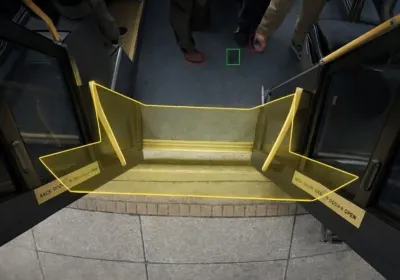
TAPTCO Updates OSHA Compliance Training for Transit Maintenance Operations
The revamped program addresses 26 OSHA standards for maintenance facilities, with TAPTCO pointing to training, documentation, and everyday shop hazards as continuing challenges for transit operations.
Read More →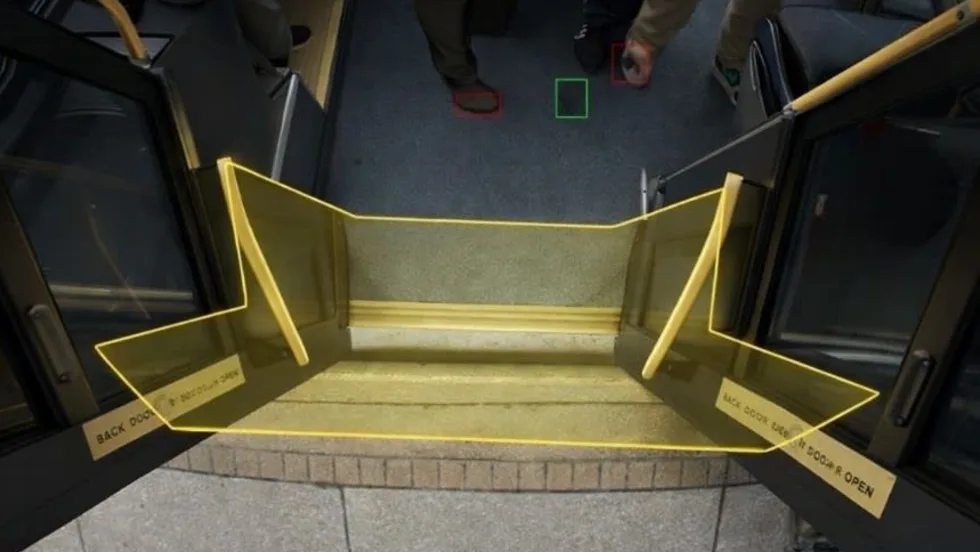
How VaporVision Adds Value to Transit Door Systems
Wabtec engineers explain how the system improves doorway detection, strengthens diagnostics and gives transit agencies and OEMs greater operating flexibility.
Read More →
FRA Announces $5.3B in Rail Investments, Including $2B for Amtrak
Funding will support grade-crossing improvements, infrastructure upgrades, and new Amtrak equipment in 23 states.
Read More →
Chicago, Maryland Expand Non-Law-Enforcement Safety, Rider Support
The CTA and MTA are launching new programs aimed at de-escalation, crisis response, rider assistance, and greater transparency.
Read More →
LA Metro, City of West Hollywood, and Partners Advance Smarter Bus Lane Enforcement
The award-winning partnership combines AI-powered detection with human oversight to improve bus reliability, accessibility, and enforcement efficiency.
Read More →
LA Metro Reports 57% Decline in Homelessness on Transit System Since 2024
The agency's latest homelessness count offers new data on how care-based services and cross-sector partnerships can complement traditional transit security strategies.
Read More →
FTA Launches 'Transit Moves America' Dashboard to Highlight Agency Safety and Performance
The online dashboard transforms National Transit Database information into a public-facing resource that allows users to compare transit agencies on key operational and safety metrics.
Read More →