




Related: $27B, 5-year NY MTA capital program gets final approval
NY Gov. unveils new subway car design, plan for enhanced stations
The MTA is using design-build contracts to expedite the process and ensure the shortest timeframe for project completion. These vital investments are part of the $27 billion, five-year MTA Capital Program to renew and expand the MTA network.
July 19, 2016
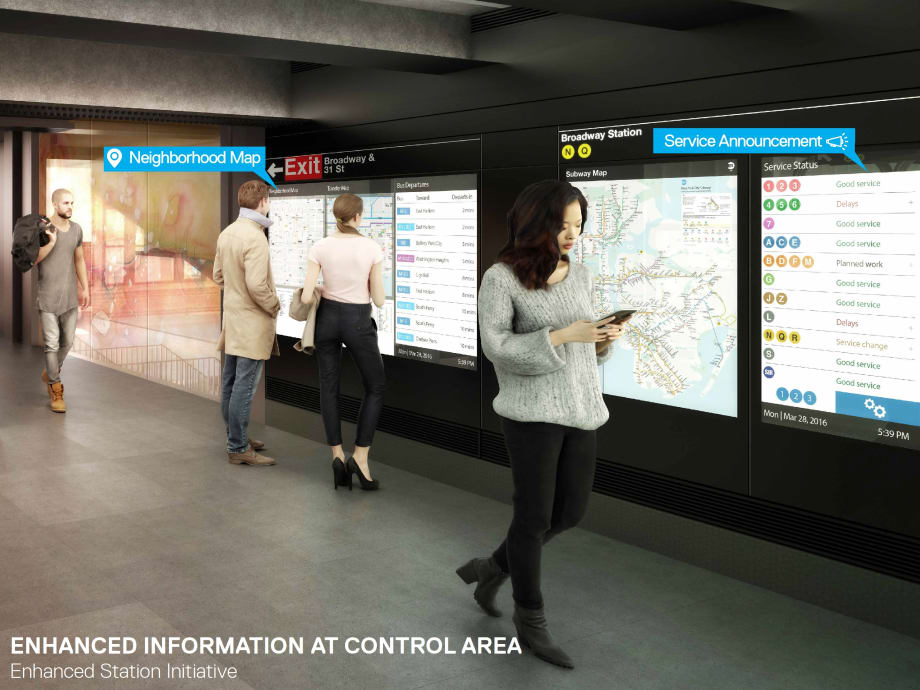
All renderings courtesy NY MTA.
4 min to read
All renderings courtesy NY MTA.
New York Gov. Andrew M. Cuomo unveiled the design features of 1,025 new and reimagined subway cars — including vital enhancements to the exteriors and interiors of regular cars, wider doors, as well as the addition of up to 750 “Open Car End” designed-cars, which will reduce wait times and increase capacity.
The Governor also previewed key elements that will be featured in the renovation of 31 subway stations throughout the New York Metropolitan Area and announced that the first of several Requests for Proposals will be issued this week. The MTA is using design-build contracts to expedite the process and ensure the shortest timeframe for project completion. These vital investments are part of the $27 billion, five-year MTA Capital Program to renew and expand the MTA network.
“New York deserves a world-class transportation network, worthy of its role as the heartbeat of the 21st century economy,” Gov. Cuomo said. “The MTA design team developed a bold and visionary reimagining of the quintessential commuter experience; incorporating best practices from global transit systems; and focusing on our core mission to renew, enhance and expand. We are going to do more than renovate — we are bringing subway stations to a higher standard than ever before, and the new vision for subway cars will increase capacity and reduce overcrowding and delays.”
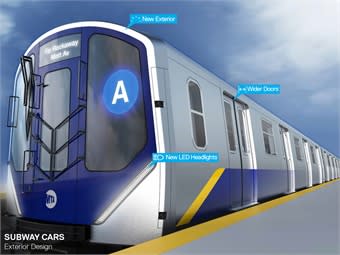
Reimagined and Enhanced Subway Cars
Later this week, the MTA will issue an RFP for the construction of 1,025 new subway cars, which will highlight that the timeline of design and production, as well as cost-effectiveness, will be central factors in awarding the contract.
The RFP will also emphasize the need to align with MTA design guidelines, which were established after a review of best practices in a number of major metropolitan areas from around the world, and identified several key elements for use in the New York system, including:
Open Car End Design: The MTA anticipates that out of 1,025 new cars, up to 750 will feature an Open Car End designed. The Open Car End design replaces the door between cars with an accordion-like connector in order to create longer, open spaces, allowing for greater passenger flow movement and increasing capacity in the process. These cars have become an international standard: in London 31% of cars will be Open Car End by the end of the year; in Paris the figure climbs to 37%; and in Toronto to 56%.
Wider Doors: The door width of the new cars will be expanded from the current MTA standard of 50 inches to 58 inches. Wider subway doors can reduce delays by allowing customers to enter and exit more quickly and have become an international standard. According to a computer simulation of passenger flow conducted on behalf of the MTA, in crowded scenarios wider doors can reduce a train’s “dwell time” in the station by 32%.
Customer Amenities & Security: The interior of new cars will also feature a host of new amenities, including Wi-Fi, USB chargers, full color digital customer information displays, digital advertisements, illuminated door opening alerts and security cameras to promote passenger safety.
Exterior Features: Design elements for the exterior of the new subway cars include a new blue front with large windows, LED headlights, and a blue stripe with gold accents along the sides.
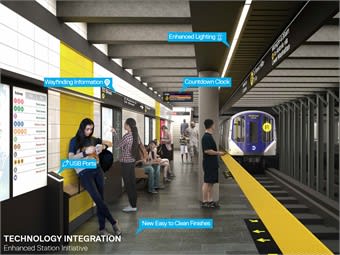
Improved Subway Stations
The announcement highlighted key elements of the Governor’s initiative to create a new and improved design standard for subway stations and undertake extensive renovations at 31 stations from across the five boroughs. The 31 stations included in the program build upon a larger campaign, designed to improve the customer experience and includes component and renewal work at more than 170 other stations.
Design elements include:
Enhanced lighting throughout the stations.
Improved signage to make it easier for customers to navigate stations, including digital, real-time updates on on-time performance at subway entrances before customers even enter the station.
Inclusion of amenities, such as count down clocks, improved cellular connectivity, Wi-Fi and new art.
Renovations will also consider the architectural legacy of each station and remain sensitive to historical elements as the stations undergo redesign.
The MTA will issue an RFP for the first package of three stations located in Brooklyn later this week. RFPs for the remainder of the 31 stations will be released over the next 12 months and will be distributed across the five boroughs. The first contract is expected to be awarded in the fall. Station closures will be limited to a six-month period.
More Rail

New York MTA Advances Final Contract for Second Avenue Subway Expansion
Contract Four is the largest in the Second Avenue Subway Phase 2 project and includes construction of station infrastructure, tracks, and signals for the subway expansion, MTA officials said. Work on Contract Four will begin in 2027.
Read More →
San Diego MTS Breaks Monthly Trolley Ridership Record
Agency officials said July’s ridership indicates MTS’s continued recovery from the pandemic.
Read More →
Report Examines NJ TRANSIT Reliability, Funding Challenges
The Garden State Initiative analysis examines the roles of Amtrak infrastructure, fleet management, and agency operations while recommending a more performance-based approach to improving reliability.
Read More →
Stadler, CapMetro Sign Long-Term Rail Fleet Support Agreement
Beginning in 2027, Stadler will provide on-site technical expertise, spare parts support, training, and obsolescence management to help extend the reliability and longevity of CapMetro’s GTW fleet.
Read More →
Biz Briefs: Alstom Lands Canadian Contract, LYT to Supply California TSP, and More
In METRO's latest installment, we take a look at recent news from Complete Coach Works, Beep, FlixBus, and more partnerships making headlines across the transportation sector.
Read More →
CATS Gold Line Marks 5 Years of Service, 2.8M Passenger Trips
With a six-mile expansion planned, the Charlotte streetcar is positioned to connect more neighborhoods and major transit hubs across the region.
Read More →
Why Simulating Pedestrian Movement Has Become Essential for Modern Rail Stations
Pedestrian microsimulation is helping rail planners identify bottlenecks, test station designs, and prepare complex transit hubs for growing passenger volumes.
Read More →
Amtrak Begins Major Construction at New York’s Sunnyside Yard
The new maintenance facility will support Amtrak’s Airo trainsets while improving maintenance efficiency and turnaround times in New York.
Read More →
Chicago Leaders Unveil Plans for O’Hare Airport Express Train
The privately developed project would offer a 15-minute trip between downtown and O’Hare’s Terminal 2, with trains operating every 15 minutes on a dedicated track. The service would use battery-electric trains and three existing freight rail rights-of-way.
Read More →
OCTA Maps Out 30-Year Strategy to Protect Coastal Rail Corridor
The draft feasibility report identifies strategies to protect the coastal rail line for decades as the agency continues near-term stabilization and sand placement efforts.
Read More →