



NY MTA Awards Second Avenue Subway Phase 2 Project Contract
The initial $182 million award is for the first component of the Second Avenue Subway Phase 2 project, which will finally deliver subway service to residents of East Harlem.

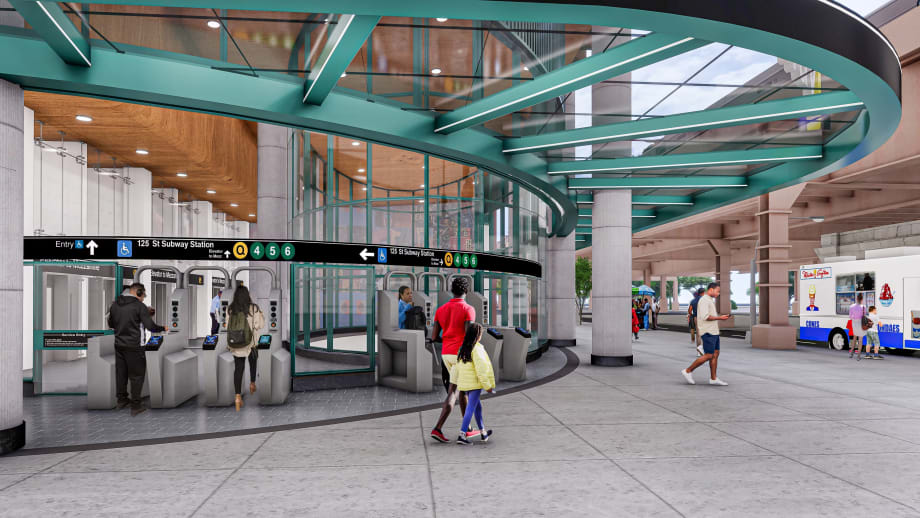
In July, the MTA also unveiled new conceptual renderings of the proposed stations for the extension, providing future riders with a first-ever glimpse into the potential station interior and exterior designs.
Photo: Rendering via MTA
The New York Metropolitan Transportation Authority (MTA) awarded the first construction contract for the extension of the Second Avenue Subway from 96 Street to 125 Street in Harlem to C.A.C. Industries Inc., a family-owned heavy civil contractor based in New York City, specializing in infrastructure projects.
The initial $182 million award is for the first component of the Second Avenue Subway Phase 2 project, which will finally deliver subway service to residents of East Harlem.
“We're moving full speed ahead to extend the Second Avenue Subway to East Harlem, expanding transit access for thousands of New Yorkers," said New York Gov. Kathy Hochul. “This critical milestone will put shovels in the ground for the next phase of this transformative project. East Harlem has dreamed of transit access for decades — and we're committed to getting the job done.”
First of Many Contracts
This is the first of four construction contracts for the new line, which will extend the Q train from 96 Street to 125 Street, serving more than 100,000 average daily riders and building three new ADA-accessible stations for the East Harlem community.
The contract will relocate underground utilities from 105 Street to 110 Street on Second Avenue at the site of the future 106 Street Station, to facilitate the subsequent cut-and-cover construction of the station.
New York City has some of the most complex underground utilities networks in the world — much of which is unmapped — which can add delays and costs once projects are underway.
Advancing utility relocation ahead of station and tunnel construction is a major lesson learned from Phase 1 of Second Avenue Subway, which will help to reduce unnecessary costs and delays on Phase 2 of the project.
“Phase 2 of the Second Avenue Subway will change lives and expand opportunities by bringing transit equity to the East Harlem community who have waited decades for this,” said MTA Chair/CEO Janno Lieber. “The expansion of the Second Avenue Subway will get more than 100,000 daily riders to jobs, education and recreation not only in the city but throughout the region.”
Charging Ahead with Extension Work
In July, the MTA also unveiled new conceptual renderings of the proposed stations for the extension, providing future riders with a first-ever glimpse into the potential station interior and exterior designs.
Revenue from congestion pricing will support $15 billion in funding for critical projects in the MTA's current capital program, which includes Second Avenue Subway Phase 2.
As part of the MTA's commitment to delivering key infrastructure projects better, faster, and cheaper, the first contract for Phase 2 incorporates lessons learned from Second Avenue Subway Phase 1. Addressing utility relocation requirements upfront will reduce the risk of unexpected costs or delays later as construction progresses.
The first contract will also include temporary streetscape modifications that will be required during construction, including new bike lanes to replace those that will be impacted by construction on Second Avenue and building remediation in preparation for future contracts for the new subway station at 106 Street.
Additional cost containment initiatives in Phase 2 include reuse of a tunnel segment that was built in the 1970s from 110 Street to 120 Street along Second Avenue, early real estate acquisition, adoption of best value contract structures like A+B contracts, reduction in back-of-house and ancillary space, and close coordination of contracts.
More Rail

New York MTA Advances Final Contract for Second Avenue Subway Expansion
Contract Four is the largest in the Second Avenue Subway Phase 2 project and includes construction of station infrastructure, tracks, and signals for the subway expansion, MTA officials said. Work on Contract Four will begin in 2027.
Read More →
San Diego MTS Breaks Monthly Trolley Ridership Record
Agency officials said July’s ridership indicates MTS’s continued recovery from the pandemic.
Read More →
Report Examines NJ TRANSIT Reliability, Funding Challenges
The Garden State Initiative analysis examines the roles of Amtrak infrastructure, fleet management, and agency operations while recommending a more performance-based approach to improving reliability.
Read More →
Stadler, CapMetro Sign Long-Term Rail Fleet Support Agreement
Beginning in 2027, Stadler will provide on-site technical expertise, spare parts support, training, and obsolescence management to help extend the reliability and longevity of CapMetro’s GTW fleet.
Read More →
Biz Briefs: Alstom Lands Canadian Contract, LYT to Supply California TSP, and More
In METRO's latest installment, we take a look at recent news from Complete Coach Works, Beep, FlixBus, and more partnerships making headlines across the transportation sector.
Read More →
CATS Gold Line Marks 5 Years of Service, 2.8M Passenger Trips
With a six-mile expansion planned, the Charlotte streetcar is positioned to connect more neighborhoods and major transit hubs across the region.
Read More →
Why Simulating Pedestrian Movement Has Become Essential for Modern Rail Stations
Pedestrian microsimulation is helping rail planners identify bottlenecks, test station designs, and prepare complex transit hubs for growing passenger volumes.
Read More →
Amtrak Begins Major Construction at New York’s Sunnyside Yard
The new maintenance facility will support Amtrak’s Airo trainsets while improving maintenance efficiency and turnaround times in New York.
Read More →
Chicago Leaders Unveil Plans for O’Hare Airport Express Train
The privately developed project would offer a 15-minute trip between downtown and O’Hare’s Terminal 2, with trains operating every 15 minutes on a dedicated track. The service would use battery-electric trains and three existing freight rail rights-of-way.
Read More →
OCTA Maps Out 30-Year Strategy to Protect Coastal Rail Corridor
The draft feasibility report identifies strategies to protect the coastal rail line for decades as the agency continues near-term stabilization and sand placement efforts.
Read More →