




RELATED: Transit Wireless, Verizon finalize NYCT wireless pact
NY MTA completes underground cell connectivity a year ahead of schedule
In addition, through a pact with Transit Wireless, Wi-Fi has been installed in underground stations a full two years ahead of schedule.
January 9, 2017
All photos via Gov. Cuomo
2 min to read
All photos via Gov. Cuomo
New York Gov. Andrew M. Cuomo announced that cell phone coverage in the MTA's underground subway stations will be available a full year ahead of schedule, with all four carriers — AT&T, Sprint, T-Mobile, and Verizon Wireless — present across underground stations as of Jan. 9. In addition, Wi-Fi has been installed in underground stations a full two years ahead of schedule.
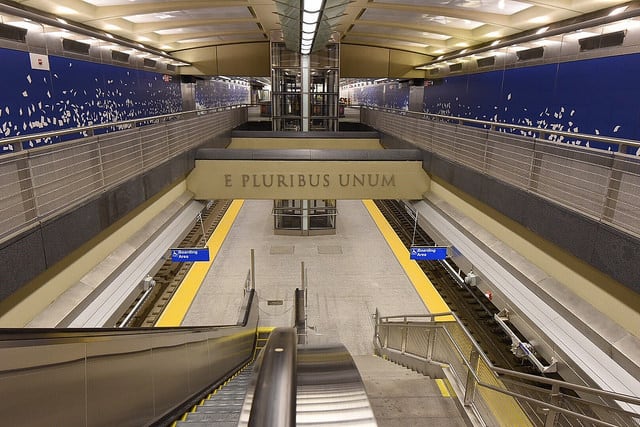
The MTA’s early delivery was in response to the Governor’s directive at the beginning of 2016 to accelerate the project. The announcement represents another important step in the Governor’s ongoing campaign to modernize the MTA, and comes shortly after he presided over the on-time opening of the new Second Avenue Subway, which includes three new, state-of-the-art stations, as well as a new entrance at the existing Lexington and 63rd Street Station.
“By bringing Wi-Fi and cell service underground ahead of schedule, we are reimagining our subway stations to meet the needs of the next generation,” Gov. Cuomo said. “This will better connect New Yorkers who are on-the-go and build on our vision to reimagine the country’s busiest transportation network for the future.”
Transit Wireless has a long term agreement with the MTA to design, build, operate, and maintain cellular and Wi-Fi connectivity in the underground subway stations. The company has invested well over $300 million into this infrastructure project and is sharing revenues derived through the network’s services with the MTA. The project was being built at no cost to taxpayers or subway riders.
MTA Partnership with Transit Wireless
Transit Wireless has a 27-year partnership agreement with the MTA to design, build, operate and maintain cellular and Wi-Fi connectivity in the underground subway stations. The company is investing well over $300 million into this infrastructure project and is sharing revenues derived through the services with the MTA. The project is being built at no cost to taxpayers or subway customers.
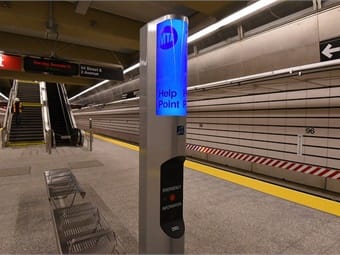
Within this project, MTA and Transit Wireless are working together on the deployment of specific communications technologies to enhance public safety, including a dedicated 4.9 GHz public safety broadband network and the highly visible Help Point Intercoms. These instant communication kiosks offer immediate access to E911 assistance and information with the touch of a button. To date, Transit Wireless has built the infrastructure for more than 3,000 Help Point Intercoms in 175 underground MTA stations. This network now provides thousands of MTA employees, contractors, and first responders connected capability as never before.
More Management

METRO Opens Submissions for 2026 Motorcoach Awards
Nominations are now being accepted for METRO Magazine’s Operator of the Year and Innovative Operator of the Year awards.
Read More →
New York MTA Advances Final Contract for Second Avenue Subway Expansion
Contract Four is the largest in the Second Avenue Subway Phase 2 project and includes construction of station infrastructure, tracks, and signals for the subway expansion, MTA officials said. Work on Contract Four will begin in 2027.
Read More →
Transit Agencies Highlight Safety Gains at National Summit
Leaders from 15 major transit systems shared crime-reduction results and safety initiatives while discussing the role of continued federal support.
Read More →

NITA Names New Leadership, Expands Reduced-Fare Program at First Board Meeting
The new regional transit authority appointed its first board chair and interim executive director while extending reduced fares across CTA, Metra, and Pace for eligible riders.
Read More →
Beyond the Checklist: A Structured Approach to Transit Maintenance
Reliability-Centered Maintenance helps transit agencies move beyond routine checklists to focus limited resources on the assets and failures that have the greatest impact on safety, reliability, and service.
Read More →
APTA 2026 Nominating Committee Selects Leadership Slate, Names Chair and Vice Chair Nominees
Leadership changes will help shape the association’s priorities and its representation of the transportation industry during the 2026–2027 term.
Read More →
DART Launches Major Security, Fare Enforcement Initiative
The 90-day demonstration will deploy coordinated security teams at five light rail stations while testing controlled access and gathering data to guide future investments.
Read More →
Sponsored•September 9, 2026
Advancing Fare Collection Through Technology and Innovation
Learn about delivering 1300 gates at 91 stations while managing fare evasion. Explore the large scale deployment, solution customization and real-world results that affect the region. Prepare for deployment in your region now.
Read More →
Game Day in Motion: Moving Millions During the 2026 World Cup
Between packed transit stations and team motorcoaches, see how agencies and operators across North America tackled the transportation demands of the 2026 FIFA World Cup.
Read More →
Surface Transportation Extension Averts Shutdown, Leaves Transit Funding Gap
The stopgap keeps federal transportation programs moving, but missing advance funding could complicate the transit and rail projects agencies are planning next.
Read More →