




RELATED: $27B, 5-year MTA capital program gets final approval
NY MTA launches international innovative solution contest for subway system
The "MTA Genius Transit Challenge" is searching for the best ideas in each of three categories: How to improve NYC's subway signal system, how to bring better subway cars to the system, and how to increase communiations connectivity in subway tunnels.
May 31, 2017
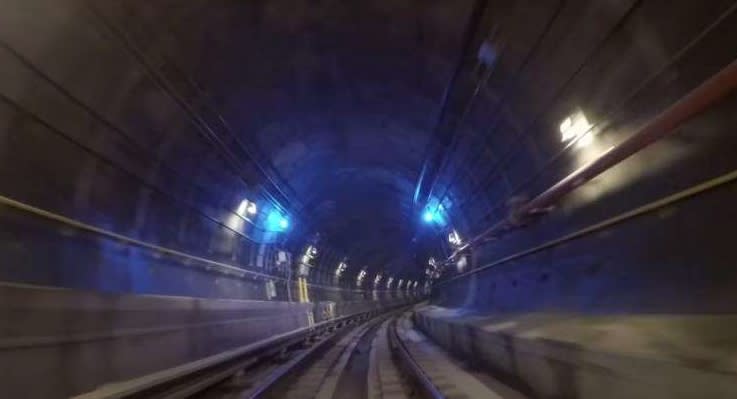
The challenge seeks to improve connectivity in the NYCT's tunnels.
4 min to read
The expert panel that will judge the competition and help guide participants including engineers, thought leaders, and experts who have developed significant expertise in wireless technology, manufacturing, business, and railroad operation.
PatrickCashin
New York’s Metropolitan Transportation Authority (MTA) announced the launch of the "MTA Genius Transit Challenge," an international competition seeking groundbreaking and innovative solutions to increase the capacity and improve the reliability of New York City's subway service. The competition will challenge participants to find solutions for the system that can be implemented quickly and efficiently. The status quo and industry standards currently take too long to implement and cannot improve service as expeditiously as is needed.
The competition will begin June 29 with a conference at the City College of New York's Great Hall. Gov. Andrew M. Cuomo announced his intention to give three $1 million “genius” awards, paid by New York State, for the best ideas in each of three categories. Competitors will be presented with the issues, current solutions, and best practices and will be judged by an expert panel of technology and transportation experts in each of three categories:
How to Improve the New York City Subway’s Signal System: To address the aging signal system in a faster and more efficient way to enable the MTA to expand the number of trains per hour during peak periods.
How to Bring Better Subway Cars to the System: To address the subway system’s aging cars. Strategies can include the refurbishment of current subway cars, upgrading existing systems, better maintenance programs/protocols, and faster delivery of new cars.
How to Increase Communications Connectivity in Subway Tunnels: To design communications technology for cellular and Wi-Fi connectivity that can be installed throughout the entire subway system including tunnels.
“Governor Cuomo challenged the MTA to look far and wide for solutions to the systemic problems that have plagued our subway system for years and to reimagine traditional solutions to reduce delays and relieve overcrowding,” said MTA Interim Executive Director Ronnie Hakim. “This challenge is accepted and wholly embraced by the MTA.”
The challenge seeks to improve connectivity in the NYCT's tunnels.
The expert panel that will judge the competition and help guide participants including engineers, thought leaders, and experts who have developed significant expertise in wireless technology, manufacturing, business, and railroad operation. Representatives from New York City and the surrounding region will also participate in judging the competition.
The Challenge
The New York City subway system operates 665 miles of track, 24 lines, and operates 24 hours a day, seven days a week/365 days a year. Demand for service is at historic levels with ridership of six million people per day. New York City Transit must innovate to accommodate a growing demand and to continue to be the economic engine of the city, state, and region.
The Signal System
The existing fixed-block signal system was designed over a century ago and now requires constant repair and is increasingly less reliable. The current $29.5 billion MTA Capital Plan includes more than $2.75 billion for signals, with more than $1 billion for installation of Communication Based Train Control. Other signalization investments include roughly $850 million to modernize six signal interlockings and $250 million to upgrade conventional signals.
The improvement in signalization is designed to increase the number of trains at peak periods. This competition is seeking to accelerate the implementation of these solutions to bring better and more reliable signal service to the system faster.
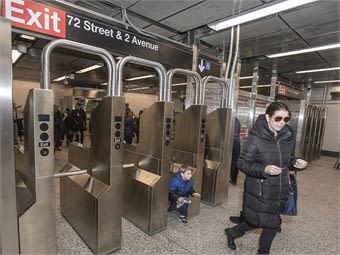
Demand for NYC's subway service is at historic levels, with ridership of six million people per day.
Subway Cars
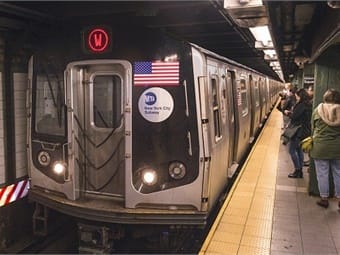
Subway car doors open and close roughly seven million times daily — and doors are the primary cause of car-related failures. Currently, the fastest a new car can be built is three years. The MTA is expediting the delivery of 300 new R179 subway cars with the first arriving fall 2017 and delivery to be completed by September 2018. Additionally, New York City Transit will accelerate the delivery of 450 new R211 cars.
The car renovation project is looking for strategies to get more new subway cars faster, or refurbish existing cars to increase reliability, prevent breakdowns, and reduce delays.
The MTA's recently announced six-point plan tackles frequent issues that cause disruption to service and discomfort to riders — including stuck doors, master controller systems, and heating and air conditioning. The transit system needs a more comprehensive, diagnostic data-driven approach that allows for predictive maintenance rather than corrective maintenance.
Communications and Connectivity in Subway Tunnels
The MTA succeeded in delivering cellular and Wi-Fi connectivity to every station in the system by the end of last year. However, connectivity in subway tunnels is still unavailable. Subway tunnels are narrow, which presents challenges in running cable and other necessary Wi-Fi equipment. Standard industry strategies would require completely shutting down train service to install Wi-Fi in tunnels.
More Rail

New York MTA Advances Final Contract for Second Avenue Subway Expansion
Contract Four is the largest in the Second Avenue Subway Phase 2 project and includes construction of station infrastructure, tracks, and signals for the subway expansion, MTA officials said. Work on Contract Four will begin in 2027.
Read More →
San Diego MTS Breaks Monthly Trolley Ridership Record
Agency officials said July’s ridership indicates MTS’s continued recovery from the pandemic.
Read More →
Report Examines NJ TRANSIT Reliability, Funding Challenges
The Garden State Initiative analysis examines the roles of Amtrak infrastructure, fleet management, and agency operations while recommending a more performance-based approach to improving reliability.
Read More →
Stadler, CapMetro Sign Long-Term Rail Fleet Support Agreement
Beginning in 2027, Stadler will provide on-site technical expertise, spare parts support, training, and obsolescence management to help extend the reliability and longevity of CapMetro’s GTW fleet.
Read More →
Biz Briefs: Alstom Lands Canadian Contract, LYT to Supply California TSP, and More
In METRO's latest installment, we take a look at recent news from Complete Coach Works, Beep, FlixBus, and more partnerships making headlines across the transportation sector.
Read More →
CATS Gold Line Marks 5 Years of Service, 2.8M Passenger Trips
With a six-mile expansion planned, the Charlotte streetcar is positioned to connect more neighborhoods and major transit hubs across the region.
Read More →
Why Simulating Pedestrian Movement Has Become Essential for Modern Rail Stations
Pedestrian microsimulation is helping rail planners identify bottlenecks, test station designs, and prepare complex transit hubs for growing passenger volumes.
Read More →
Amtrak Begins Major Construction at New York’s Sunnyside Yard
The new maintenance facility will support Amtrak’s Airo trainsets while improving maintenance efficiency and turnaround times in New York.
Read More →
Chicago Leaders Unveil Plans for O’Hare Airport Express Train
The privately developed project would offer a 15-minute trip between downtown and O’Hare’s Terminal 2, with trains operating every 15 minutes on a dedicated track. The service would use battery-electric trains and three existing freight rail rights-of-way.
Read More →
OCTA Maps Out 30-Year Strategy to Protect Coastal Rail Corridor
The draft feasibility report identifies strategies to protect the coastal rail line for decades as the agency continues near-term stabilization and sand placement efforts.
Read More →