



NYC Transit to shut down L train tunnel for 18 months
The decision to do the work under a full tunnel closure, instead of a one-track, three-year closure, was made based on a detailed operational review. The tunnel was severely damaged during Superstorm Sandy.

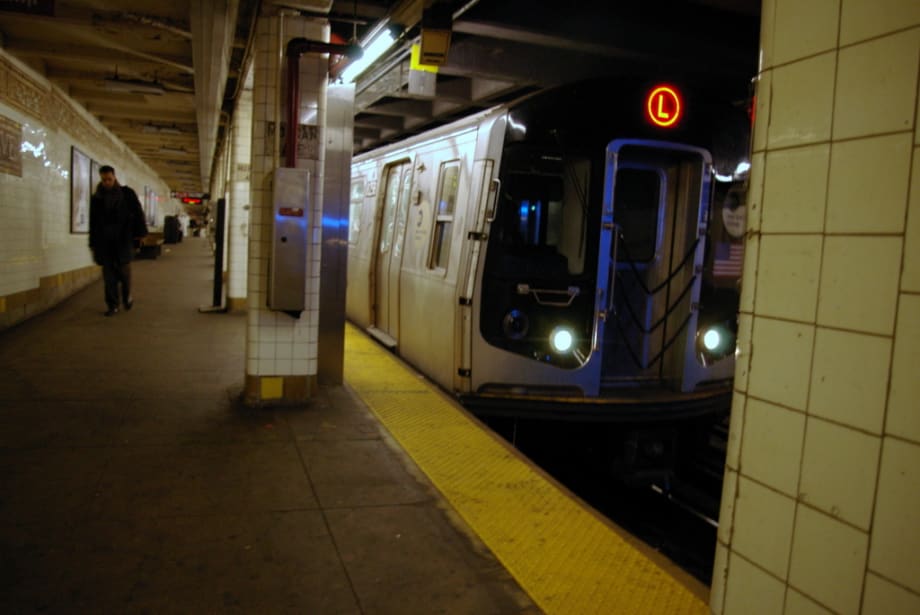
MTA New York City Transit (NYCT) announced that the massive reconstruction work needed to the Canarsie Tunnel, which carries the L train under the East River between Brooklyn and Manhattan, will require a full closure of the tunnel for 18 months starting no sooner than 2019.
The decision to do the work under a full 18-month tunnel closure, instead of a one-track, three-year closure, was made based on a detailed operational review, and only after significant community engagement to consider all adverse impacts, according to the agency. Serious consideration was also given to consequences of unplanned outages that would occur if one track was closed for three years.
“While the MTA always looks to avoid service disruptions, there is no question that repairs to the Canarsie Tunnel are critical and cannot be avoided or delayed. Throughout this process we have committed to engaging the community and listening to all concerns so that we can address them as we prepare for this necessary work,” MTA Chairman/CEO Thomas F. Prendergast said.
Since May, the MTA has held four large-scale, interactive community meetings in communities affected by the upcoming closure, which were led by Prendergast, NYCT President Veronique “Ronnie” Hakim, Chief of Operations Planning Peter Cafiero, and Sr. VP for Capital Program Management John O’Grady.
MTA officials also visited all 11 Community Boards along the L Line, which were overwhelmingly in favor of the full, shorter-duration closure. Of the comments MTA received directly through email, social media and at meetings, 77% were in favor of the full, shorter closure.
“We think it is better to have a shorter duration of pain than a longer more unstable process — and risk unplanned closures — by leaving one track open during construction,” Hakim said.
The Canarsie Tunnel was one of nine underwater tunnels that flooded during Superstorm Sandy, all of which required major rehabilitation and repair. Some of that work was accomplished during night and weekend closures, while the R line’s Montague Tunnel under the East River was closed for 13 months and the G line tunnel under Newtown Creek was closed for two months, both for complete renovations.
The Canarsie Tunnel suffered extensive damage to tracks, signals, switches, power cables, signal cables, communication cables, lighting, cable ducts and bench walls throughout a seven-mile long flooded section of both tubes. Bench walls throughout those sections must be replaced to protect the structural integrity of the two tubes that carry trains through the tunnel.
More Rail

New York MTA Advances Final Contract for Second Avenue Subway Expansion
Contract Four is the largest in the Second Avenue Subway Phase 2 project and includes construction of station infrastructure, tracks, and signals for the subway expansion, MTA officials said. Work on Contract Four will begin in 2027.
Read More →
San Diego MTS Breaks Monthly Trolley Ridership Record
Agency officials said July’s ridership indicates MTS’s continued recovery from the pandemic.
Read More →
Report Examines NJ TRANSIT Reliability, Funding Challenges
The Garden State Initiative analysis examines the roles of Amtrak infrastructure, fleet management, and agency operations while recommending a more performance-based approach to improving reliability.
Read More →
Stadler, CapMetro Sign Long-Term Rail Fleet Support Agreement
Beginning in 2027, Stadler will provide on-site technical expertise, spare parts support, training, and obsolescence management to help extend the reliability and longevity of CapMetro’s GTW fleet.
Read More →
Biz Briefs: Alstom Lands Canadian Contract, LYT to Supply California TSP, and More
In METRO's latest installment, we take a look at recent news from Complete Coach Works, Beep, FlixBus, and more partnerships making headlines across the transportation sector.
Read More →
CATS Gold Line Marks 5 Years of Service, 2.8M Passenger Trips
With a six-mile expansion planned, the Charlotte streetcar is positioned to connect more neighborhoods and major transit hubs across the region.
Read More →
Why Simulating Pedestrian Movement Has Become Essential for Modern Rail Stations
Pedestrian microsimulation is helping rail planners identify bottlenecks, test station designs, and prepare complex transit hubs for growing passenger volumes.
Read More →
Amtrak Begins Major Construction at New York’s Sunnyside Yard
The new maintenance facility will support Amtrak’s Airo trainsets while improving maintenance efficiency and turnaround times in New York.
Read More →
Chicago Leaders Unveil Plans for O’Hare Airport Express Train
The privately developed project would offer a 15-minute trip between downtown and O’Hare’s Terminal 2, with trains operating every 15 minutes on a dedicated track. The service would use battery-electric trains and three existing freight rail rights-of-way.
Read More →
OCTA Maps Out 30-Year Strategy to Protect Coastal Rail Corridor
The draft feasibility report identifies strategies to protect the coastal rail line for decades as the agency continues near-term stabilization and sand placement efforts.
Read More →