



OCTA, Calif. agencies launch water conservation initiative
Along with wrapped buses, the campaign will include printing and distributing window clings with the conservation message at public events that agencies also will use on their fleets.


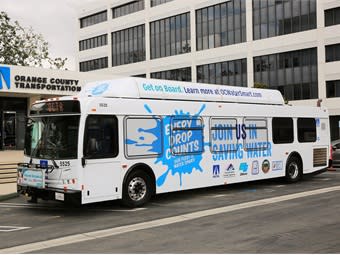
Elected officials, along with transportation and water-district leaders, gathered to launch a multi-agency water conservation campaign in Orange County, Calif., with the message, “Every Drop Counts,” to help raise awareness and address the state’s severe drought.
A bus wrapped with the conservation messages was unveiled with the help of the Orange County Transportation Authority (OCTA) board of directors outside OCTA’s headquarters. Other public agencies participating in the campaign include Caltrans, the County of Orange, Irvine Ranch Water District, Municipal Water District of Orange County and the Transportation Corridor Agencies.
Along with wrapped buses, the campaign will include printing and distributing window clings with the conservation message at public events that agencies also will use on their fleets.
Internally, OCTA has embraced the message that every drop counts for many years. The agency has cut back by 21% on its water usage by washing buses less frequently, installing drought-resistant landscaping, and installing low-flow faucets and toilets at all bases and transit centers.
Prior to 2005, OCTA washed its buses daily. That year, the number was cut to three times a week and was further cut to twice a week. In addition, a treatment system was installed to reclaim and filter the water for reuse, saving about 30 gallons each wash.
Low-water vegetation and artificial turf will continue to be planted when possible and low-flow toilets and faucets will continue to replace the older models on OCTA’s properties.
OCTA’s partnering agencies are also leading their own efforts to cut back on water use and encourage others to save every drop possible.
More Technology

Biz Briefs: New Electric Offering from Alexander Dennis/Volvo, Transdev in Boston, and More
In METRO's latest installment, we also take a look at recent news from STV, WSP, Prevost, and more partnerships making headlines across the transportation sector.
Read More →
Roman Cornell on ABC Companies’ Evolution and the Future of Passenger Transportation
The company’s CEO discusses carrying forward a third-generation family legacy, ABC’s continued evolution in passenger transportation, support for increasingly complex fleets, and how technology and continued investment could help operators improve uptime.
Read More →
ETA CEO John Maglio on Transit Technology, Innovation, and Building Agency Trust
ETA founder and CEO John Maglio explores the evolution of transit technology, the importance of reliable systems, and how stronger partnerships can help agencies improve operations and the passenger experience.
Read More →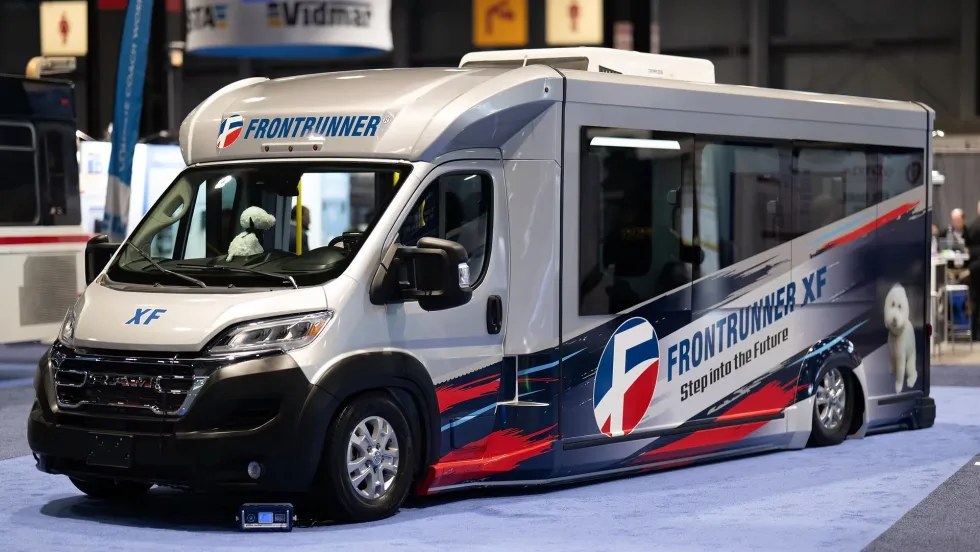
Frontrunner Bus Group Introduces XF Low-Floor Bus with Enhanced Accessibility
The new mid-sized bus features a full flat-floor design, eight-inch curbside step-in height, and zero-entry rear ramp to improve passenger access and operational flexibility.
Read More →
Building a Flexible Path to Transit Electrification with BAE's John Hroncich
John Hroncich discusses BAE Systems’ modular and scalable approach, lessons learned from decades of real-world operations, and how agencies can identify electrification strategies that fit their fleets.
Read More →
Scenes from APTA TRANSform & EXPO 2026
Transit leaders, manufacturers, and industry professionals gathered in Chicago to explore new technologies, share ideas, and discuss the future of public transportation.
Read More →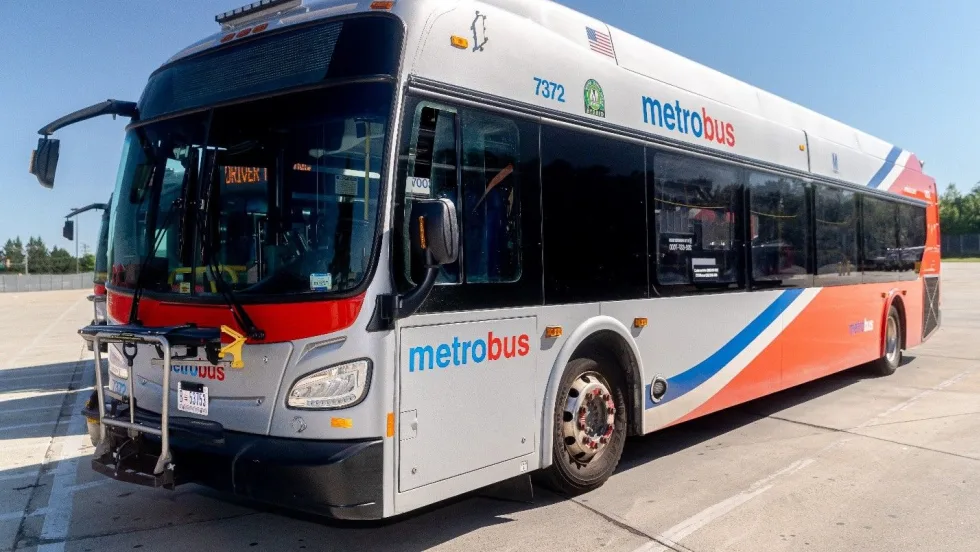
Biz Briefs: New Flyer Secures Additional 100-Bus Order from WMATA and More
In METRO's latest installment, we also take a look at recent news from Masabi, MCI, Samsara, and more partnerships making headlines across the transportation sector.
Read More →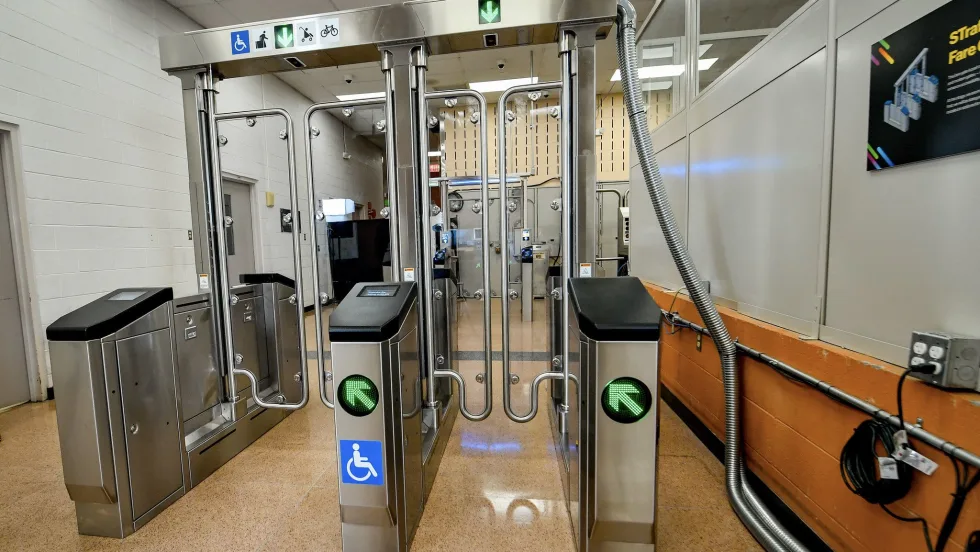
MTA Fare Gate Pilot Reduces Fare Evasion by 35%
Following a 20-station pilot, the agency plans to install new fare gates at 20 additional subway stations as part of a $1.1 billion modernization initiative.
Read More →
California Law Extends AC Transit’s Bus Lane Camera Enforcement
The new law allows AC Transit to continue using forward-facing bus cameras to enforce parking violations in bus-only lanes and at bus stops.
Read More →
Biz Briefs: Luminator Launches AI Technology to Monitor Bus Stop Conditions and More
In METRO's latest installment, we also take a look at recent news from Masabi, Troman Industries, ioki, CCW, and more partnerships making headlines across the transportation sector.
Read More →