



Ohio House passes bill that includes $200M public transit funding boost
The funds reverses a years-long trend that saw the state slip to 38th nationally in support for transit systems.

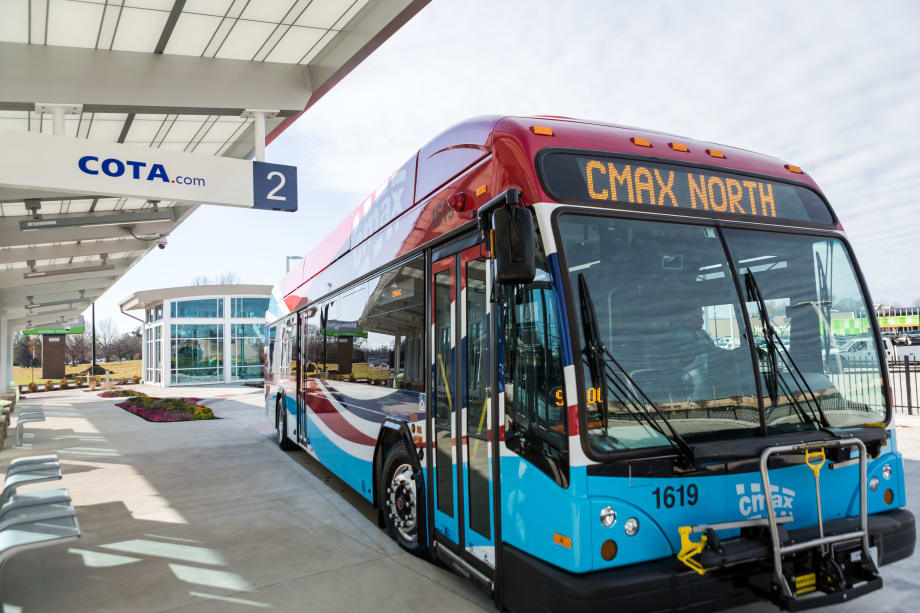
President/CEO Joanna Pinkerton said the agency would use these funds for capital improvements.
COTA
The $200 million allocated in the budget bill represents Ohio’s largest-ever investment in public transportation.
SARTA
Under amended Substitute House Bill 62, which passed the Ohio House of Representative by a vote of 71 to 27, state funding for Ohio’s 61 urban and rural transit systems will rise to $100 million in each of the next two years.
The $200 million allocated in the budget bill represents Ohio’s largest-ever investment in public transportation and reverses a years-long trend that saw the state slip to 38th nationally in support for transit systems.
“Today’s vote was a huge win for SARTA and Ohio’s other transit agencies, and an even bigger, more important victory for the thousands of people here in Stark County and around the state who depend on public transportation to get them where they want and need to go each and every day,” said Kirt Conrad, CEO of the Stark Area Regional Transit Authority (SARTA).
Conrad added that he is unsure how much additional funding SARTA and the other agencies will ultimately receive and that the passage of the House version of the transportation budget is the first stop in what may be a difficult journey to secure the additional funding as the bill now moves to the Senate.
“I hope the overwhelming, bi-partisan vote in the House will send a signal that the time has come for the state to address its infrastructure needs and adequately fund public transportation,” he said.
President/CEO Joanna Pinkerton said the agency would use these funds for capital improvements.
COTA
Central Ohio Transit Authority (COTA) President/CEO Joanna Pinkerton, who is also chair of the DriveOhio Government Advisory Board, also urged the Ohio Senate to maintain support for public transit in the final transportation budget sent to Gov. Mike DeWine.
“As the process moves to the Senate, we hope state legislative leaders maintain this level of funding,” she said. “Doing so will allow COTA and other mobility partners across the state to implement transportation systems that will better serve our growing senior population, focus on shifting consumer preferences for the newer generations, and ensure access for all.”
If approved, Pinkerton said COTA would use these funds for capital improvements, such as purchasing new alternative fuel buses or upgrading operational facilities and customer amenities.
More Management

METRO Opens Submissions for 2026 Motorcoach Awards
Nominations are now being accepted for METRO Magazine’s Operator of the Year and Innovative Operator of the Year awards.
Read More →
New York MTA Advances Final Contract for Second Avenue Subway Expansion
Contract Four is the largest in the Second Avenue Subway Phase 2 project and includes construction of station infrastructure, tracks, and signals for the subway expansion, MTA officials said. Work on Contract Four will begin in 2027.
Read More →
Transit Agencies Highlight Safety Gains at National Summit
Leaders from 15 major transit systems shared crime-reduction results and safety initiatives while discussing the role of continued federal support.
Read More →

NITA Names New Leadership, Expands Reduced-Fare Program at First Board Meeting
The new regional transit authority appointed its first board chair and interim executive director while extending reduced fares across CTA, Metra, and Pace for eligible riders.
Read More →
Beyond the Checklist: A Structured Approach to Transit Maintenance
Reliability-Centered Maintenance helps transit agencies move beyond routine checklists to focus limited resources on the assets and failures that have the greatest impact on safety, reliability, and service.
Read More →
APTA 2026 Nominating Committee Selects Leadership Slate, Names Chair and Vice Chair Nominees
Leadership changes will help shape the association’s priorities and its representation of the transportation industry during the 2026–2027 term.
Read More →
DART Launches Major Security, Fare Enforcement Initiative
The 90-day demonstration will deploy coordinated security teams at five light rail stations while testing controlled access and gathering data to guide future investments.
Read More →
Advancing Fare Collection Through Technology and Innovation
Learn about delivering 1300 gates at 91 stations while managing fare evasion. Explore the large scale deployment, solution customization and real-world results that affect the region. Prepare for deployment in your region now.
Read More →
Game Day in Motion: Moving Millions During the 2026 World Cup
Between packed transit stations and team motorcoaches, see how agencies and operators across North America tackled the transportation demands of the 2026 FIFA World Cup.
Read More →
Surface Transportation Extension Averts Shutdown, Leaves Transit Funding Gap
The stopgap keeps federal transportation programs moving, but missing advance funding could complicate the transit and rail projects agencies are planning next.
Read More →