



Optibus Expands Into Ferry Transportation
The announcement comes with Optibus’ signing of HADAG, the ferry operator for the city of Hamburg, Germany, for its Planning, Scheduling, Rostering, and Operations software solution.

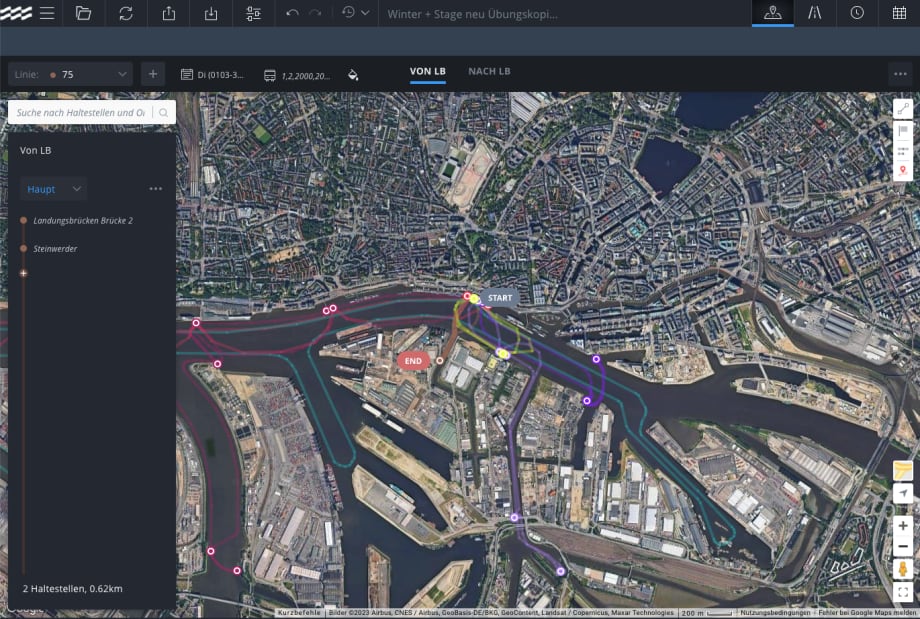
Optibus’ expansion from the roads to the seas will first see the company’s software optimize ferry travel in Hamburg, the second-largest city in Germany.
Photo: Optibus
Optibus announced its expansion beyond the bus sector into ferry operations.
The announcement comes with Optibus’ signing of HADAG, the ferry operator for the city of Hamburg, Germany, for its Planning, Scheduling, Rostering, and Operations software solution.
Optibus' History with Bus Networks
Until now, Optibus has focused on fine-tuning its software to meet the needs of fixed-route bus networks, which are at the core of almost every public transportation network around the world
Demand for Optibus’ software and innovation within the bus sector has seen Optibus hit a series of milestones. Usage of Optibus’ software grew to 4,000 cities across 35 countries in the Americas, Europe, Africa, the Middle East, and Asia Pacific.
Buses are only one way of transporting passengers from A to B. In many of the cities where Optibus’ software is used, the transportation network includes multiple modes of mobility.
Expanding Into Ferry Transportation
Optibus is now expanding its technology beyond the bus sector. Starting with ferry operators.
Optibus’ expansion from the roads to the seas will first see the company’s software optimize ferry travel in Hamburg, the second-largest city in Germany.
There, HADAG, the city’s publicly-owned ferry operator and a subsidiary of Hamburger Hochbahn, will implement Optibus’ entire end-to-end system, consisting of Planning, Scheduling, Rostering, and Operations products, across their departments to digitize their manual and paper-based workflows and bring the benefits and usability of cloud-native technology to their operation.
HADAG is a historic player in Hamburg’s passenger transportation network. Established in 1888, its network spans 330,000 nautical miles of the River Elbe (the equivalent of circling the world 11 times).
Its fleet comprises 26 vessels that can transport anywhere between 114 and 250 passengers at a time, and - just as in the bus sector - is being upgraded to replace diesel-electric models with electric hybrids to become a zero-emissions fleet.
HADAG's Use of Optibus Software
In addition to enhancing its fleet, HADAG is investing in its planning and operational infrastructure. Using Optibus’ software, the ferry operator will introduce artificial intelligence, optimization algorithms, and cloud technology to its workflows.
The software’s user-friendly interface makes these advanced tools easy for anyone to master. This was a consideration for HADAG, as their schedulers and dispatchers have a diverse workload that also includes operating ships.
More Technology

From Hardware to Digital Partner: Luminator Charts Its Next Chapter
CEO Magnus Friberg discusses Luminator’s shift toward becoming a digital partner, the growing importance of software and interoperability, and how AI can help agencies improve operations and passenger experience.
Read More →
Beyond the Checklist: A Structured Approach to Transit Maintenance
Reliability-Centered Maintenance helps transit agencies move beyond routine checklists to focus limited resources on the assets and failures that have the greatest impact on safety, reliability, and service.
Read More →
NJ TRANSIT Advances Bus Technology Upgrades Across Statewide Fleet
More than 1,500 buses now feature upgraded technology designed to improve arrival predictions and provide free Wi-Fi, with deployment expected to reach nearly 2,000 buses by the end of 2026.
Read More →

Building a Flexible Path to Transit Electrification
John Hroncich discusses BAE Systems’ modular and scalable approach, lessons learned from decades of real-world operations, and how agencies can identify electrification strategies that fit their fleets.
Read More →
Biz Briefs: Alstom Lands Canadian Contract, LYT to Supply California TSP, and More
In METRO's latest installment, we take a look at recent news from Complete Coach Works, Beep, FlixBus, and more partnerships making headlines across the transportation sector.
Read More →
From Legacy Silos to Conversational Intelligence
What if transit leaders could ask any operational question and get a trusted answer in seconds? Conversational AI is transforming how agencies use their data.
Read More →
USDOT Announces Rail Vehicle Replacement Grants, Chattanooga AV Shuttle Funding
More than $191 million in federal funding will help three transit agencies replace aging rail vehicles and support a new autonomous shuttle service in Chattanooga.
Read More →
Bus Tech Talk: Keeping Transit Technicians Ahead of the Technology Curve
LA Metro’s Obed Mejia discusses technician training, evolving maintenance technology, fleet replacement, and strategies for getting the most out of today’s transit fleets.
Read More →
Biz Briefs: RIPTA Unveils New Frontrunners, Clevland RTA Adds New Siemens, and More
In METRO's latest installment, we take a look at recent news from Siemens, Prevost, Dodge, and more partnerships making headlines across the transportation sector.
Read More →
Why Simulating Pedestrian Movement Has Become Essential for Modern Rail Stations
Pedestrian microsimulation is helping rail planners identify bottlenecks, test station designs, and prepare complex transit hubs for growing passenger volumes.
Read More →