




Read More: Optibus Survey Reveals Top Transportation, Tech Trends
Optibus Launches Driver-Depot Management App
Integrated with Optibus Operations, the Driver App was designed in partnership with drivers, for drivers, offering a single space for digitizing and centralizing depot-driver communications and work information.
October 9, 2023
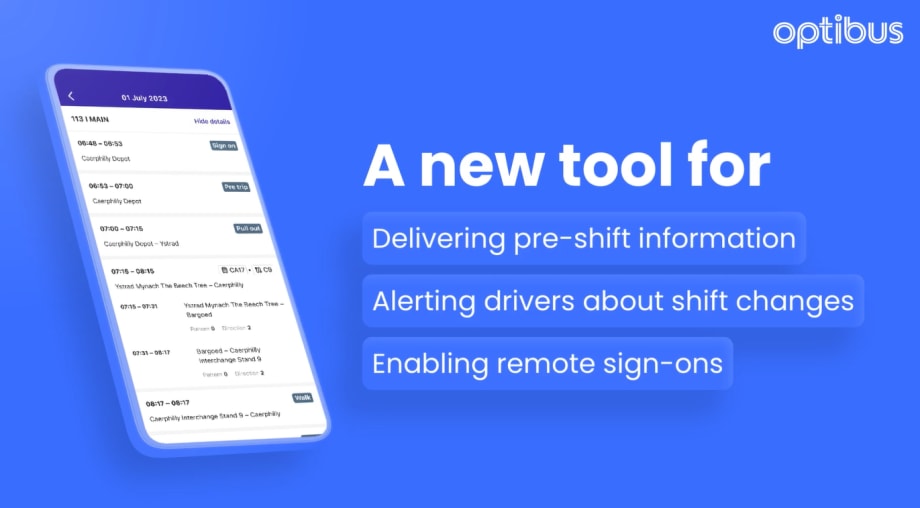
Optibus’ Driver App was designed to help public transportation operators (PTOs) and public transportation agencies (PTAs) address these issues and improve driver retention and recruitment.
Photo: Optibus
2 min to read
Optibus announced the launch of the Optibus Driver App, a mobile app and web tool designed to improve communication between drivers and the depot.
Integrated with Optibus Operations, the Driver App was designed in partnership with drivers, for drivers, offering a single space for digitizing and centralizing depot-driver communications and work information.
Optibus Identifies Driver Challenges
In their research and interviews with bus drivers to explore how to improve job satisfaction, Optibus identified two key driver challenges that are immediately addressable using digital solutions: depot communication and job-related information.
Driver-depot communication
The lack of a single, centralized form of communication with the depot is a major point of frustration for drivers. Pre-shift information, including start time and vehicle location, is scattered.
Last-minute changes often are not communicated in a timely manner, creating a stressful and disruptive work environment. Drivers want to feel that their time is valued and that their voice is heard, especially when it comes to sharing insights into services and accounting for their shift preferences in work schedules. All this communication should occur on one platform that everyone knows to check for updates.
Access to key documents
Drivers find the limited access to documents a major inconvenience. While many industries have digitized work documents and centralized them on a single cloud platform, bus drivers feel they must contend with outdated practices, such as physical paperwork, inconvenient extra trips to access documents available only at the depot, and documentation that is lost or disorganized.
Optibus Driver App Features
Optibus’ Driver App was designed to help public transportation operators (PTOs) and public transportation agencies (PTAs) address these issues and improve driver retention and recruitment.
Leveraging cloud-native technology, the Driver App provides a virtual space that connects drivers, depots, and documents - from anywhere - and enables communication about service changes, HR requests, and driver work preferences.
The Optibus Driver App gives dispatchers, allocators, and depots a range of abilities, including:
Help drivers prepare better for their shift
Alert drivers in real-time
Create lifestyle rosters
Digitize and centralize information
Enable remote sign-ons
Balance driver needs with operational goals
Integrate the app into operational processes
Make data-driven decisions
“The Driver App marks a significant milestone in our journey to empower the people who power public transportation. By putting innovation in the hands of drivers, the Driver App helps create an excellent driver work experience and ensures a strong workforce for passengers. We are excited to see the positive impact that this technology will have on drivers and depots worldwide," said Amos Haggiag, CEO/co-founder of Optibus.
More Technology

From Hardware to Digital Partner: Luminator Charts Its Next Chapter
CEO Magnus Friberg discusses Luminator’s shift toward becoming a digital partner, the growing importance of software and interoperability, and how AI can help agencies improve operations and passenger experience.
Read More →
Beyond the Checklist: A Structured Approach to Transit Maintenance
Reliability-Centered Maintenance helps transit agencies move beyond routine checklists to focus limited resources on the assets and failures that have the greatest impact on safety, reliability, and service.
Read More →
NJ TRANSIT Advances Bus Technology Upgrades Across Statewide Fleet
More than 1,500 buses now feature upgraded technology designed to improve arrival predictions and provide free Wi-Fi, with deployment expected to reach nearly 2,000 buses by the end of 2026.
Read More →

Building a Flexible Path to Transit Electrification
John Hroncich discusses BAE Systems’ modular and scalable approach, lessons learned from decades of real-world operations, and how agencies can identify electrification strategies that fit their fleets.
Read More →
Biz Briefs: Alstom Lands Canadian Contract, LYT to Supply California TSP, and More
In METRO's latest installment, we take a look at recent news from Complete Coach Works, Beep, FlixBus, and more partnerships making headlines across the transportation sector.
Read More →
Sponsored•September 8, 2026
From Legacy Silos to Conversational Intelligence
What if transit leaders could ask any operational question and get a trusted answer in seconds? Conversational AI is transforming how agencies use their data.
Read More →
USDOT Announces Rail Vehicle Replacement Grants, Chattanooga AV Shuttle Funding
More than $191 million in federal funding will help three transit agencies replace aging rail vehicles and support a new autonomous shuttle service in Chattanooga.
Read More →
Bus Tech Talk: Keeping Transit Technicians Ahead of the Technology Curve
LA Metro’s Obed Mejia discusses technician training, evolving maintenance technology, fleet replacement, and strategies for getting the most out of today’s transit fleets.
Read More →
Biz Briefs: RIPTA Unveils New Frontrunners, Clevland RTA Adds New Siemens, and More
In METRO's latest installment, we take a look at recent news from Siemens, Prevost, Dodge, and more partnerships making headlines across the transportation sector.
Read More →
Why Simulating Pedestrian Movement Has Become Essential for Modern Rail Stations
Pedestrian microsimulation is helping rail planners identify bottlenecks, test station designs, and prepare complex transit hubs for growing passenger volumes.
Read More →