



Oregon’s Cherriots, LYT Launch Transit Signal Priority Partnership
The project explicitly targets the busiest and longest route in the Cherriots system.

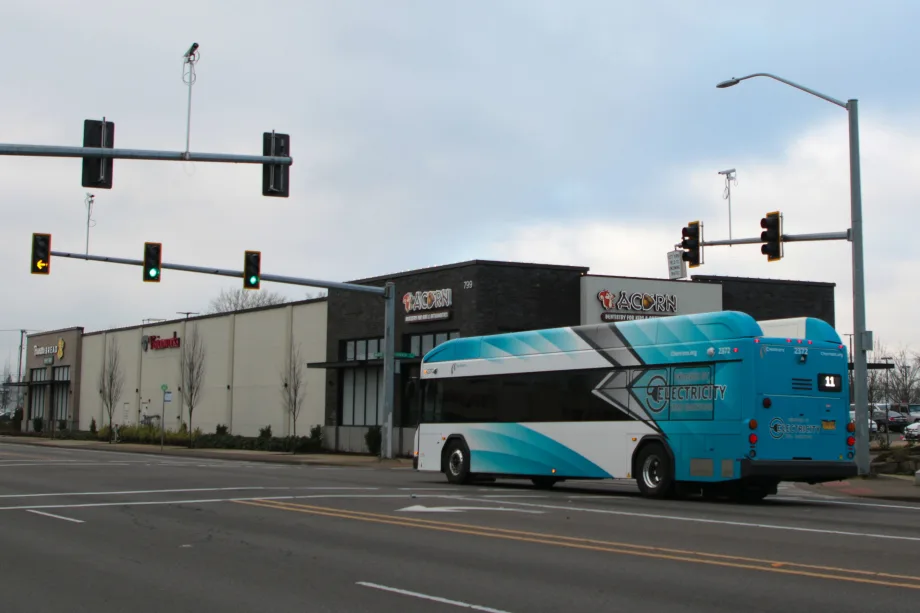
Cherriots will continue monitoring performance data to ensure the system delivers consistent, measurable improvements over time.
LYT/Cherriots
- Cherriots and LYT have implemented Transit Signal Priority (TSP) technology at 22 intersections on the Lancaster Drive corridor in Salem, targeting the system's busiest route.
- TSP allows buses to communicate with traffic signals to extend green lights, reducing trip times and improving reliability for riders by up to 20%.
- The initiative aims to enhance the viability of public transit as an alternative to personal vehicle travel, improving on-time performance and overall service quality.
*Summarized by AI
Salem, Oregon’s Cherriots, in partnership with LYT, officially launched Transit Signal Priority (TSP) technology at 22 intersections along the Lancaster Drive corridor.
The project explicitly targets the busiest and longest route in the Cherriots system. LYT TSP will help solve persistent on-time performance challenges and improve the daily experience for thousands of riders.
LYT’s TSP Tech
The implementation of TSP technology is a customer-centric solution designed to make public transit a more viable choice alongside personal vehicle travel, according to partner officials. Initial data from the project indicate a significant impact on service quality—the system has reduced the number of late vehicles by up to 20% in both the northbound and southbound directions.
By allowing buses to communicate with traffic signals to extend green lights, when appropriate, the TSP system reduces overall trip time and ensures riders reach their destinations more reliably. Furthermore, LYT’s TSP implementation is expected to improve overall traffic operations and efficiency throughout the corridor.
“This project reflects the kind of thoughtful and innovative investments we hope to bring into the community,” said Maria Hinojos Pressey, president of the Cherriots board. “It builds on work already underway and moves us closer to an expansive and robust transit system the capital of Oregon deserves.”
Implementation Proving Effective, More Data Possibilities
Recent survey data from Cherriots Transit bus operators who drive the route confirm the system’s effectiveness:
- Better Scheduling: 62% find it easier to stay on schedule.
- Reduced Stress: 69% feel less "rushed" to make up time during shifts.
- Faster Travel: 56% noticed a visible decrease in travel time.
- High Satisfaction: 56% are "Satisfied" or "Very Satisfied" with the new system.
“The launch of Transit Signal Priority in Salem marks an important milestone in how we deliver faster, more reliable transit for our riders,” said Shofi Ull Azum, Chief Planning and Development Officer at Cherriots. “Early results are very encouraging. By leveraging LYT’s cloud-based technology, we are using real-time data to improve operations, reduce delays, and enhance the customer experience. This project serves as a blueprint for how we intend to grow our system. By being data-driven, operationally efficient, and focused on high-return investments that deliver measurable benefits to our community."
The initiative represents a practical partnership in transit technology, utilizing a Software-as-a-Service (SaaS) cloud-based model. Unlike traditional transit priority systems that require expensive, specialized hardware on every bus and at every intersection, this cloud-based approach avoids heavy infrastructure costs, LYT officials said.
"This project is a testament to what can be achieved through a strong public-private partnership," said Timothy Menard, CEO and Founder of LYT. "Working with forward-thinking partners like Cherriots and the City of Salem is vital to our mission. By embracing the flexibility of this dynamic tech, we are not just moving buses faster; we are providing a better transit experience and improving the quality of life for residents and businesses. We are making the entire urban mobility model more progressive and efficient."
Cherriots will continue monitoring performance data to ensure the system delivers consistent, measurable improvements over time.
Quick Answers
The TSP technology aims to address on-time performance challenges by allowing buses to communicate with traffic signals, thereby extending green lights when necessary, reducing overall trip time and improving service reliability for riders.
*Summarized by AI
More Technology

From Hardware to Digital Partner: Luminator Charts Its Next Chapter
CEO Magnus Friberg discusses Luminator’s shift toward becoming a digital partner, the growing importance of software and interoperability, and how AI can help agencies improve operations and passenger experience.
Read More →
Beyond the Checklist: A Structured Approach to Transit Maintenance
Reliability-Centered Maintenance helps transit agencies move beyond routine checklists to focus limited resources on the assets and failures that have the greatest impact on safety, reliability, and service.
Read More →
NJ TRANSIT Advances Bus Technology Upgrades Across Statewide Fleet
More than 1,500 buses now feature upgraded technology designed to improve arrival predictions and provide free Wi-Fi, with deployment expected to reach nearly 2,000 buses by the end of 2026.
Read More →

Building a Flexible Path to Transit Electrification
John Hroncich discusses BAE Systems’ modular and scalable approach, lessons learned from decades of real-world operations, and how agencies can identify electrification strategies that fit their fleets.
Read More →
Biz Briefs: Alstom Lands Canadian Contract, LYT to Supply California TSP, and More
In METRO's latest installment, we take a look at recent news from Complete Coach Works, Beep, FlixBus, and more partnerships making headlines across the transportation sector.
Read More →
From Legacy Silos to Conversational Intelligence
What if transit leaders could ask any operational question and get a trusted answer in seconds? Conversational AI is transforming how agencies use their data.
Read More →
USDOT Announces Rail Vehicle Replacement Grants, Chattanooga AV Shuttle Funding
More than $191 million in federal funding will help three transit agencies replace aging rail vehicles and support a new autonomous shuttle service in Chattanooga.
Read More →
Bus Tech Talk: Keeping Transit Technicians Ahead of the Technology Curve
LA Metro’s Obed Mejia discusses technician training, evolving maintenance technology, fleet replacement, and strategies for getting the most out of today’s transit fleets.
Read More →
Biz Briefs: RIPTA Unveils New Frontrunners, Clevland RTA Adds New Siemens, and More
In METRO's latest installment, we take a look at recent news from Siemens, Prevost, Dodge, and more partnerships making headlines across the transportation sector.
Read More →
Why Simulating Pedestrian Movement Has Become Essential for Modern Rail Stations
Pedestrian microsimulation is helping rail planners identify bottlenecks, test station designs, and prepare complex transit hubs for growing passenger volumes.
Read More →