



INIT Introduces Open Payments for Seattle’s ORCA Fare System
The landmark event empowers riders across six agencies in the Puget Sound region to tap-and-ride transit using a contactless credit or debit card or a mobile wallet.

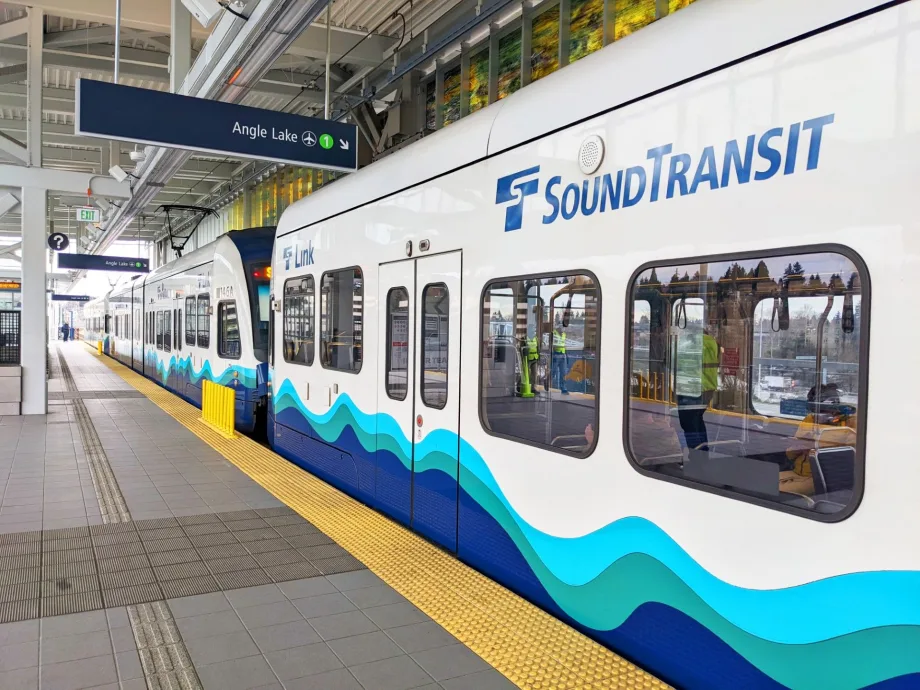
ORCA supports travel across buses, ferries, and light rail for six regional partner agencies: Sound Transit, King County Metro, Community Transit, Everett Transit, Kitsap Transit, and Pierce Transit.
INIT/Sound Transit
- INIT Innovations in Transportation Inc. and Seattle’s Sound Transit have introduced open payments on the ORCA regional fare system, allowing passengers to use contactless credit/debit cards or mobile wallets.
- The new contactless payment method supports Visa, Mastercard, Discover Network, and American Express, along with mobile wallets like Apple Pay, Google Pay, and Samsung Pay.
- This development aims to ease transit use as the region anticipates increased demand, particularly with the upcoming global games, by facilitating easier and convenient payment options for riders.
*Summarized by AI
INIT Innovations in Transportation Inc., in partnership with Seattle’s Sound Transit, successfully launched open payments on the ORCA regional fare system.
The landmark event empowers riders across six agencies in the Puget Sound region to tap-and-ride transit using a contactless credit or debit card or a mobile wallet.
Contactless in Seattle
Contactless payment options now include Visa, Mastercard, Discover Network, and American Express cards, as well as Apple Pay, Google Pay, and Samsung Pay in mobile wallets. This feature will significantly impact the region’s ability to manage rising demand as Seattle prepares to host an estimated 750,000 fans during the upcoming global games.
“Open payments reduce barriers and make transit the easy choice for everyday riders and visitors alike,” said Chris McKnight, ORCA director. “By partnering with INIT, people can now ride with the cards and devices they already carry.”
Public transit ridership in the Seattle region continues to expand, and ORCA has played a key role in that momentum.
Since its implementation, the system has recorded major milestones, including 82 million ORCA card taps at its first anniversary.
Today, 79% of fares are paid using ORCA, underscoring the system’s widespread adoption and ease of use.
Boosting Multimodality
ORCA supports travel across buses, ferries, and light rail for six regional partner agencies: Sound Transit, King County Metro, Community Transit, Everett Transit, Kitsap Transit, and Pierce Transit.
As service expands with more buses, light rail extensions, and improved ferry connections, INIT’s fare technology ensures the Puget Sound transit network is ready to meet rising demand while putting riders first — now and in the years ahead.
ORCA is one of multiple INIT fare systems being launched in World Cup host cities, including Houston and Atlanta.
Quick Answers
They have launched open payments on the ORCA regional fare system, allowing riders to use contactless credit/debit cards or mobile wallets.
*Summarized by AI
More Technology

ENC Lands MATA Contract and More in Biz Briefs
In this edition of Biz Briefs, we spotlight the latest developments shaping the future of mobility.
Read More →
Strada360’s Steve Lassey on Turning Transit Data Into Better Decisions
From breaking down data silos to preparing for AI, Strada360 CEO Steve Lassey discusses how transit agencies can use technology to improve operations, customer information, and long-term decision-making.
Read More →
Almaviva Looks to Open Architecture to Advance Transit Technology
Eric Reese discusses how interoperability, open architecture, and modular design can help transit agencies control costs, reduce vendor lock-in, and upgrade technology without starting over.
Read More →

Driving Smarter Paratransit
John Hanlon shares how AlphaRoute is leveraging AI-powered technology to help paratransit providers optimize operations, support frontline staff, and enhance the rider experience.
Read More →
From Hardware to Digital Partner: Luminator Charts Its Next Chapter
CEO Magnus Friberg discusses Luminator’s shift toward becoming a digital partner, the growing importance of software and interoperability, and how AI can help agencies improve operations and passenger experience.
Read More →
Beyond the Checklist: A Structured Approach to Transit Maintenance
Reliability-Centered Maintenance helps transit agencies move beyond routine checklists to focus limited resources on the assets and failures that have the greatest impact on safety, reliability, and service.
Read More →
NJ TRANSIT Advances Bus Technology Upgrades Across Statewide Fleet
More than 1,500 buses now feature upgraded technology designed to improve arrival predictions and provide free Wi-Fi, with deployment expected to reach nearly 2,000 buses by the end of 2026.
Read More →
Building a Flexible Path to Transit Electrification
John Hroncich discusses BAE Systems’ modular and scalable approach, lessons learned from decades of real-world operations, and how agencies can identify electrification strategies that fit their fleets.
Read More →
Biz Briefs: Alstom Lands Canadian Contract, LYT to Supply California TSP, and More
In METRO's latest installment, we take a look at recent news from Complete Coach Works, Beep, FlixBus, and more partnerships making headlines across the transportation sector.
Read More →
From Legacy Silos to Conversational Intelligence
What if transit leaders could ask any operational question and get a trusted answer in seconds? Conversational AI is transforming how agencies use their data.
Read More →