



Scaling Smart: How Fleet Operations Can Cut Downtime and Drive Growth
A phased approach to technology, in-house capabilities, and workforce investment is helping transportation leaders break the reactive cycle and build more resilient, revenue-focused operations.
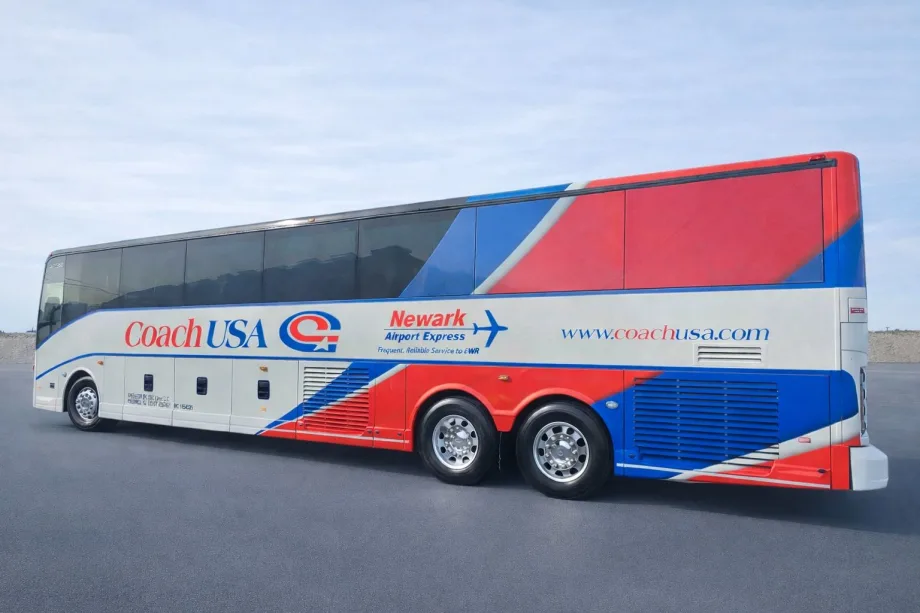
By adding two Roland DG XP-640 printers and in-house cutting systems, Perfect Body, a Coach USA subsidiary, now produces full wraps and large-format ads for transit buses, coaches, school buses, and cutaways.
Coach USA
- Bringing functions in-house is about achieving better operational alignment, not just enhancing quality.
- Internalized operations allow vehicles to return to revenue-generating activities more swiftly.
- Keeping processes in-house reduces the outflow of financial resources significantly.
*Summarized by AI
In today’s transportation industry, operational scale is inseparable from reliability. Unplanned downtime is not just a headache; it erodes margins, strains teams, and undermines customer trust.
For fleet operations, analytics show unexpected breakdowns can cost thousands of dollars of lost revenue per day per vehicle, with deferred maintenance driving emergency‑repair costs three to five times higher than planned work. Add in persistent staffing shortages and rising expectations for speed, precision, and quality, and many fleet leaders find themselves stuck in a reactive cycle.
Breaking the cycle requires a deliberate approach to scale. The most resilient transportation operations share a common playbook: phased implementation of new tools, internal ownership of key functions, thoughtful adoption of technology, and investment in skilled people. Together, these strategies allow fleets to reduce downtime, stabilize costs, and create room for growth.
Scale Intentionally
Operational changes are rarely successful when adopted all at once. A phased rollout requires patience for risk reduction and ensures new capabilities are integrated smoothly without disrupting existing workflows.
It is important to separate a new function enough so it can stand alone while still integrating into the daily routine. New maintenance tools and capabilities need to be carefully rolled out to operations to ensure they work. This approach makes it easier to test the new variable, identify pain points, and adjust in real time.
Tools, workflows, and responsibilities often need refinement once they’re applied in live operating conditions. Treating scale as an evolving process rather than a linear path with a fixed end state helps organizations avoid costly missteps and build momentum through early wins.
And when it comes to major changes or the creation of an entirely new department, the approach remains the same. Any significant shift should follow a lean rollout. Gradual, evolving integration is critical, and something many operations overlook.
Bring Critical Capabilities In-House
As fleet operations grow, external dependencies can become a bottleneck. When essential functions sit outside the organization, leaders lose control over costs, quality, and turnaround time, all of which directly affect revenue and uptime.
Internalizing key resources gives operations leaders greater visibility and accountability. Work can be prioritized based on operational needs rather than third-party priorities, and quality standards can be enforced consistently across the fleet. Over time, this control often translates into faster vehicle returns to service and lower total cost of ownership.
The decision to bring functions in-house is not just about improving quality; it is about operational alignment. Internalizing the work helps vehicles return to revenue generation faster and stops a significant amount of money from going out the door.
Strategic partnerships remain key to growth. Working with suppliers who understand the long-term vision and structure purchasing agreements wisely allows fleet leadership to reinvest in the materials and equipment needed to bring the function inside, which ultimately benefits all parties.
Embracing New Technology as a Strategic Lever
In transportation operations, resistance to new technology is a competitive risk. The biggest barrier is not budget or capability, but mindset. Organizations that view equipment and systems solely as expenses tend to lag behind those that see them as enablers of scale.
Modern production and maintenance technologies can shorten downtime, standardize quality across a brand, and unlock capabilities once thought impossible. This is increasingly evident in areas like vehicle finishing and branding; large-format printer company Roland DGA has made in-house production faster, more consistent, and easier to manage at scale by using top-of-the-line inkjet printers and cutters for high-speed, high-precision systems.
At Perfect Body, a subsidiary of Coach USA, we house up to 30 buses in our 45,000-square-foot facility in North Bergen, New Jersey, 70% of which require some form of graphics.
By bringing two Roland DG TrueVIS XP-640 64-inch eco-solvent printers, a Roland DG CAMM-1 GR2-640 64-inch cutter, and a Roland DG VersaSTUDIO GS2-24 desktop cutter in-house, Perfect Body can turn out visually striking and high-quality full wraps, as well as king-sized ads, for everything from articulated transit and double-decker buses to regular coaches, school buses, and cutaways. Work that once took weeks is now completed in days, reducing downtime and increasing output without adding headcount.
The impact is measurable. Faster repair cycles improve uptime, while tighter quality control reduces recurring issues. New technology can also open the door to new revenue opportunities, such as specialized vehicle finishes or branding that were not feasible to produce under legacy processes.
For transportation leaders, the takeaway is clear: technology adoption should be evaluated based on operational outcomes, not just upfront cost. The fleets that scale successfully are those willing to pilot new technology, modernize ways of working, and continuously reassess their toolsets as strategic assets.
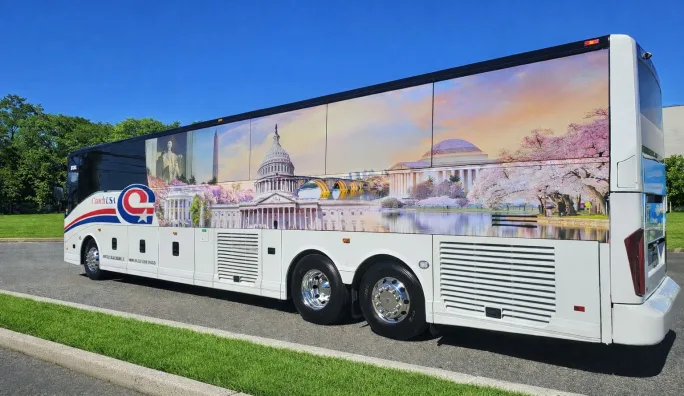
Organizations that view equipment and systems solely as expenses tend to lag behind those that see them as enablers of scale.
Coach USA
Invest Where it Matters.
Scaling is not just about equipment or workflows; it hinges on the experts supporting them. Hiring for skill, not convenience, accelerates the impact of bringing production in-house.
The quality of the employee has to match the quality of the equipment. Investments in top-tier systems and tools deserve top-tier professionals who understand them inside and out.
External support matters too: consulting industry professionals and suppliers can provide clear guidance to help avoid early missteps.
A principle that is simple but often overlooked: One has to spend money to make money. While deliberate investment may require higher upfront spending, it often prevents far more expensive operational inefficiencies down the line. When organizations invest deliberately in both people and partners, they create the foundation for sustainable growth, smoother adoption of new technology, and far greater operational control.
What’s Next in Transportation
At the end of the day, scaling is a mindset shift. It requires leaders to stretch their thinking, challenge comfortable habits, and resist the temptation to keep doing things the way they have always been done.
Bringing key capabilities in-house, adopting the right technologies, and investing in the right people all work together to cut downtime, improve quality, and create new revenue opportunities. These are not abstract ideas; they are practical steps any transportation operation can take to gain more control over its future.
For those who do, the possibilities expand quickly. Commercial vehicles are quickly becoming a frontier for new media formats, with capabilities like embedded electronics and tactile film technologies. These innovations turn a standard fleet asset into a moving experience, the kind that makes passersby look twice.
Leaders who modernize operations today will be the ones positioned to take advantage of what is coming next — from new materials to new forms of visual communication. The only way to get there is to start moving now.
About the Author:Bernie Obry, Maintenance Director at Perfect Body Co., Subsidiary of Coach USA
Quick Answers
Bringing functions in-house is beneficial because it enhances operational alignment and allows vehicles to return to revenue generation more quickly while reducing external expenditures.
*Summarized by AI
More Technology

From Hardware to Digital Partner: Luminator Charts Its Next Chapter
CEO Magnus Friberg discusses Luminator’s shift toward becoming a digital partner, the growing importance of software and interoperability, and how AI can help agencies improve operations and passenger experience.
Read More →
Beyond the Checklist: A Structured Approach to Transit Maintenance
Reliability-Centered Maintenance helps transit agencies move beyond routine checklists to focus limited resources on the assets and failures that have the greatest impact on safety, reliability, and service.
Read More →
NJ TRANSIT Advances Bus Technology Upgrades Across Statewide Fleet
More than 1,500 buses now feature upgraded technology designed to improve arrival predictions and provide free Wi-Fi, with deployment expected to reach nearly 2,000 buses by the end of 2026.
Read More →

Building a Flexible Path to Transit Electrification
John Hroncich discusses BAE Systems’ modular and scalable approach, lessons learned from decades of real-world operations, and how agencies can identify electrification strategies that fit their fleets.
Read More →
Biz Briefs: Alstom Lands Canadian Contract, LYT to Supply California TSP, and More
In METRO's latest installment, we take a look at recent news from Complete Coach Works, Beep, FlixBus, and more partnerships making headlines across the transportation sector.
Read More →
From Legacy Silos to Conversational Intelligence
What if transit leaders could ask any operational question and get a trusted answer in seconds? Conversational AI is transforming how agencies use their data.
Read More →
USDOT Announces Rail Vehicle Replacement Grants, Chattanooga AV Shuttle Funding
More than $191 million in federal funding will help three transit agencies replace aging rail vehicles and support a new autonomous shuttle service in Chattanooga.
Read More →
Bus Tech Talk: Keeping Transit Technicians Ahead of the Technology Curve
LA Metro’s Obed Mejia discusses technician training, evolving maintenance technology, fleet replacement, and strategies for getting the most out of today’s transit fleets.
Read More →
Biz Briefs: RIPTA Unveils New Frontrunners, Clevland RTA Adds New Siemens, and More
In METRO's latest installment, we take a look at recent news from Siemens, Prevost, Dodge, and more partnerships making headlines across the transportation sector.
Read More →
Why Simulating Pedestrian Movement Has Become Essential for Modern Rail Stations
Pedestrian microsimulation is helping rail planners identify bottlenecks, test station designs, and prepare complex transit hubs for growing passenger volumes.
Read More →