



Boston's MBTA Advancing Major Signal Modernization to Improve Red Line Reliability
To accomplish this work, the MBTA announced that four phases of temporary evening service changes will begin on February 28 and continue through April.

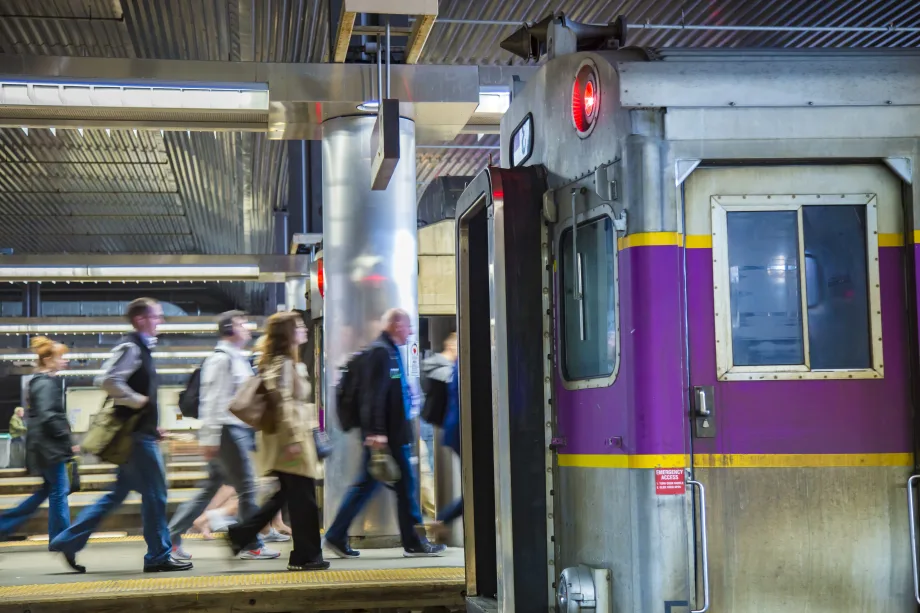
The work taking place beginning February 28, which could have been completed in 2019, fully corrects these issues, restoring full system functionality.
MBTA/Keolis
- Boston's MBTA is advancing major signal modernization efforts to improve the reliability of the Red Line.
- The modernization project will involve temporary evening service changes.
- These service changes are scheduled to occur in four phases from February 28 through April.
*Summarized by AI
Boston’s MBTA announced that critical signal modernization work is underway on the Red Line at Columbia Junction, near JFK/UMass station, as crews complete testing and cutover to the new digital signaling system in this area.
The work will bring important upgrades that will strengthen Red Line service reliability for riders, enabling trains to be routed more quickly, turned around faster, and recovered from unplanned disruptions more efficiently. To accomplish this work, the MBTA announced that four phases of temporary evening service changes will begin on February 28 and continue through April.
“The long-overdue work at Columbia Junction completes signal updates that should have been accomplished after the 2019 Red Line derailment. We’re taking the time now to do the work correctly, modernize the system, and improve the Red Line’s reliability long-term,” said Interim MassDOT Secretary and MBTA GM Phillip Eng. “By doing this work in a phased evening approach instead of a full shutdown, we’re also delivering essential improvements while minimizing disruption for riders. I thank riders for their patience while we accomplish this critical work.”
Signal Modernization
Columbia Junction is the complex area of track just north of JFK/UMass that merges the Ashmont and Braintree branches and connects the Red Line’s main passenger track to the Cabot Yard Maintenance Facility, where the majority of the Red Line fleet is stored and maintained.
The signal system in this area was significantly damaged following the major derailment of a Red Line train in 2019. Initial repairs restored service at that time, but signal and switch operations have remained limited.
The work taking place beginning February 28, which could have been completed in 2019, fully corrects these issues, restoring full system functionality. Operations will be able to reroute trains as needed quickly, turn trains around more quickly, and recover more quickly after unplanned service changes, ultimately providing a better transit experience for riders, MBTA officials said.
The work also follows through on the MBTA’s commitment to complete major signal upgrades on the Orange and Red lines before the FIFA World Cup matches this summer.
Testing of the new system began in mid-February. Over 100 track circuits are in the Columbia Junction area, and most require 12 tests.
With over 1,200 tests to complete during this phase of the project, the MBTA is closely monitoring, analyzing, and documenting the results of each test, recognizing that adjustments will be needed as the work progresses.
Quick Answers
The purpose of the temporary evening service changes is to advance major signal modernization efforts aimed at improving the reliability of the Red Line.
*Summarized by AI
More Technology

From Hardware to Digital Partner: Luminator Charts Its Next Chapter
CEO Magnus Friberg discusses Luminator’s shift toward becoming a digital partner, the growing importance of software and interoperability, and how AI can help agencies improve operations and passenger experience.
Read More →
Beyond the Checklist: A Structured Approach to Transit Maintenance
Reliability-Centered Maintenance helps transit agencies move beyond routine checklists to focus limited resources on the assets and failures that have the greatest impact on safety, reliability, and service.
Read More →
NJ TRANSIT Advances Bus Technology Upgrades Across Statewide Fleet
More than 1,500 buses now feature upgraded technology designed to improve arrival predictions and provide free Wi-Fi, with deployment expected to reach nearly 2,000 buses by the end of 2026.
Read More →

Building a Flexible Path to Transit Electrification
John Hroncich discusses BAE Systems’ modular and scalable approach, lessons learned from decades of real-world operations, and how agencies can identify electrification strategies that fit their fleets.
Read More →
Biz Briefs: Alstom Lands Canadian Contract, LYT to Supply California TSP, and More
In METRO's latest installment, we take a look at recent news from Complete Coach Works, Beep, FlixBus, and more partnerships making headlines across the transportation sector.
Read More →
From Legacy Silos to Conversational Intelligence
What if transit leaders could ask any operational question and get a trusted answer in seconds? Conversational AI is transforming how agencies use their data.
Read More →
USDOT Announces Rail Vehicle Replacement Grants, Chattanooga AV Shuttle Funding
More than $191 million in federal funding will help three transit agencies replace aging rail vehicles and support a new autonomous shuttle service in Chattanooga.
Read More →
Bus Tech Talk: Keeping Transit Technicians Ahead of the Technology Curve
LA Metro’s Obed Mejia discusses technician training, evolving maintenance technology, fleet replacement, and strategies for getting the most out of today’s transit fleets.
Read More →
Biz Briefs: RIPTA Unveils New Frontrunners, Clevland RTA Adds New Siemens, and More
In METRO's latest installment, we take a look at recent news from Siemens, Prevost, Dodge, and more partnerships making headlines across the transportation sector.
Read More →
Why Simulating Pedestrian Movement Has Become Essential for Modern Rail Stations
Pedestrian microsimulation is helping rail planners identify bottlenecks, test station designs, and prepare complex transit hubs for growing passenger volumes.
Read More →