



AC Transit's hydrogen fuel-cell bus evaluation surpasses targets
Testing shows the vehicles have made significant progress toward commercialization, surpassing fed technical targets for fuel cell operating hours and reliability.

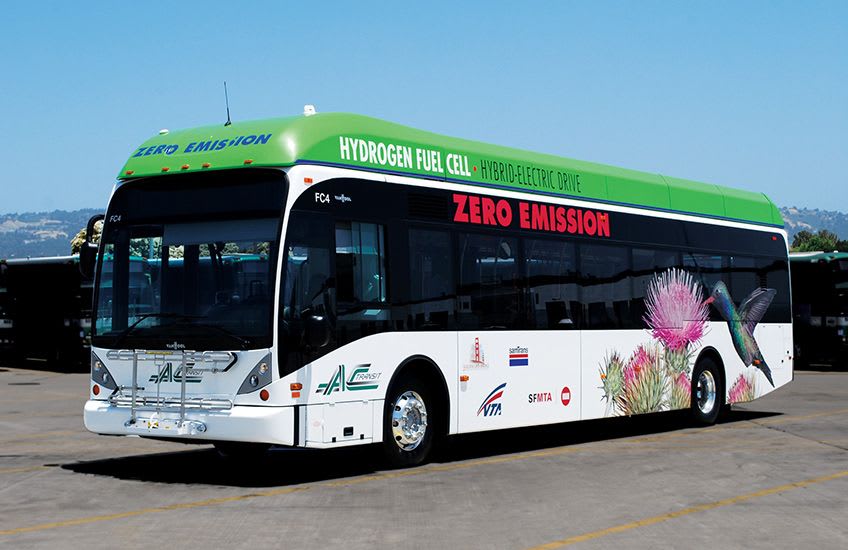
AC Transit is demonstrating 13 advanced-design fuel cell electric buses and two hydrogen fueling stations. Photo by Leslie Eudy, NREL
AC Transit is demonstrating 13 advanced-design fuel cell electric buses and two hydrogen fueling stations. Photo by Leslie Eudy, NREL
Results from a National Renewable Energy Laboratory (NREL) evaluation of hydrogen fuel cell electric buses (FCEBs) at Alameda Contra-Costa Transit District (AC Transit) in California show that FCEBs have made significant progress toward commercialization, surpassing the U.S. Department of Energy's (DOE's) ultimate technical targets for fuel cell operating hours and reliability.
NREL collects and analyzes transit agency data to validate FCEB performance and cost as compared to DOE and U.S. Department of Transportation (DOT) targets and conventional transit technologies like diesel or compressed natural gas. The DOE Fuel Cell Technologies Office (FCTO) in the Office of Energy Efficiency and Renewable Energy and DOT's Federal Transit Administration fund NREL's evaluations and the results provide feedback and direction to early-stage research and development.
In a recent FCTO webinar, Leslie Eudy, NREL's project lead for FCEB evaluations, reviewed and presented data and accomplishments from several demonstration projects, including AC Transit. This partner operates the largest FCEB fleet in NREL's evaluation project with 13 advanced-design fuel cell buses and two hydrogen fueling stations.
AC Transit shares FCEB data with the NREL team including fuel cell hours, fueling records, and roadcalls. Two results — fuel cell hour accumulation and reliability — have surpassed DOE-DOT technical targets. As of April 2018, two fuel cell systems in AC Transit's FCEBs exceeded the DOE-DOT fuel cell hour ultimate target of 25,000 hours accumulated and all but one bus exceeded the DOE-DOT interim target of 18,000 hours.
NREL measures fuel cell reliability as miles between roadcalls (MBRC). The cumulative fuel-cell-system-related MBRC in AC Transit's FCEB fleet surpassed the ultimate target with 24,200 MBRC as of January 2018. DOE-DOT targets for reliability are 15,000 miles for the interim target and 20,000 for the ultimate target.
AC Transit had another notable achievement — the successful transition of all FCEB maintenance work to transit staff. While maintaining FCEB buses each day, in-house AC Transit staff can anticipate, troubleshoot, and repair issues before they cause an in-service failure. This increases reliability and reduces labor costs as the staff becomes more familiar with the systems, both of which help drive competition with conventional and other zero-emission transit technologies.
Although detailed evaluation of AC Transit's current fleet has ended, fuel cell hours accumulated will continue to be tracked.
View the webinar 2018 Fuel Cell Electric Buses: Progress Toward Meeting Technical Targets.
Learn more about NREL's fuel cell electric bus evaluations.
More Technology

New York MTA Launches Historic $1.9B Signal, Track Modernization Project
Funded in part by congestion pricing revenue, the project will replace nearly century-old signals along the A and C lines in Brooklyn and Queens.
Read More →
Biz Briefs: New Electric Offering from Alexander Dennis/Volvo, Transdev in Boston, and More
In METRO's latest installment, we also take a look at recent news from STV, WSP, Prevost, and more partnerships making headlines across the transportation sector.
Read More →
Roman Cornell on ABC Companies’ Evolution and the Future of Passenger Transportation
The company’s CEO discusses carrying forward a third-generation family legacy, ABC’s continued evolution in passenger transportation, support for increasingly complex fleets, and how technology and continued investment could help operators improve uptime.
Read More →
ETA CEO John Maglio on Transit Technology, Innovation, and Building Agency Trust
ETA founder and CEO John Maglio explores the evolution of transit technology, the importance of reliable systems, and how stronger partnerships can help agencies improve operations and the passenger experience.
Read More →
Frontrunner Bus Group Introduces XF Low-Floor Bus with Enhanced Accessibility
The new mid-sized bus features a full flat-floor design, eight-inch curbside step-in height, and zero-entry rear ramp to improve passenger access and operational flexibility.
Read More →
Building a Flexible Path to Transit Electrification with BAE's John Hroncich
John Hroncich discusses BAE Systems’ modular and scalable approach, lessons learned from decades of real-world operations, and how agencies can identify electrification strategies that fit their fleets.
Read More →
Scenes from APTA TRANSform & EXPO 2026
Transit leaders, manufacturers, and industry professionals gathered in Chicago to explore new technologies, share ideas, and discuss the future of public transportation.
Read More →
Biz Briefs: New Flyer Secures Additional 100-Bus Order from WMATA and More
In METRO's latest installment, we also take a look at recent news from Masabi, MCI, Samsara, and more partnerships making headlines across the transportation sector.
Read More →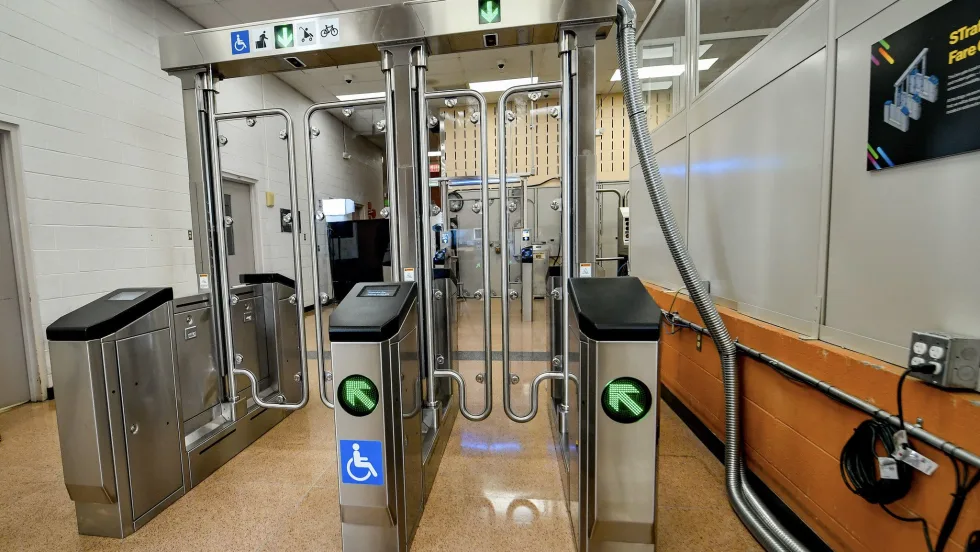
MTA Fare Gate Pilot Reduces Fare Evasion by 35%
Following a 20-station pilot, the agency plans to install new fare gates at 20 additional subway stations as part of a $1.1 billion modernization initiative.
Read More →
California Law Extends AC Transit’s Bus Lane Camera Enforcement
The new law allows AC Transit to continue using forward-facing bus cameras to enforce parking violations in bus-only lanes and at bus stops.
Read More →