




Miss This? AC Transit Sees First Sustained Three-Month Ridership Climb Since 2022
California Law Extends AC Transit’s Bus Lane Camera Enforcement
The new law allows AC Transit to continue using forward-facing bus cameras to enforce parking violations in bus-only lanes and at bus stops.
October 6, 2026
California’s AB 1837 extends AC Transit’s authority to use forward-facing bus cameras to enforce parking violations in bus-only lanes and at bus stops.
Credit:
METRO
2 min to read
California Governor Gavin Newsom has signed legislation extending Alameda-Contra Costa Transit District's (AC Transit) authority to use forward-facing bus cameras to enforce parking violations in bus-only lanes and at bus stops.
Assembly Bill 1837 extends an existing statewide authorization that was scheduled to expire on January 1, 2027. The cameras are used to identify vehicles illegally parked in bus lanes or blocking bus stops, which can prevent buses from safely reaching the curb and create accessibility issues for riders.
Camera Enforcement Expands Across AC Transit
AC Transit began deploying automated forward-facing cameras along the Tempo Bus Rapid Transit corridor in June 2024, targeting vehicles illegally occupying bus-only lanes and blocking station platforms.
The agency initially relied on bus operators to identify potential violations by pressing an onboard button. In August 2024, AC Transit expanded automated enforcement to 100 buses throughout its service area, with each vehicle equipped with two small forward-facing cameras mounted on the windshield.
Data compiled with Hayden AI, the developer of the camera technology, showed declines in both bus lane and bus stop violations. Bus-only lane citations dropped from 1,241 in the second quarter of 2025 to 631 during the same period in 2026, a decline of nearly 50%.
Bus stop citations fell from 5,207 to 4,068 during the same year-over-year period, a reduction of more than 20%.
AB 1837 Keeps Enforcement Program in Place
“I thank Governor Newsom for taking action to make public transportation safer and more accessible. Vehicles illegally stopped in bus-only lanes or blocking bus stops create more than an inconvenience,” said Salvador Llamas, General Manager and CEO. “They delay service, disrupt trips, and can create serious risks for riders with disabilities and other vulnerable riders who need safe access to board and exit our buses.”
Assemblymember Mark Gonzalez (D-Los Angeles) authored AB 1837, with Senator Jesse Arreguín (D-Oakland) as principal co-author. According to AC Transit, the legislation advanced through the Legislature with bipartisan support.
The agency also cited regional support for continued automated bus lane and bus stop enforcement from the Metropolitan Transportation Commission, the San Francisco Municipal Transportation Agency, the City and County of San Francisco, and the Alameda County Transportation Commission.
With AB 1837 now law, AC Transit can continue using the camera enforcement program as it provides service to more than 3 million riders each month.
More Technology
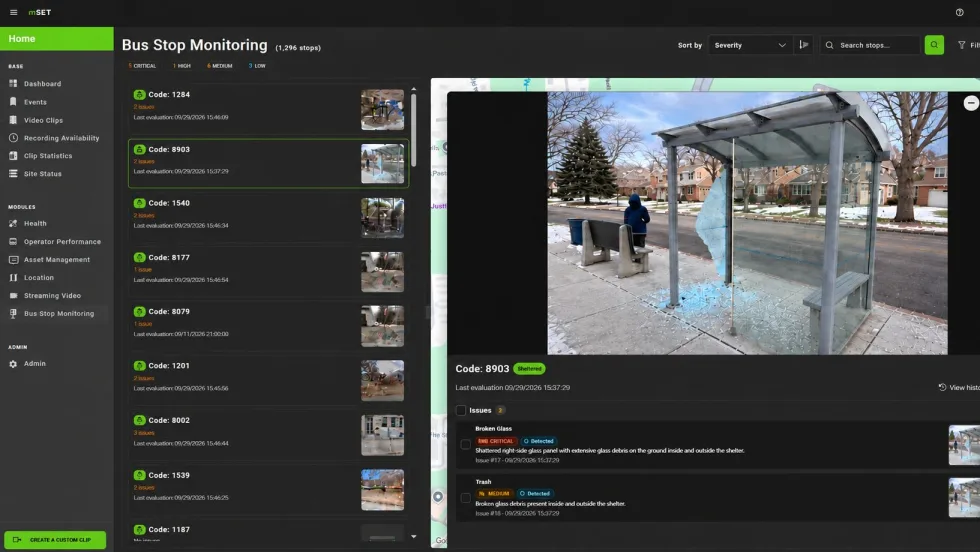
Biz Briefs: Luminator Launches AI Technology to Monitor Bus Stop Conditions and More
In METRO's latest installment, we also take a look at recent news from Masabi, Troman Industries, ioki, CCW, and more partnerships making headlines across the transportation sector.
Read More →
Public Transit Conference Returning to GFX in 2027, Call for Papers Now Open
The Call for Papers is now open, allowing transit agency professionals and industry experts to help shape the PTC educational program by submitting session ideas for consideration.
Read More →
ENC Lands MATA Contract and More in Biz Briefs
In this edition of Biz Briefs, we spotlight the latest developments shaping the future of mobility.
Read More →

Strada360’s Steve Lassey on Turning Transit Data Into Better Decisions
From breaking down data silos to preparing for AI, Strada360 CEO Steve Lassey discusses how transit agencies can use technology to improve operations, customer information, and long-term decision-making.
Read More →
Almaviva Looks to Open Architecture to Advance Transit Technology
Eric Reese discusses how interoperability, open architecture, and modular design can help transit agencies control costs, reduce vendor lock-in, and upgrade technology without starting over.
Read More →
Driving Smarter Paratransit
John Hanlon shares how AlphaRoute is leveraging AI-powered technology to help paratransit providers optimize operations, support frontline staff, and enhance the rider experience.
Read More →
From Hardware to Digital Partner: Luminator Charts Its Next Chapter
CEO Magnus Friberg discusses Luminator’s shift toward becoming a digital partner, the growing importance of software and interoperability, and how AI can help agencies improve operations and passenger experience.
Read More →
Beyond the Checklist: A Structured Approach to Transit Maintenance
Reliability-Centered Maintenance helps transit agencies move beyond routine checklists to focus limited resources on the assets and failures that have the greatest impact on safety, reliability, and service.
Read More →
NJ TRANSIT Advances Bus Technology Upgrades Across Statewide Fleet
More than 1,500 buses now feature upgraded technology designed to improve arrival predictions and provide free Wi-Fi, with deployment expected to reach nearly 2,000 buses by the end of 2026.
Read More →
Building a Flexible Path to Transit Electrification
John Hroncich discusses BAE Systems’ modular and scalable approach, lessons learned from decades of real-world operations, and how agencies can identify electrification strategies that fit their fleets.
Read More →