



MTA Fare Gate Pilot Reduces Fare Evasion by 35%
Following a 20-station pilot, the agency plans to install new fare gates at 20 additional subway stations as part of a $1.1 billion modernization initiative.

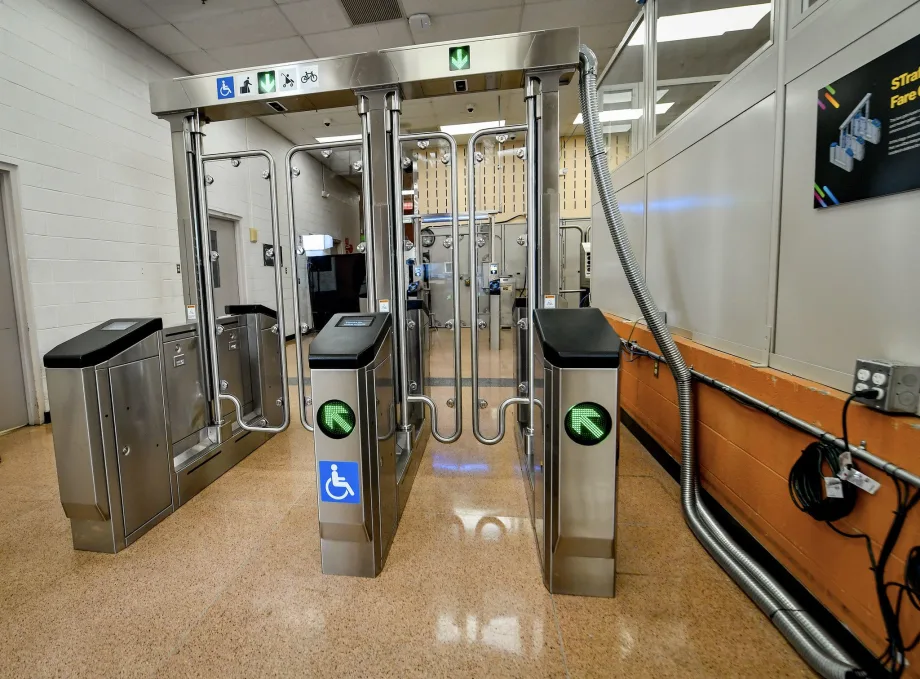
The MTA qualified three vendors — Cubic, STraffic, and Conduent — to compete for contracts to deliver new fare gate systems at 20 additional stations across Manhattan, the Bronx, Brooklyn, and Queens.
Marc A. Hermann
- A pilot program involving new fare gates at 20 stations has reduced fare evasion by 35%.
- The Metropolitan Transportation Authority (MTA) is set to expand this initiative to 20 more subway stations.
- This expansion is a part of a broader $1.1 billion effort aimed at modernizing the subway system.
*Summarized by AI
The New York Metropolitan Transportation Authority (MTA) announced results from its subway fare gate pilot, reporting an average 35% reduction in fare evasion at 20 stations equipped with new gates.
Following the pilot, Gov. Kathy Hochul announced the next 20 subway stations that will receive new fare gates at all entrances as part of the agency's efforts to reduce fare evasion, improve accessibility, and modernize the customer experience.
The MTA qualified three vendors — Cubic, STraffic, and Conduent — to compete for contracts to deliver new fare gate systems at 20 additional stations across Manhattan, the Bronx, Brooklyn, and Queens.
Bids for the first phase are expected this month, with installation of the new gates scheduled to begin by the end of 2026.
“The data is clear: these new fare gates have created a better riding experience for customers and made it harder for would-be fare evaders to enter the system without paying,” Hochul said. “Now, we’re ramping up our plan to install these world-class fare gates across the subway system so even more riders can benefit.”
MTA's Fare Gate Initiative
The fare gate initiative is part of the MTA's 2025-2029 Capital Plan, which includes $1.1 billion to upgrade fare control areas at 150 subway stations.
The next 20 stations represent the first phase of the broader modernization program. The MTA said the 150 stations included in the program serve nearly three-quarters of daily subway riders. The rollout will continue into 2027, with a second phase scheduled to bring 30 additional stations under construction by the end of that year. Combined with the pilot locations, the first two phases will bring modern fare gates to 70 stations.
“This is a generational investment in the way customers navigate through the subway system,” said NYC Transit President Demetrius Crichlow. “These gates are more accessible and provide a better design that improves customer flow and deters fare evasion. Better fare compliance helps secure more of the revenue we rely on to deliver faster and more reliable service.”
Pilot Results and Evaluation
In December 2023, the MTA issued a Request for Information (RFI) seeking firms that could design fare gates meeting its technical requirements.
Three vendors advanced to the pilot phase, installing new gates at 20 stations at no cost to the MTA. Some locations received entirely new fare gate arrays, while others received only new wide-aisle access gates. The MTA began evaluating the gates last fall, examining fare evasion, accessibility, customer experience, passenger throughput, maintenance, system integration, and data accuracy.
Since the pilot began, the gates have recorded approximately 29 million entries and 34 million exits. The MTA estimates that 40% to 50% of typical daily subway riders have used the new gates at least once. Stations equipped with new gates experienced an average 35% reduction in fare evasion. The largest decreases were at Hoyt St and Nostrand Av (72%) and 3 Av-138 St (65%).
During the pilot, the MTA made adjustments based on gate performance and customer feedback. The agency used those findings to inform the final system design. The MTA is proceeding with procurement from the qualified vendors, with early station preparation work expected to begin in October 2026.
Modernizing Subway Access
The fare gate program represents the MTA's first comprehensive overhaul of its fare control system in more than 30 years.
The agency began installing its current tri-wheel turnstiles in the early 1990s. The design, which originated during the token era, presents accessibility challenges for riders using wheelchairs or traveling with strollers and luggage. To provide wider access, the MTA installed emergency exit gates to accommodate riders who cannot use traditional turnstiles. However, riders have also used these gates for fare evasion.
In recent years, the MTA has implemented several measures to address fare evasion through emergency gates, including replacing gate locks, deploying gate guards, and introducing delayed egress.
The new fare gate program aims to improve fare compliance and accessibility through a redesigned fare control system while improving passenger movement through stations.
Quick Answers
The MTA fare gate pilot resulted in a 35% reduction in fare evasion at the 20 stations where it was implemented.
*Summarized by AI
More Technology
California Law Extends AC Transit’s Bus Lane Camera Enforcement
The new law allows AC Transit to continue using forward-facing bus cameras to enforce parking violations in bus-only lanes and at bus stops.
Read More →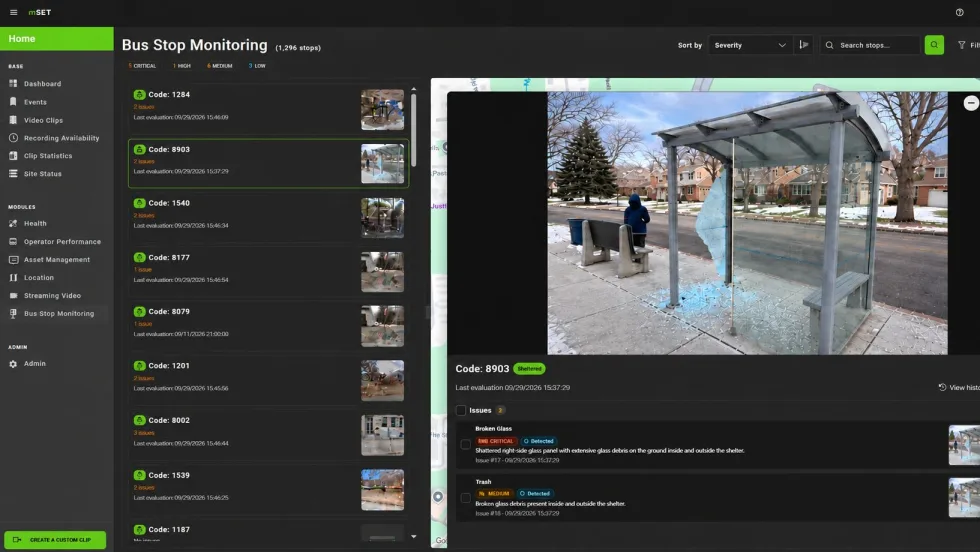
Biz Briefs: Luminator Launches AI Technology to Monitor Bus Stop Conditions and More
In METRO's latest installment, we also take a look at recent news from Masabi, Troman Industries, ioki, CCW, and more partnerships making headlines across the transportation sector.
Read More →
Public Transit Conference Returning to GFX in 2027, Call for Papers Now Open
The Call for Papers is now open, allowing transit agency professionals and industry experts to help shape the PTC educational program by submitting session ideas for consideration.
Read More →
ENC Lands MATA Contract and More in Biz Briefs
In this edition of Biz Briefs, we spotlight the latest developments shaping the future of mobility.
Read More →
Strada360’s Steve Lassey on Turning Transit Data Into Better Decisions
From breaking down data silos to preparing for AI, Strada360 CEO Steve Lassey discusses how transit agencies can use technology to improve operations, customer information, and long-term decision-making.
Read More →
Almaviva Looks to Open Architecture to Advance Transit Technology
Eric Reese discusses how interoperability, open architecture, and modular design can help transit agencies control costs, reduce vendor lock-in, and upgrade technology without starting over.
Read More →
Driving Smarter Paratransit
John Hanlon shares how AlphaRoute is leveraging AI-powered technology to help paratransit providers optimize operations, support frontline staff, and enhance the rider experience.
Read More →
From Hardware to Digital Partner: Luminator Charts Its Next Chapter
CEO Magnus Friberg discusses Luminator’s shift toward becoming a digital partner, the growing importance of software and interoperability, and how AI can help agencies improve operations and passenger experience.
Read More →
Beyond the Checklist: A Structured Approach to Transit Maintenance
Reliability-Centered Maintenance helps transit agencies move beyond routine checklists to focus limited resources on the assets and failures that have the greatest impact on safety, reliability, and service.
Read More →
NJ TRANSIT Advances Bus Technology Upgrades Across Statewide Fleet
More than 1,500 buses now feature upgraded technology designed to improve arrival predictions and provide free Wi-Fi, with deployment expected to reach nearly 2,000 buses by the end of 2026.
Read More →