



Q'Straint debuts new wheelchair retractor
The new QRT-360 meets the Rehabilitation Engineering Assistive Technology Society of North American's newly revised WTORS standard for effective wheelchair securement well in advance of the 2015 deadline.

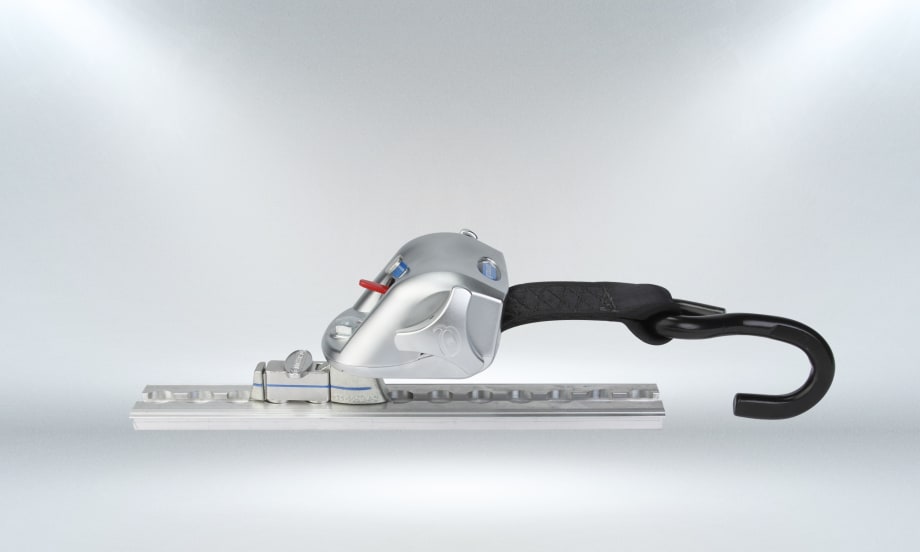

Q’Straint unveiled a new wheelchair retractor tie-down system that meets the higher-strength requirements of WC18 that take effect in December 2015. At that time, compliance with WC18 will require frontal-impact sled testing of the wheelchair tie-down system with the crash-test dummy restrained by a three-point lap/shoulder belt with a lap belt anchored to the 187-lb surrogate wheelchair, such that a large percentage of the wheelchair-passenger restraint forces are transmitted to the rear tie-down straps.
The new QRT-360 is the first four-point, heavy duty, fully automatic retractable tie-down system designed, engineered and built to perform successfully in a 30-mph frontal crash when the user of a powered wheelchair is traveling in a motor vehicle while using a commercially available crashworthy lap belt that must be used in the frontal-impact test conducted of wheelchairs under WC19.
The new QRT-360 meets RESNA’s (Rehabilitation Engineering Assistive Technology Society of North American) newly revised WTORS standard for effective wheelchair securement well in advance of the 2015 deadline. It also offers a shortened retractor footprint that allows more flexibility in vehicle anchor-point locations to better accommodate large wheelchairs.
The revolutionary new product is compatible with the widest variety of wheelchairs and is an acceptable solution to wheelchair securement in all types of motor-vehicles.
The QRT-360 design utilizes energy management features and material technologies to deliver the system’s full strength for maximum load capacity. It features an energy-absorbing steel frame, new high-strength 58-mm wide webbing and a fine-adjustment self-tensioning mechanism using 25 high-strength teeth in the retractor locking mechanism.
The geometry of the teeth and an innovative new locking bar ensure perpendicular alignment for maximum strength in all tie-down situations. A re-engineered positive-locking Interface in the retractor mechanism contributes to the system’s ability to resist extremely high dynamic loads. The QRT-360 is covered by a comprehensive five-year warranty.
More Paratransit

King County Metro Makes ADA Paratransit Easier to Navigate
METRO's Innovative Solutions Award winner replaces complex service-area descriptions with an accessible, interactive map that puts paratransit information directly in customers’ hands.
Read More →
Jacksonville’s NAVI Project Charts a New Course for Autonomous Public Transportation
Through its NAVI program, JTA is showing how autonomous vehicles, intelligent infrastructure, and coordinated operations can work together to deliver everyday public transportation.
Read More →
Driving Smarter Paratransit
John Hanlon shares how AlphaRoute is leveraging AI-powered technology to help paratransit providers optimize operations, support frontline staff, and enhance the rider experience.
Read More →
METRO Magazine Announces 2026 Innovative Solutions Awards Winners
Projects Recognized for Advancing Mobility Through Technology, Accessibility, Workforce Innovation, and Operational Excellence
Read More →
Biz Briefs: STV teams with Amtrak, Motorcoach Operators Boost Fleet and Land Contracts, and More
From manufacturers and suppliers to transit agencies and motorcoach operators, these updates offer a snapshot of the projects, partnerships and business moves driving the industry forward.
Read More →
Biz Briefs: Masabi Teams with St. Louis Metro and More
In METRO's latest installment, we take a look at recent news from Transdev, Hitachi, and more partnerships making headlines across the transportation sector.
Read More →
New York MTA Leverages Zoning Program to Advance Station Accessibility
Accessibility enhancements at Nevins St Station will be financed through a development agreement tied to the MTA's Zoning for Accessibility initiative.
Read More →
Reinventing Fleet Maintenance with Real-time Visibility and AI
Transit leaders need to know what needs fixing, where to look, who is responsible, when work is completed, and what it costs without having to chase information across disconnected systems.
Read More →
SamTrans Sets Priorities for Potential Connect Bay Area Revenue
The board-approved framework allocates future funding to maintaining service, rider improvements, equity initiatives, and infrastructure repairs.
Read More →
Chicago's NITA Act Moves Into Next Phase as Service Improvements Begin
Rider-focused improvements will begin rolling out across the system immediately as CTA, Metra, and Pace increase service this summer in the six-county region.
Read More →