



Renewable Diesel, Biodiesel Cut GHG Emissions in California
New numbers from the California Air Resources Board demonstrate the importance of renewable fuels in cutting greenhouse gases from heavy-duty vehicles in California.


Neste is one of the companies providing renewable diesel. To date, Neste has provided more than 1.5 billion gallons of renewable diesel to California businesses and cities, Neste officials said.
Photo: Neste
Renewable diesel and biodiesel are playing a major role in reducing greenhouse gas emissions from the transport sector in California, according to newly released data from the California Air Resources Board on California’s Low Carbon Fuel Standard Program.
The Diesel Technology Forum, a not-for-profit organization dedicated to raising awareness about the importance of diesel engines, fuel, and technology, points out that low-carbon transportation fuels powering internal combustion engines delivered the state’s biggest reduction in transportation-related sources of greenhouse gas emissions.
Biodiesel and renewable diesel fuel are the biggest carbon-cutting technologies from the transportation sector in the report, edging out ethanol and beating the benefits of electrified cars, trucks and buses by three to one, notes the forum.
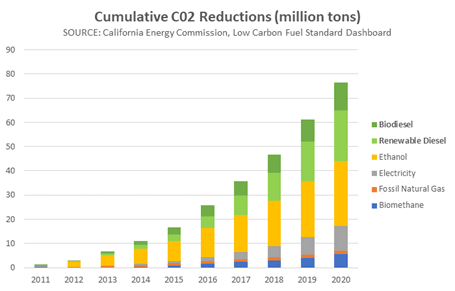
Graph: Diesel Technology Forum
Cumulatively, over the period of 2011-2020, California’s consumption of biodiesel and renewable diesel fuels accounted for 43% (over 32 million tons) of all greenhouse gas eliminated from the transportation sector, while battery-electric transportation options accounted for only 13% (10 million tons), according to Allen Schaeffer, executive director of the Diesel Technology Forum.
Availability of low carbon-biobased diesel fuel is expanding. CARB estimates that biobased diesel fuel has grown from about 16 million gallons in 2011 to nearly 1 billion gallons in 2020. Renewable diesel fuel is one the fastest-growing low-carbon transportation fuels sold in the state, notes DTF.
These are fuels derived from waste feedstocks, including vegetable oils and animal fats, to yield very low carbon transportation fuels.
Traditional fuel producers such as Marathon and Phillips66 have announced investments to retool petroleum refineries to produce renewable diesel fuel, in addition to existing large renewable diesel providers such as Neste and Renewable Energy Group. Love’s, Cargill and their affiliates recently announced a joint venture to produce and market renewable diesel.
Energy analysts estimate that announced capacity from these announcements would equate to nearly 3 billion gallons of the fuel produced annually, or about as much petroleum diesel fuel consumed in California in 2019.
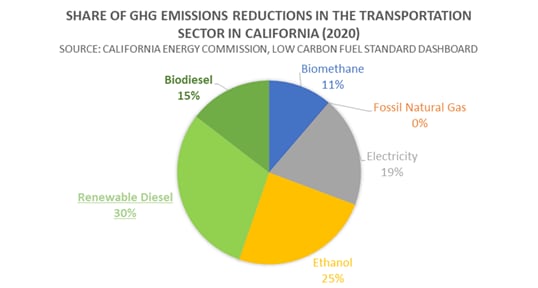
Graph: Diesel Technology Forum
“Relative to other strategies, today the switch to biobased diesel fuel is a cost-effective solution that allows municipal and private fleets to generate big climate benefits at least cost by using existing assets like fueling infrastructure and diesel engines,” said Schaeffer in a news release.
For example:
The City of Oakland was an early adopter of renewable diesel fuel. All of the city-owned trucks, equipment and emergency generators are now operating on 100T renewable diesel fuel to displace 230,000 gallons of petroleum diesel and reduce greenhouse gas emissions by 75%.
The City of San Diego is now fueling its fleet of 1,125 heavy-duty vehicles and equipment with renewable diesel fuel to achieve more than 80% reduction on greenhouse gas emissions
“Meeting the climate challenge will require many solutions,” Schaeffer said in a news release. “While the promise of zero-emissions technologies is growing, internal combustion engines using biobased diesel fuels have been delivering significant carbon reductions across broad sectors of the economy. The greatest benefits are occurring from the use of these biobased diesel fuels in heavy-duty vehicles, Class 8 trucks, that represent 60% of all emissions generated by the fleet of commercial vehicles.
“With other West Coast states recently adopting low-carbon transportation policies, we expect a green corridor from California through British Columbia and biobased diesel fuels will generate impressive climate benefits as they have in California.”
Originally posted on Heavy Duty Trucking
More Zero Emissions
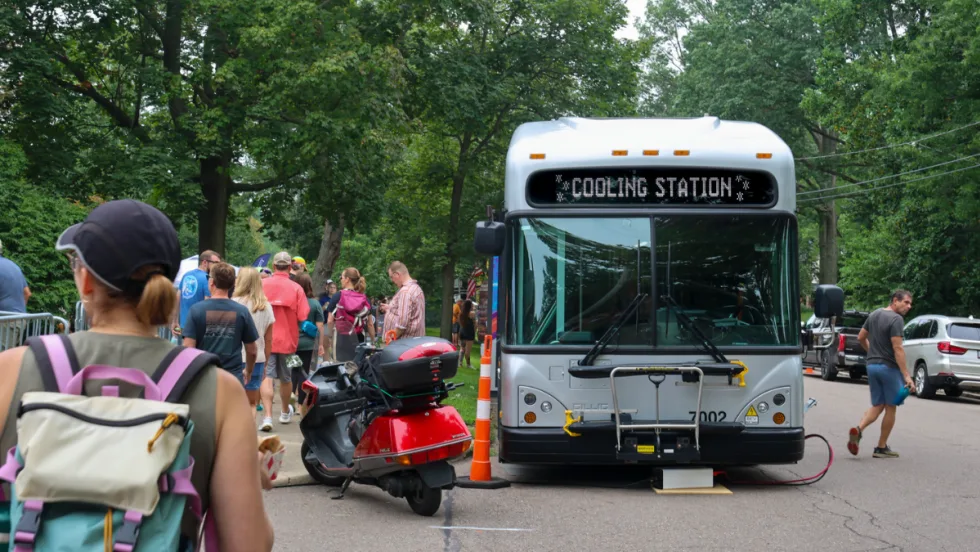
Ohio’s METRO RTA Turns Electric Buses into Mobile Power Sources at PorchROKR
See how three Gillig battery-electric buses powered festival stages while the agency’s new Park & Ride service carried approximately 1,000 attendees, demonstrating another potential use for transit agencies’ electric fleets.
Read More →
CALSTART and Forth Combine to Form Catalyst Mobility
The new name represents a renewed vision for the nonprofit focused on advancing clean, equitable, and affordable transportation solutions that move people and goods.
Read More →
Building a Flexible Path to Transit Electrification
John Hroncich discusses BAE Systems’ modular and scalable approach, lessons learned from decades of real-world operations, and how agencies can identify electrification strategies that fit their fleets.
Read More →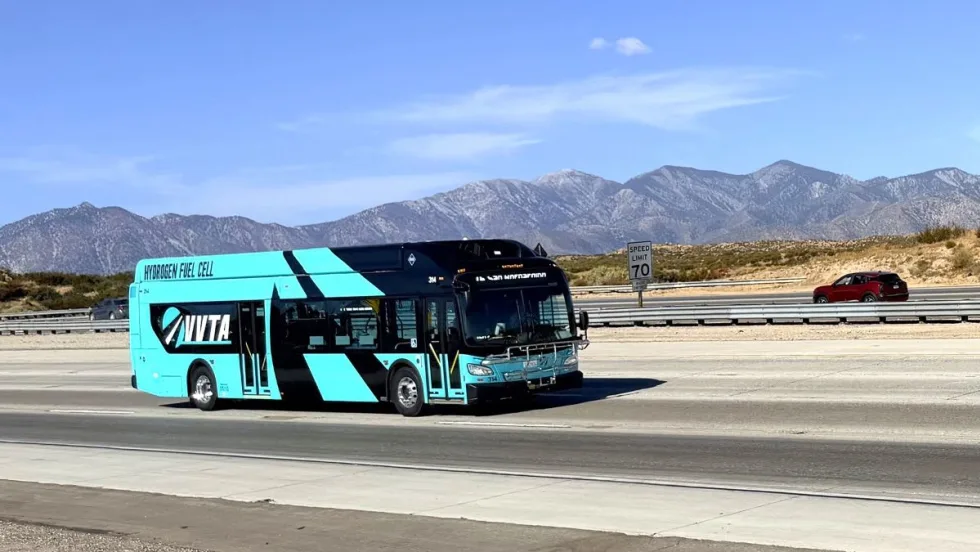
California's VVTA Begins Phased Rollout of Hydrogen Fuel Cell Buses
The agency is introducing 13 zero-emission buses into revenue service while evaluating performance across its urban, rural, and long-distance routes.
Read More →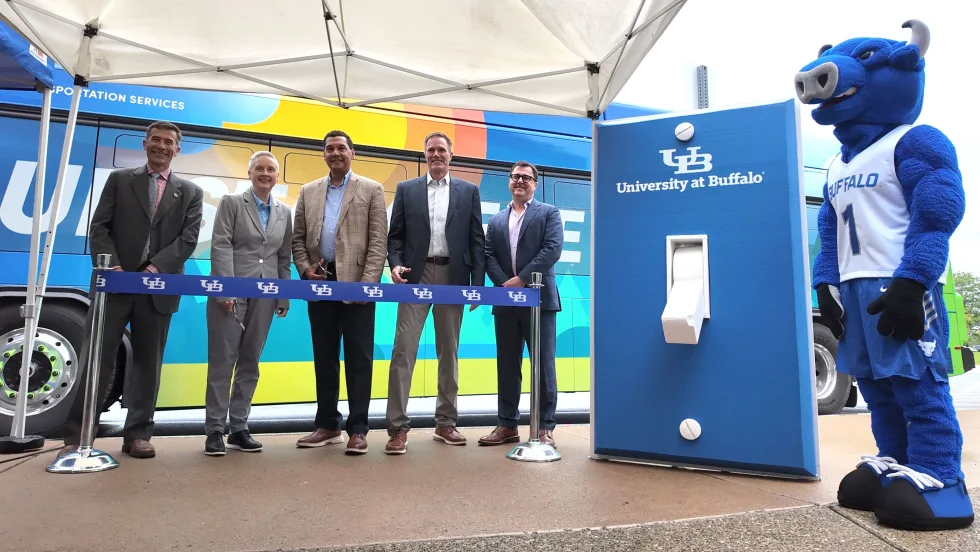
Inside Look: University at Buffalo Puts First 8 Electric Buses Into Stampede Service
UB, transportation solutions provider WeDriveU, and fleet electrification specialist Zenobē marked the deployment in the presence of students, university administrators, and local officials.
Read More →
Biz Briefs: OCTA Taps Clean Energy for Hydrogen Station, Stadler to Supply Via Rail Vehicles, and More
From manufacturers and suppliers to transit agencies and motorcoach operators, these updates offer a snapshot of the projects, partnerships and business moves driving the industry forward.
Read More →
AC Transit’s Cecil Blandon on Building the Next Generation of Transit Maintenance Leaders
The agency’s maintenance chief discusses leadership, workforce development, zero-emission technology, and preparing technicians for the future of public transportation.
Read More →
CTDOT Taps STV for Electric Bus Facility Design
The firm will work with CTDOT and RVT to define the facility layout, operational requirements, and long-term flexibility for RVT’s growing electric fleet.
Read More →
Chicago’s Pace Deploys 24 Hybrid-Electric Buses in Will County
The new buses reduce emissions and fuel consumption while advancing the agency's long-term goal of transitioning to a fully zero-emission fleet.
Read More →
DASH Breaks Ground on First On-Route Electric Bus Chargers in D.C. Region
The fast-charging infrastructure will help extend electric bus range, improve fleet utilization, and support DASH's goal of transitioning to a fully zero-emission fleet.
Read More →