



Key Factors Driving the Commercial EV Battery Market
A Calstart report found these five key factors will drive the battery costs for medium- and heavy-duty electric vehicles.

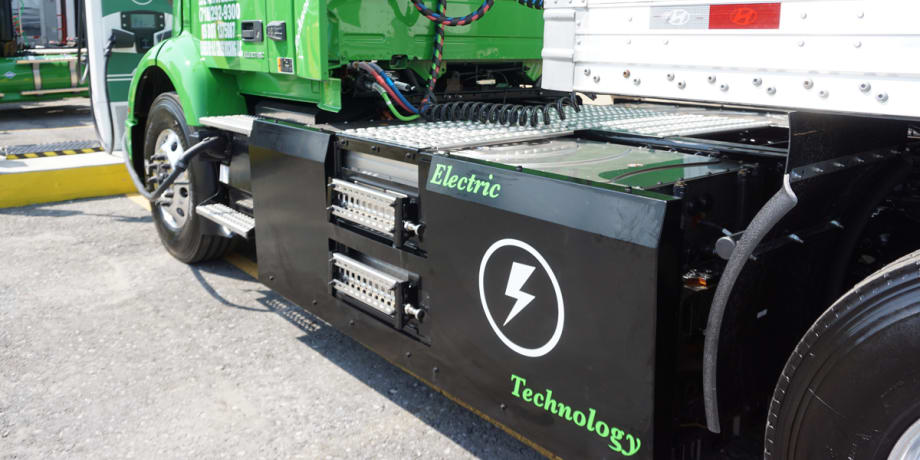
Capital costs to create manufacturing facilities and manufacture the unique pack will have an impact on the final battery pack price to the commercial vehicle OEM or Tier 1 supplier.
File Photo: Vesna Brajkovic
Battery-cost disparities will likely persist across the industry as electric commercial vehicle manufacturers continue to evolve and grow at different rates, according to a report released by Calstart.
Efforts to address cost and scale of batteries will be key for early-stage manufacturers to compete and successfully deliver products that meet fleets’ budgets. Therefore, purchase incentives and other policies are needed to help early-stage manufacturers and specific vehicle platforms while they are at sub-critical volumes, according to the report.
The report, authored by consulting firm Yunev, provides insight on the factors affecting battery costs for the U.S. commercial vehicle industry and offers an overview of the current state of battery sourcing and supply chain considerations.
Battery sourcing is a challenge for commercial vehicle OEMS due to lower volumes and scale. Truck OEMS are also competing with well-funded start-ups with access to the largest scale and lowest cost batteries in the passenger car electric vehicle market.
The key factors driving battery costs for medium- and heavy-duty electric vehicles are:
Raw materials. Raw matericalsaccount for roughly 70% of the total cost of battery cells. The majority of the cost is driven by the cathode and anode materials.
Battery cell chemistry. Lithium titanate (LTO) has a distinct advantage in terms of its ability to accept high charge rates while also delivering long cycle life compared to lithium nickel manganese cobalt oxide or lithium iron phosphate. LTO has attractive attributes for commercial vehicle applications, but come at a higher price point.
Production volumes. When it comes to purchasing Li-Ion batteries, scale and high-volume price points are achieved predominantly by delivering “actual” production volumes, not “forecasted” or “promised” production volumes, according to the report. Commercial vehicle OEMs and Tier 1 suppliers continue to seek pathways that will deliver sustainably lower battery prices, similar to levels currently available primarily to passenger car EV manufacturers.
Non-recurring engineering costs. These costs are driven by the up-front engineering cost required to design, validate, and release a new pack design into production, and the most probable forecasted volume that will be produced over a fixed period of time. The cost for the validation process in the NRE phase for commercial vehicle battery packs is typically in the range of $150,000 to $500,000.
Capital costs. Costs to create manufacturing facilities and manufacture the unique pack will have an impact on the final pack price to the commercial vehicle OEM or Tier 1 supplier.
Yunev serves the Li-Ion battery and electric vehicle markets, offering battery sourcing, strategic planning, new product development and more. Kevin Beaty, president of Yunev and lead author of the report, previously served as vice president and director of Calstart. Calstart is a nonprofit consortium which advocates for investment in the electric vehicle supply chain.
Originally posted on Heavy Duty Trucking
More Zero Emissions
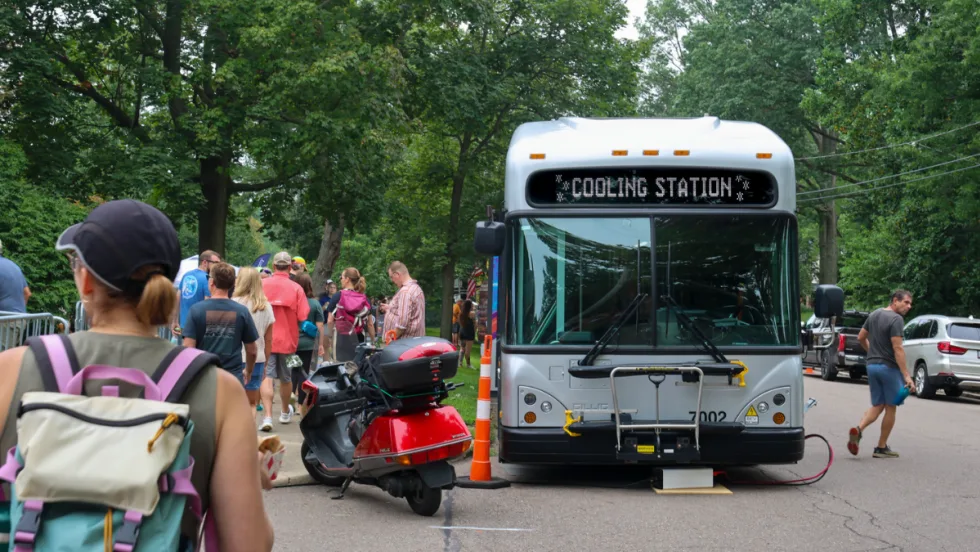
Ohio’s METRO RTA Turns Electric Buses into Mobile Power Sources at PorchROKR
See how three Gillig battery-electric buses powered festival stages while the agency’s new Park & Ride service carried approximately 1,000 attendees, demonstrating another potential use for transit agencies’ electric fleets.
Read More →
CALSTART and Forth Combine to Form Catalyst Mobility
The new name represents a renewed vision for the nonprofit focused on advancing clean, equitable, and affordable transportation solutions that move people and goods.
Read More →
Building a Flexible Path to Transit Electrification
John Hroncich discusses BAE Systems’ modular and scalable approach, lessons learned from decades of real-world operations, and how agencies can identify electrification strategies that fit their fleets.
Read More →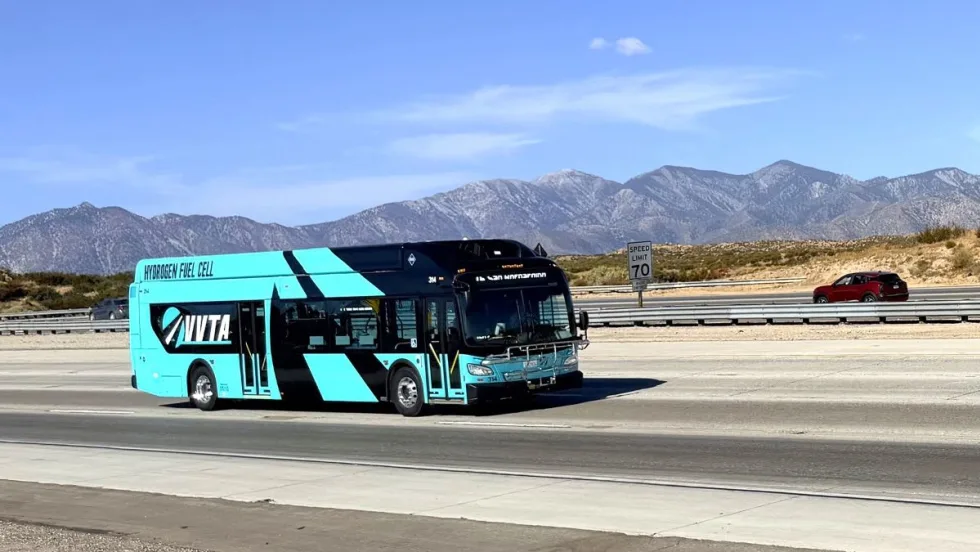
California's VVTA Begins Phased Rollout of Hydrogen Fuel Cell Buses
The agency is introducing 13 zero-emission buses into revenue service while evaluating performance across its urban, rural, and long-distance routes.
Read More →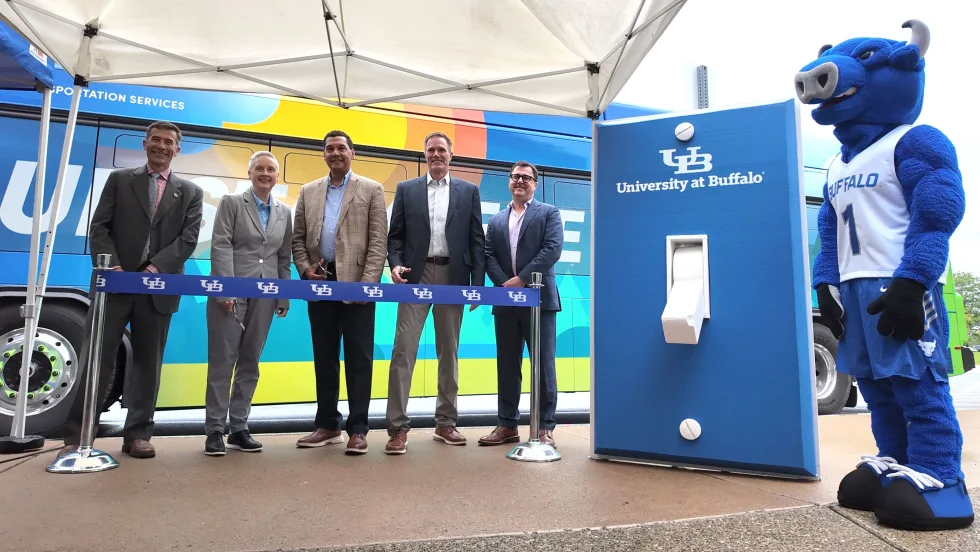
Inside Look: University at Buffalo Puts First 8 Electric Buses Into Stampede Service
UB, transportation solutions provider WeDriveU, and fleet electrification specialist Zenobē marked the deployment in the presence of students, university administrators, and local officials.
Read More →
Biz Briefs: OCTA Taps Clean Energy for Hydrogen Station, Stadler to Supply Via Rail Vehicles, and More
From manufacturers and suppliers to transit agencies and motorcoach operators, these updates offer a snapshot of the projects, partnerships and business moves driving the industry forward.
Read More →
AC Transit’s Cecil Blandon on Building the Next Generation of Transit Maintenance Leaders
The agency’s maintenance chief discusses leadership, workforce development, zero-emission technology, and preparing technicians for the future of public transportation.
Read More →
CTDOT Taps STV for Electric Bus Facility Design
The firm will work with CTDOT and RVT to define the facility layout, operational requirements, and long-term flexibility for RVT’s growing electric fleet.
Read More →
Chicago’s Pace Deploys 24 Hybrid-Electric Buses in Will County
The new buses reduce emissions and fuel consumption while advancing the agency's long-term goal of transitioning to a fully zero-emission fleet.
Read More →
DASH Breaks Ground on First On-Route Electric Bus Chargers in D.C. Region
The fast-charging infrastructure will help extend electric bus range, improve fleet utilization, and support DASH's goal of transitioning to a fully zero-emission fleet.
Read More →