




California Fleet Turns to Volvo Lights for Truck Electrification Expertise
Volvo Group Creates Electrification Business Unit
A new business unit within the Volvo Group will take a life-cycle approach to batteries, electric vehicles, and other aspects of transportation electrification.
January 28, 2021
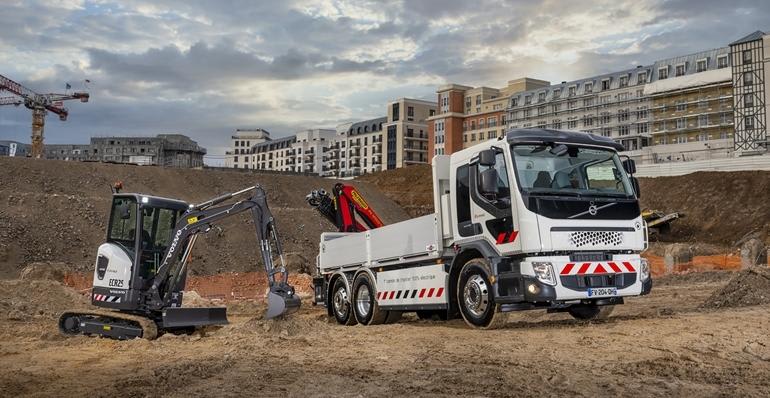
Volvo believes taking a life-cycle approach to batteries will help accelerate the adoption of zero-emissions vehicles, like this electric compact excavator and Volvo FE Electric truck.
Photo: Volvo Group
2 min to read
A new business unit called Volvo Energy will strengthen the Volvo Group’s business flow of batteries for electric vehicles over their life cycle, as well as working on charging infrastructure for battery-electric and fuel-cell electric vehicles, the Swedish commercial vehicle maker has announced.
Giving used batteries a second life in different applications will reduce the environmental impact from electric and hybrid electric commercial vehicles and machines, the company said.
“There is a great and growing interest for electric vehicles and machines among our customers,” said Martin Lundstedt, president and CEO of the Volvo Group. “This is of course very positive as it accelerates the transition towards more sustainable transport solutions. Our ambition is to offer our customers the most competitive solutions when it comes to electrification, including batteries and charging infrastructure. With Volvo Energy, we are taking a holistic view of the entire life cycle, which benefits both our customers’ business and society as a whole.”
The Volvo Group already offers electrified equipment ranging from city buses, to trucks for waste management, construction and urban distribution, to compact excavators and loaders. The roll-out of additional, electric vehicles and related services will continue at a high pace, it said, and later this year, it will also include heavy-duty trucks for regional transport or construction.
Volvo Energy will be a business area with full profit and loss responsibility. It will have both an internal role (providing batteries and charging solutions to the Volvo Group’s other business areas), and an external role: offering used, remanufactured, and refurbished batteries to customers for use across different applications.
Volvo Energy will also carry the Group’s responsibility for hydrogen infrastructure solutions for fuel cell electric vehicles. Collaborations with various business partners and actors across the ecosystem will be key to its success, Volvo said.
Commercial vehicle batteries will be used for many years in the vehicle before they need to be replaced or remanufactured/refurbished. However, if completely new batteries are fitted to the vehicle, the used ones will generally still have considerable life left to offer, which makes them ideal for energy storage purposes, Volvo said, for example in buildings or in green energy production. Repurposing these batteries means natural resources are conserved.
Joachim Rosenberg, member of the Volvo Group Executive Board and Chairman of UD Trucks, will head the new business area. Starting in February, he will lead the effort to create Volvo Energy while also continuing to run UD Trucks and preparing the transfer of UD Trucks ownership to Isuzu Motors as part of the previously communicated strategic alliance between the Volvo Group and Isuzu Motors.
The financial results for Volvo Energy will be reported as part of the Volvo Truck Group.
Topics:Volvo GroupBattery-Electric VehiclesElectrificationGlobalElectric VehiclesEnvironmentSustainabilityMotorcoachZero Emissions
Originally posted on Heavy Duty Trucking
More Motorcoach

From Surviving to Thriving: Building Stronger Transportation Organizations
Bus Business Consultants founder Brian Dickson shares lessons on leadership, organizational health, and creating options for long-term success in a changing transportation industry.
Read More →
Report: Canadian Motorcoach Industry Generates $4.4B in Economic Impact
The 2025 Motorcoach Economic Impact Report finds motorcoach travel supported nearly 25,000 jobs and generated $980 million in federal, provincial, and local taxes.
Read More →
Prevost Opens Expanded Chicago-Area Service Center
The $8.1 million Elk Grove Village investment nearly triples facility space while adding service capacity, parts storage, and customer amenities.
Read More →
People Movement: Dan Dipert Coaches Adds Third-Generation Leader, Keolis Names New Valley Metro VP/GM, and More
In this edition, we also cover recent appointments and announcements at the Wabtec, SilverRide, HNTB, and more, showcasing the individuals helping to shape the future of transportation.
Read More →
METRO Opens Submissions for 2026 Motorcoach Awards
Nominations are now being accepted for METRO Magazine’s Operator of the Year and Innovative Operator of the Year awards.
Read More →
Biz Briefs: Alstom Lands Canadian Contract, LYT to Supply California TSP, and More
In METRO's latest installment, we take a look at recent news from Complete Coach Works, Beep, FlixBus, and more partnerships making headlines across the transportation sector.
Read More →
Biz Briefs: RIPTA Unveils New Frontrunners, Clevland RTA Adds New Siemens, and More
In METRO's latest installment, we take a look at recent news from Siemens, Prevost, Dodge, and more partnerships making headlines across the transportation sector.
Read More →
People Movement: Holly Arnold Joins Transdev and More
In this edition, we also cover recent appointments and announcements at Pace, CamTran, MCI, and more, showcasing the individuals helping to shape the future of transportation.
Read More →
ABA Report: Motorcoach Travel Generates $161.6B Economic Impact
The 2025 analysis finds motorcoach travel supported nearly 900,000 jobs and generated $28 billion in federal, state, and local taxes.
Read More →
CharterUP’s Armir Harris on Technology, AI, and the Future of Group Mobility
In a recent episode of METROspectives, CharterUP Founder/CEO Armir Harris discussed the company’s evolution from an online charter bus marketplace into a technology platform supporting public- and private-sector mobility and much more.
Read More →