



Report finds 62% of Portlanders view e-scooters positively
Based on this evaluation, the bureau also announced a one-year pilot program that will bring e-scooters back to Portland streets this spring.

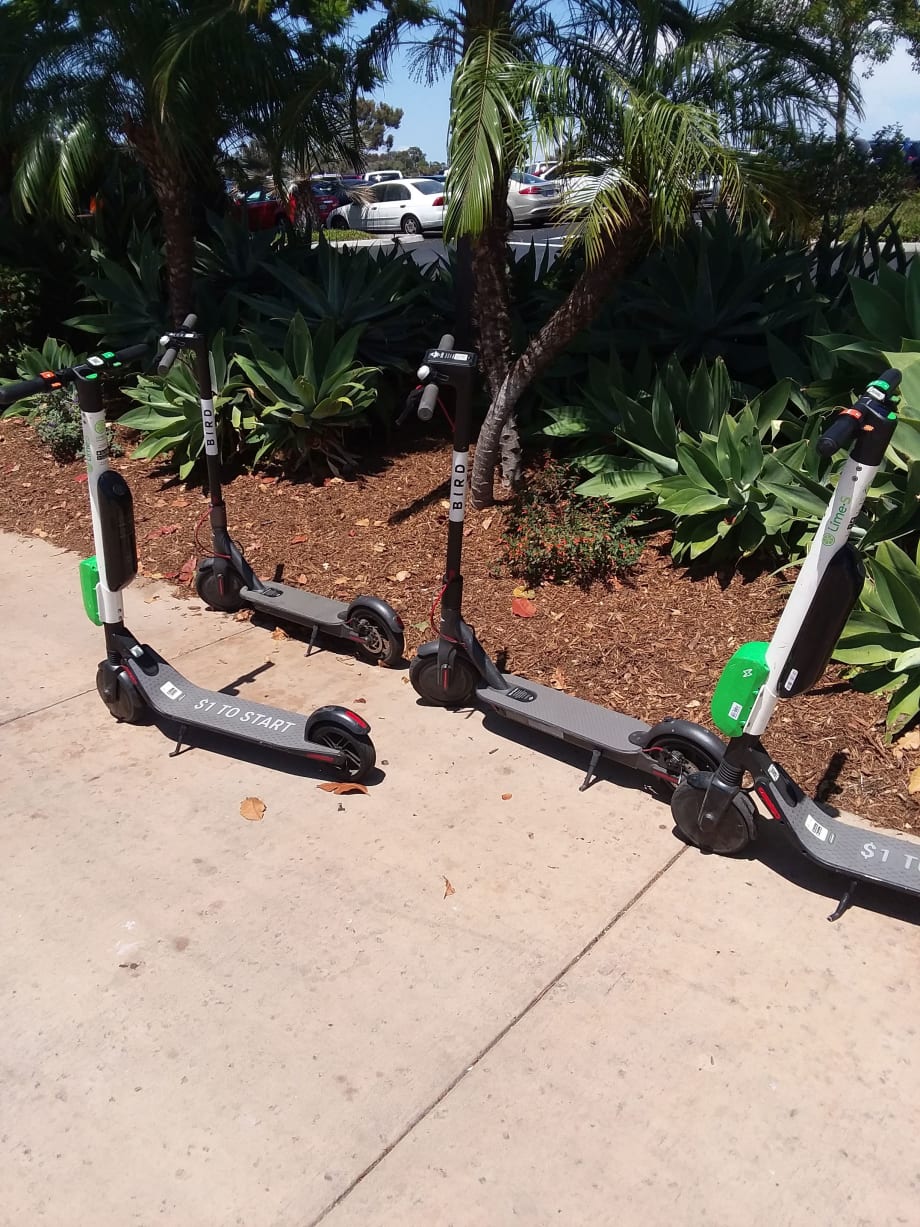
New data gathered by Multnomah County Health Department for PBOT show e-scooters were subject to risks similar to other ways of getting around.
Alex Roman
New data gathered by Multnomah County Health Department for PBOT show e-scooters were subject to risks similar to other ways of getting around.
Alex Roman
Drawing on scooter use data, public opinion polling, staff observations, and other sources, the Portland Bureau of Transportation released the 2018 E-Scooter Findings Report. The report evaluates Portland’s first e-scooter pilot conducted from July 23 to Nov. 30. Based on this evaluation, the bureau also announced a one-year pilot program that will bring e-scooters back to Portland streets this spring.
New data gathered by Multnomah County Health Department for PBOT show e-scooters were subject to risks similar to other ways of getting around. Scooter-related injuries, including injuries from non-motorized scooters, were a small portion of total traffic crash injuries, accounting for about 5% of the estimated 3,220 of total traffic crash injury visits to emergency rooms and urgent care centers during the pilot period. Scooters generated 176 visits or less than one-half the 429 visits for bicycle-related injuries.
“We recognize people are interested in understanding the risk associated with a citywide scooter ride-share program, and this analysis provides an important baseline from which to make that determination," said Environmental Health Director Jae Douglas, Ph.D. "After reviewing emergency department and urgent care clinic data, we found that e-scooters have risks similar to other parts of the transportation system. We did not find a disproportionate risk that would discourage the city from allowing a scooter ride-share pilot."
A start date for the second pilot program has not been set. PBOT staff will brief community groups and transportation advisory committees on the findings report and seek input on how the bureau should conduct the second pilot program. A longer one-year pilot program will give PBOT the chance to test new measures to improve the use of e-scooters.
Several findings show that e-scooters were well-received by Portlanderes:
A majority of Portlanders viewed e-scooters positively.
In a representative citywide poll conducted in December by DHM Research, 62% of all Portlanders viewed e-scooters positively at the end of the pilot. Support was even higher among Portlanders under 35 (71%), people of color (74%), and those with incomes below $30,000 (66%).
Scooter safety risks were similar to other ways of getting around.
According to the Multnomah County Health Department, scooter related injuries increased from less than one per week before the pilot to about 10 per week during the pilot. Weekly emergency room visits peaked in late August and early September before decreasing to near pre-pilot levels by the end of the pilot in November.
Portlanders primarily used e-scooters for transportation.
Seventy-one percent of Portlanders reported that they most frequently used e-scooters to get to a destination, while only a third of respondents (28.6%) said they most frequently used e-scooters for recreation or exercise.
E-scooters replaced driving and ride-hailing trips.
Thirty-four percent of Portland riders and 48% of visitors took an e-scooter instead of driving a personal car or using Uber, Lyft, or a taxi.
Having safe scooter infrastructure mattered to riders.
Based on scooter ride data, riders preferred riding on low-traffic streets such as neighborhood greenways and on streets with bike lanes. This was also confirmed by rider survey data.
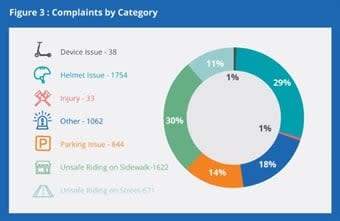
PBOT
Several findings also showed that e-scooter use created conflict with pedestrians and underperformed on some city goals:
Portlanders reported widespread illegal sidewalk riding and incorrect scooter parking.
With speeds capped at 15 miles per hour, scooters are appropriate for bike lanes or low-volume streets, but they are too fast for use on sidewalks, where they make it unsafe or uncomfortable for people walking or using mobility devices. And while staff observations showed most scooters parked properly in the sidewalk furnishing zone, improperly parked scooters negatively impacted accessibility and created a hazard for people with visual impairments.
E-scooter use in parks impacted other users and presented a significant management challenge for Portland Parks & Recreation staff.
Although bicycles are allowed in Portland parks, including Waterfront Park and the Eastbank Esplanade, motorized vehicles are not. E-scooter use on Portland parks trails violated Portland Parks & Recreation’s rules, but most riders (66%) said they weren’t aware of the rules.
E-scooter companies did not consistently comply with the East Portland fleet requirement and the pilot program showed other equity challenges.
Companies did not consistently comply with the East Portland fleet requirement. Companies only enrolled 43 Portlanders in a low-income plan. Along with staff observations, this suggests low company performance in aligning business practices with city equity goals.
To view the full report, click here.
More New Mobility

From Hardware to Digital Partner: Luminator Charts Its Next Chapter
CEO Magnus Friberg discusses Luminator’s shift toward becoming a digital partner, the growing importance of software and interoperability, and how AI can help agencies improve operations and passenger experience.
Read More →
Biz Briefs: Alstom Lands Canadian Contract, LYT to Supply California TSP, and More
In METRO's latest installment, we take a look at recent news from Complete Coach Works, Beep, FlixBus, and more partnerships making headlines across the transportation sector.
Read More →
CharterUP’s Armir Harris on Technology, AI, and the Future of Group Mobility
In a recent episode of METROspectives, CharterUP Founder/CEO Armir Harris discussed the company’s evolution from an online charter bus marketplace into a technology platform supporting public- and private-sector mobility and much more.
Read More →
Jacksonville’s NAVI Project Charts a New Course for Autonomous Public Transportation
Through its NAVI program, JTA is showing how autonomous vehicles, intelligent infrastructure, and coordinated operations can work together to deliver everyday public transportation.
Read More →
Biz Briefs: Luminator Marks Milestone and More
From manufacturers and suppliers to transit agencies and motorcoach operators, these updates offer a snapshot of the projects, partnerships and business moves driving the industry forward.
Read More →
New Tricks for Old Bureaucracies: Joshua Schank on Making Transit Innovation Stick
Former LA Metro Chief Innovation Officer Joshua Schank discusses why good ideas aren't enough, how transit agencies can overcome resistance to change, and why today's challenges demand more innovation.
Read More →
How DART's GoPass Is Redefining Regional Mobility
Serving 14 transit agencies, GoPass simplifies multimodal travel by allowing riders to plan, pay for, and manage an entire trip through one app.
Read More →
Biz Briefs: OCTA Taps Clean Energy for Hydrogen Station, Stadler to Supply Via Rail Vehicles, and More
From manufacturers and suppliers to transit agencies and motorcoach operators, these updates offer a snapshot of the projects, partnerships and business moves driving the industry forward.
Read More →CharterUP Expands Into New Mobility and Autonomous Transportation
Vice President of New Mobility Stephen Joos discusses how CharterUP is leveraging its nationwide transportation network, technology platform, and autonomous vehicle partnerships to expand into workforce mobility, campus shuttles, and transit solutions.
Read More →
METRO Magazine Announces 2026 Innovative Solutions Awards Winners
Projects Recognized for Advancing Mobility Through Technology, Accessibility, Workforce Innovation, and Operational Excellence
Read More →