



Ride-hailing services may be driving up traffic deaths
Arrival of ride-hailing is linked to an increase of approximately 3% in the number of motor vehicle fatalities and fatal accidents, study says.

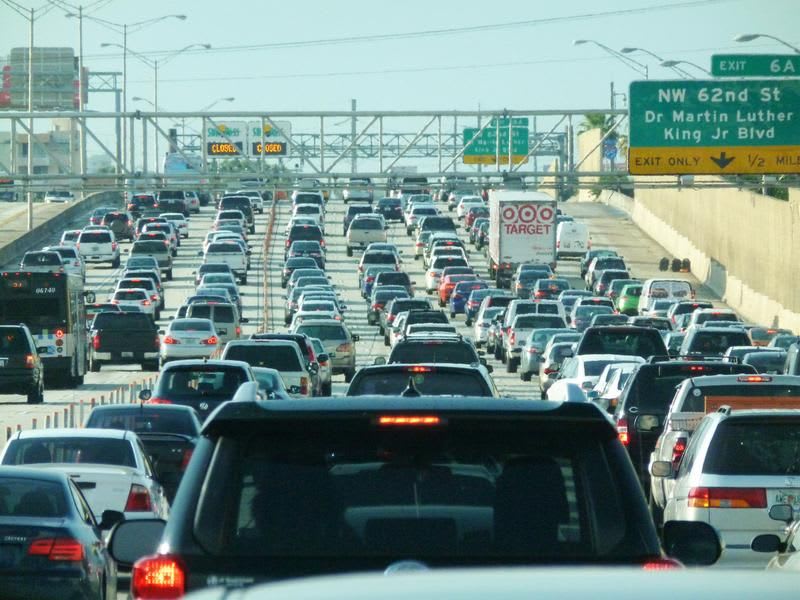
According to research data, Uber and Lyft services are linked with more congestion and traffic deaths.
Public Domain

According to research data, Uber and Lyft services are linked with more congestion and traffic deaths.
Public Domain
While the era of app-based ridehailing services, such as Uber and Lyft, has been credited with keeping more impaired drivers off the road, increasing job opportunities and offering new levels of convenience, it is also linked with more congestion and traffic deaths.
The arrival of ride-hailing is associated with an increase of approximately 3% in the number of motor vehicle fatalities and fatal accidents, according to research from the University of Chicago Booth School of Business.
The researchers used the staggered roll-out dates from Uber and Lyft to review the eight quarters before and after ridehailing adoption in large U.S. cities from 2001 to 2016 — analyzing traffic volume, transportation choices and accidents to arrive at their conclusion.
The documented increase in accidents appears to persist and even increase over time, and that rate has stayed steady through weekdays, weeknights, weekend days, and weekend nights, according to John Barrios, assistant professor at Chicago Booth, and Yale V. Hochberg and Hanyi Yi, both of Rice University, in the working paper, The Cost of Convenience: Ridehailing and Traffic Fatalities.
For perspective, while in 2010 the number of roadway deaths in the U.S. stood at 32,885 (the lowest level since 1949), that number increased to more than 37,400 in 2016. The authors find that the introduction of ridehailing services in 2011 accounts for roughly 3% annual increase in auto deaths nationwide, or 987 people each year.
Economic theory and the data point to many reasons for ridehailing’s contribution to the growth in traffic fatalities. Ride-hailing has put more cars on the road, and that has meant more accidents, injuries, and deaths involving drivers, passengers, bikers, and pedestrians, the study says.
The most significant increase in accidents occurred in larger cities, which saw a rise in new-car registrations when ride-hailing was available, despite having public-transportation systems. Meanwhile, in cities that have introduced ridehailing, bike and pedestrian fatalities from accidents involving cars have increased at a similar rate to all driving fatalities.
“Surveys report that fewer than half of [ridehailing] rides in nine major metro areas actually substitute for a trip that someone would have made in a car,” the study says.
Also, Uber and Lyft need to keep large numbers of cars on the roads so they can get to riders quickly. Thus, the companies subsidize drivers to stay on the road between fares. As a result, ridehailing drivers are often driving alone as they search for riders, resulting in more cars on the road than usual at any given time.
Finally, the researchers quantify the financial costs of the additional fatalities. Based on U.S. Department of Transportation estimates for the value of a statistical life, they found fatalities due to ride-hailing amount to about $10 billion. That figure does not include costs from non-fatal accidents.
While the authors note that ride-hailing benefits are undeniable, such as providing safe and affordable transportation options, more carpooling for riders, and job opportunities for drivers, they emphasize that, “still, the annual cost in human lives is nontrivial.” Instead, they view the essential contribution of their study as “pointing to the need for further research and debate about the overall cost-benefit tradeoff of ride-hailing.”
Read the research brief here.
More New Mobility

From Hardware to Digital Partner: Luminator Charts Its Next Chapter
CEO Magnus Friberg discusses Luminator’s shift toward becoming a digital partner, the growing importance of software and interoperability, and how AI can help agencies improve operations and passenger experience.
Read More →
Biz Briefs: Alstom Lands Canadian Contract, LYT to Supply California TSP, and More
In METRO's latest installment, we take a look at recent news from Complete Coach Works, Beep, FlixBus, and more partnerships making headlines across the transportation sector.
Read More →
CharterUP’s Armir Harris on Technology, AI, and the Future of Group Mobility
In a recent episode of METROspectives, CharterUP Founder/CEO Armir Harris discussed the company’s evolution from an online charter bus marketplace into a technology platform supporting public- and private-sector mobility and much more.
Read More →
Jacksonville’s NAVI Project Charts a New Course for Autonomous Public Transportation
Through its NAVI program, JTA is showing how autonomous vehicles, intelligent infrastructure, and coordinated operations can work together to deliver everyday public transportation.
Read More →
Biz Briefs: Luminator Marks Milestone and More
From manufacturers and suppliers to transit agencies and motorcoach operators, these updates offer a snapshot of the projects, partnerships and business moves driving the industry forward.
Read More →
New Tricks for Old Bureaucracies: Joshua Schank on Making Transit Innovation Stick
Former LA Metro Chief Innovation Officer Joshua Schank discusses why good ideas aren't enough, how transit agencies can overcome resistance to change, and why today's challenges demand more innovation.
Read More →
How DART's GoPass Is Redefining Regional Mobility
Serving 14 transit agencies, GoPass simplifies multimodal travel by allowing riders to plan, pay for, and manage an entire trip through one app.
Read More →
Biz Briefs: OCTA Taps Clean Energy for Hydrogen Station, Stadler to Supply Via Rail Vehicles, and More
From manufacturers and suppliers to transit agencies and motorcoach operators, these updates offer a snapshot of the projects, partnerships and business moves driving the industry forward.
Read More →CharterUP Expands Into New Mobility and Autonomous Transportation
Vice President of New Mobility Stephen Joos discusses how CharterUP is leveraging its nationwide transportation network, technology platform, and autonomous vehicle partnerships to expand into workforce mobility, campus shuttles, and transit solutions.
Read More →
METRO Magazine Announces 2026 Innovative Solutions Awards Winners
Projects Recognized for Advancing Mobility Through Technology, Accessibility, Workforce Innovation, and Operational Excellence
Read More →