



Denver's RTD Adopts Resolution Focused on Eliminating Transit-Related Traffic Fatalities
The board-approved initiative outlines agency specific Vison Zero strategies to make transit operations and RTD’s system safer for pedestrians and cyclists.

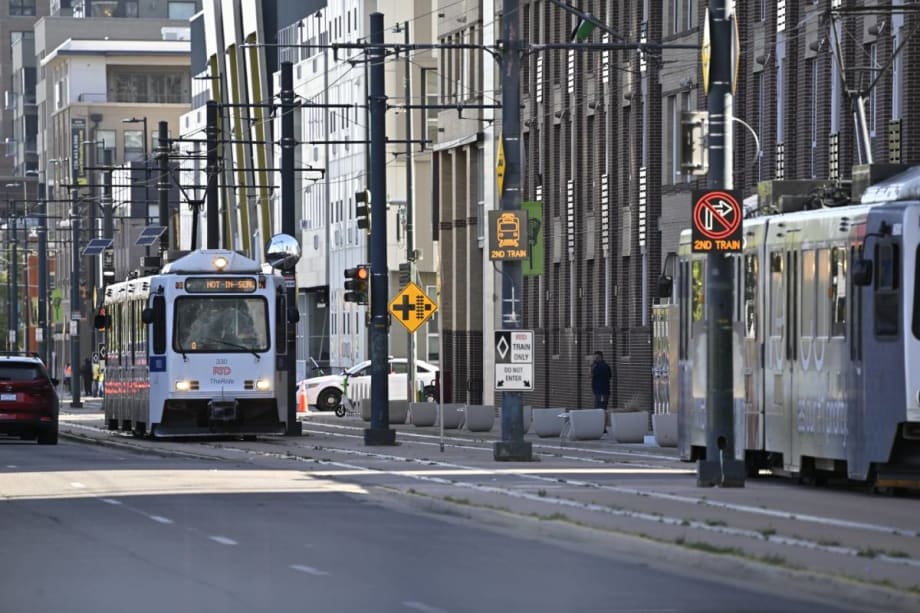
Denver's RTD is looking to reduce traffic fatalities and injuries through a Vision Zero Initiative.
Photo: Denver RTD
Denver’s Regional Transportation District (RTD) is bolstering efforts to eliminate traffic fatalities and injuries within its transit operations and infrastructure.
During its recent board meeting, RTD’s Directors approved a resolution that outlines agency-specific initiatives related to a Vison Zero strategy.
Vision Zero Initiative
Vision Zero is an internationally recognized, data-driven systems approach to increase personal safety in transportation spaces.
The initiative recognizes that traffic-related deaths and serious injuries are preventable and disproportionately affect vulnerable populations, including cyclists and pedestrians.
The agency’s adoption of Vision Zero principles aligns with RTD’s mission to make lives better through connections. At least one-third of all RTD customers begin and end their transit journeys as pedestrians, and many others use bicycles or other mobility devices to reach their destinations.
Establishing the Resolution
RTD’s Director-led Vision Zero planning efforts began in October 2023 and included multiple public meetings and feedback sessions with dozens of community partners and participants.
From the meetings directors created the Vison Zero resolution, outlining strategies and a timeline for creating a Vision Zero Action Plan.
The resolution also highlights RTD’s current and ongoing efforts related to roadway and customer safety.
RTD registered as an ally to the U.S. Department of Transportation’s (USDOT) National Roadway Safety Strategy in 2023. The agency adopted USDOT’s Safe Systems Approach including a public awareness campaign and bus operator safety trainings.
The agency also collaborates with city planners, community organizers, and local governments to develop and implement strategies and make infrastructure investments that align with Vision Zero principles.
RTD is one of the first mass transit agencies in the U.S. with a Vision Zero initiative underway.
Keeping Transit Safe
The American Public Transportation Association has found that increasing transit ridership is one of the best ways to reduce traffic-related deaths and injuries.
“Safety is a cornerstone of RTD’s core business, and the Vision Zero resolution amplifies the agency’s inherent commitment,” said Debra A. Johnson, RTD’s CEO/GM. “This effort will require RTD to work more closely with municipalities and community partners to further enhance safety on their public rights of way, and the agency is prepared to leverage those partnerships in support of the board’s action.”
RTD will identify funding for bus stop, rail crossing, and pedestrian safety enhancements and incorporate system safety feedback sessions into its ongoing community outreach.
The agency will also specifically focus on bolstering dialogue and feedback from disability rights organizations, transportation advocates, and individuals from disadvantaged communities throughout RTD’s service area.
By April 2025 RTD plans to assess the viability of having dedicated employees to support the outlined efforts to implement the Vison Zero Plan and its related tactics.
RTD’s Operations, Safety, and Security Committee will receive an annual report detailing the number of injuries and fatalities involving pedestrians, cyclists, and other motorists on RTD’s system during the prior year.
The report will also highlight RTD’s efforts to eliminate serious injuries and fatalities.
A wayfinding planning assessment is being conducted and RTD will continue to review its fixed route bus, light rail, and commuter rail networks to identify high-risk areas for accidents and injuries. This information will inform staff efforts related to areas that may require additional safety infrastructure investments.
More Security and Safety

Transit Agencies Highlight Safety Gains at National Summit
Leaders from 15 major transit systems shared crime-reduction results and safety initiatives while discussing the role of continued federal support.
Read More →
DART Launches Major Security, Fare Enforcement Initiative
The 90-day demonstration will deploy coordinated security teams at five light rail stations while testing controlled access and gathering data to guide future investments.
Read More →
RTD Launches NextRide App to Consolidate Trip Planning, Fares, Security Reporting
The app expands on RTD’s existing NextRide web application and allows customers to view real-time vehicle locations and service alerts, purchase and store digital fares, and access customer support.
Read More →

TAPTCO Updates OSHA Compliance Training for Transit Maintenance Operations
The revamped program addresses 26 OSHA standards for maintenance facilities, with TAPTCO pointing to training, documentation, and everyday shop hazards as continuing challenges for transit operations.
Read More →
How VaporVision Adds Value to Transit Door Systems
Wabtec engineers explain how the system improves doorway detection, strengthens diagnostics and gives transit agencies and OEMs greater operating flexibility.
Read More →
FRA Announces $5.3B in Rail Investments, Including $2B for Amtrak
Funding will support grade-crossing improvements, infrastructure upgrades, and new Amtrak equipment in 23 states.
Read More →
Chicago, Maryland Expand Non-Law-Enforcement Safety, Rider Support
The CTA and MTA are launching new programs aimed at de-escalation, crisis response, rider assistance, and greater transparency.
Read More →
LA Metro, City of West Hollywood, and Partners Advance Smarter Bus Lane Enforcement
The award-winning partnership combines AI-powered detection with human oversight to improve bus reliability, accessibility, and enforcement efficiency.
Read More →
LA Metro Reports 57% Decline in Homelessness on Transit System Since 2024
The agency's latest homelessness count offers new data on how care-based services and cross-sector partnerships can complement traditional transit security strategies.
Read More →
FTA Launches 'Transit Moves America' Dashboard to Highlight Agency Safety and Performance
The online dashboard transforms National Transit Database information into a public-facing resource that allows users to compare transit agencies on key operational and safety metrics.
Read More →