



RTS, Masabi Team for ABT Solution Powered by MaaS, Fare Payments-as-a-Service Platform
Fare Payments-as-a-Service delivers agencies the latest fare payment innovations quickly, using a cloud-native multi-tenant platform like Masabi’s Justride, which is constantly updating and adding new features.
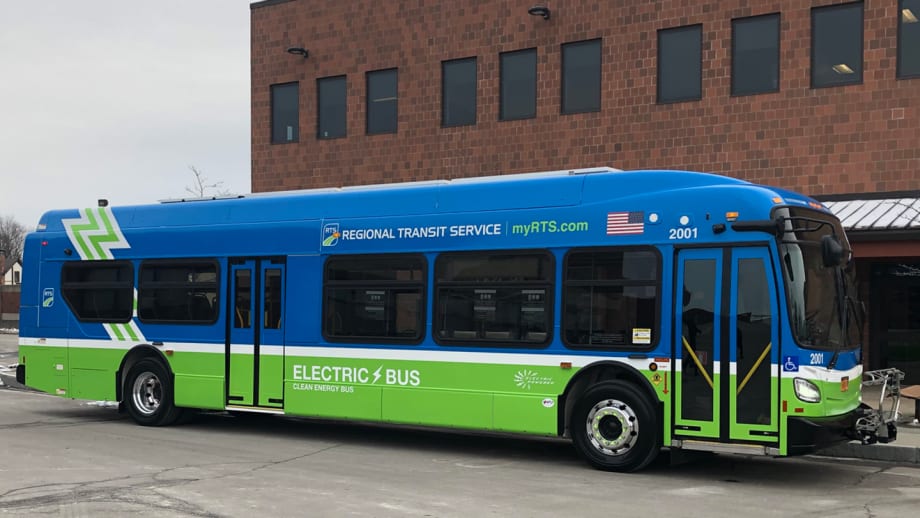
The rollout of RTS Go marks a turning point in the fare collection industry.
RTS
Masabi announced a new era in fare payments with the launch of the RTS Go contactless fare payment solution in Rochester, N.Y., for the Regional Transit Service (RTS). The touchless technology, powered by Masabi’s Justride platform, means riders will no longer need to buy a ticket and will simply be able to use their RTS Go smart card or RTS Go mobile pass in the Transit app to tap, ride, and then be charged the best possible price for their journey.
The rollout of RTS Go marks a turning point in the fare collection industry. Transit agencies no longer need to purchase their own design-and-build bespoke ticketing systems nor update regularly with new features and functionality unless significant amounts of money are invested. Instead, the solution uses a Fare Payments-as-a-Service approach, combined with a Mobility-as-a-Service app experience.
Fare Payments-as-a-Service delivers agencies the latest fare payment innovations quickly, using a cloud-native multi-tenant platform like Masabi’s Justride, which is constantly updating and adding new features. This greatly improves the journey experience for passengers by delivering constant innovation, helping agencies keep up with the pace of technology change. It also reduces the total cost of fare collection as the costs are shared between all users of the platform through reduced build, update, and maintenance costs.
Thanks to Masabi’s integration with Transit app, RTS customers are now able to add stored value to their accounts and seamlessly tap around the transit network. The combination provides RTS customers with an integrated mobility experience including trip planning, real-time information, and connections to third-party mobility services, so they can plan their complete first/last mile journeys and simply tap and ride when they’re ready to travel, all from within the same application, powered by Masabi’s Justride SDK.
Customers using RTS Go will pay $1 per ride, but thanks to “fare capping,” never more than $3 a day or $56 a month — which corresponds to the price of a daily and monthly pass. The account-based back office fare engine knows when a rider has reached these limits and stops charging them for the rest of that day or month, rewarding them the more they use RTS services. This demonstrates a commitment by RTS to the democratization of public transit, recognizing its fundamental role in enabling economic and social growth. Ensuring the availability of fully contactless journeys for riders also shows RTS’ commitment to a transport-led recovery following the Covid-19 pandemic, keeping transit working safely for the people of Rochester.
Customers who don’t have a smartphone are able to purchase an RTS Go reloadable smart card online at myRTS.com or at one of the new ticket vending machines. RTS Go cards can be topped up using Transit app, online using the new web portal, or from a ticket vending machine.
When boarding the bus, passengers tap their mobile pass or smart card on the new Justride Validators. These revolutionary and affordable validation devices bring the benefits of Account-Based Ticketing to agencies of all sizes and enable all major ticketing formats including Barcode, NFC, and Contactless EMV (for contactless bank cards).
More Technology

Public Transit Conference Returning to GFX in 2027, Call for Papers Now Open
The Call for Papers is now open, allowing transit agency professionals and industry experts to help shape the PTC educational program by submitting session ideas for consideration.
Read More →
ENC Lands MATA Contract and More in Biz Briefs
In this edition of Biz Briefs, we spotlight the latest developments shaping the future of mobility.
Read More →
Strada360’s Steve Lassey on Turning Transit Data Into Better Decisions
From breaking down data silos to preparing for AI, Strada360 CEO Steve Lassey discusses how transit agencies can use technology to improve operations, customer information, and long-term decision-making.
Read More →
Almaviva Looks to Open Architecture to Advance Transit Technology
Eric Reese discusses how interoperability, open architecture, and modular design can help transit agencies control costs, reduce vendor lock-in, and upgrade technology without starting over.
Read More →
Driving Smarter Paratransit
John Hanlon shares how AlphaRoute is leveraging AI-powered technology to help paratransit providers optimize operations, support frontline staff, and enhance the rider experience.
Read More →
From Hardware to Digital Partner: Luminator Charts Its Next Chapter
CEO Magnus Friberg discusses Luminator’s shift toward becoming a digital partner, the growing importance of software and interoperability, and how AI can help agencies improve operations and passenger experience.
Read More →
Beyond the Checklist: A Structured Approach to Transit Maintenance
Reliability-Centered Maintenance helps transit agencies move beyond routine checklists to focus limited resources on the assets and failures that have the greatest impact on safety, reliability, and service.
Read More →
NJ TRANSIT Advances Bus Technology Upgrades Across Statewide Fleet
More than 1,500 buses now feature upgraded technology designed to improve arrival predictions and provide free Wi-Fi, with deployment expected to reach nearly 2,000 buses by the end of 2026.
Read More →
Building a Flexible Path to Transit Electrification
John Hroncich discusses BAE Systems’ modular and scalable approach, lessons learned from decades of real-world operations, and how agencies can identify electrification strategies that fit their fleets.
Read More →
Biz Briefs: Alstom Lands Canadian Contract, LYT to Supply California TSP, and More
In METRO's latest installment, we take a look at recent news from Complete Coach Works, Beep, FlixBus, and more partnerships making headlines across the transportation sector.
Read More →