



RELATED: How L.A. is inspiring, training tomorrow's transportation workforce
Rutgers leads rail safety research, education in N.J. and N.Y.
The need for a strong workforce is especially critical since half of the nation’s railway engineers are eligible for retirement in the next five to 10 years.
by By Todd B. Bates, Rutgers University
April 4, 2018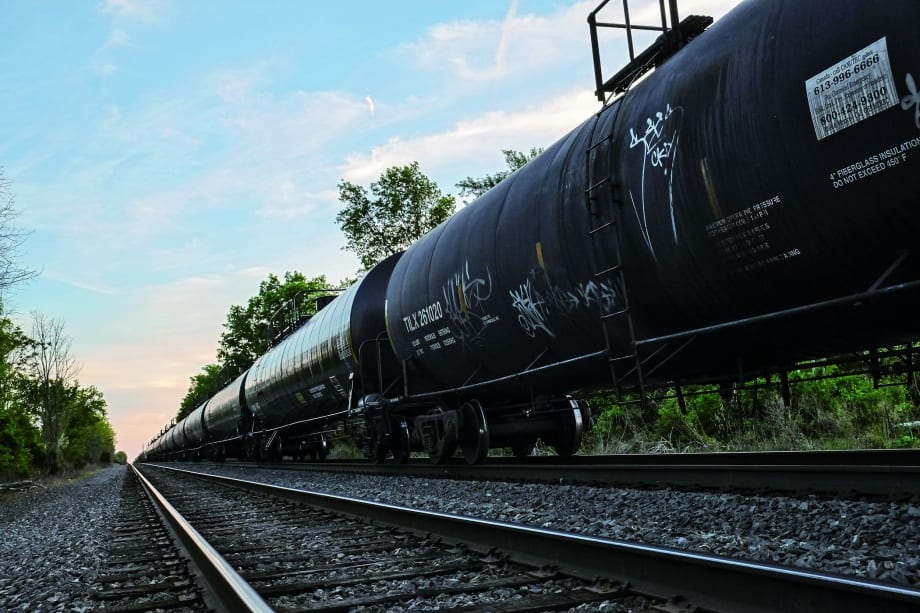
A busy CSX freight line through Manville, N.J. Photo: © Allison Thomas/Rutgers CAIT
3 min to read
A busy CSX freight line through Manville, N.J. Photo: © Allison Thomas/Rutgers CAIT
Millions of commuters and goods worth billions of dollars rely on the safety and efficiency of railway systems in the region, including NJ Transit, Amtrak, PATH, New York City subways, CSX Corp., Norfolk Southern Corp. and many shortline freight railroads.
And in an era of high-profile railroad accidents and rising rail traffic, many of these systems face challenges ranging from infrastructure integrity to operational safety to uncertainty regarding future funding.
Enter Rutgers’ Xiang Liu, whose passion for model trains and tracks while growing up in China led to a doctorate in transportation engineering focused on rail. He now heads the only academic rail engineering and safety program in the entire region — one of less than a dozen nationwide — at Rutgers University-New Brunswick’s School of Engineering.
Liu says it is vitally important that major research universities like Rutgers support railroads by training future engineers and other rail professionals and performing research to improve safety. The need for a strong workforce is especially critical since half of the nation’s railway engineers are eligible for retirement in the next five to 10 years.
To meet this need, the Department of Civil and Environmental Engineering aims to further expand its rail curriculum, according to Professor Nenad Gucunski, department chair.
“I hope in the future Rutgers can be the incubator of experts and leaders to help the rail industry further improve its safety and operational efficiency,” said Liu, who joined Rutgers in 2014 and is an assistant professor in the Department of Civil and Environmental Engineering. He is also affiliated with the Center for Advanced Infrastructure and Transportation. “We heard about a series of train accidents in recent weeks and we should have a safer rail transportation system.”
The university’s railroad ties date back more than a century. Leonor F. Loree, an 1877 graduate of Rutgers College, is one the founding fathers of the American railroad industry. He served as president of the Delaware & Hudson Railroad, had interests in the Kansas City Southern, Baltimore and Ohio, New York Central and Rock Island railroads, and coined the famous phrase: “This is a helluva way to run a railroad.”
As always, the rail industry’s top priority is safety, especially in the wake of recent Amtrak accidents in Washington, D.C., and South Carolina; the 2016 NJ Transit accident in Hoboken; and other deadly events, Liu said. Research, technology and education are all essential to improving and maintaining rail safety, he stressed.
Liu and his team are conducting several high-profile projects, sponsored by the Federal Railroad Administration (FRA), to study rail safety technologies and policy linked to infrastructure and operations. One project focuses on positive train control, high-tech train control technology required on numerous railroad lines to prevent train collisions, derailments by speeding trains and other accidents, according to the agency. Congress in 2008 required railroads to implement Positive Train Control by the end of 2015, then extended the deadline through 2018, with possible extensions through 2020. Liu is also working with the U.S. Department of Transportation to study the risks posed by cyber, physical and human aspects of national freight and passenger rail systems.
“There are lots of risk mitigation strategies,” he said. “We can improve the track, improve the equipment, improve the signaling and improve human performance. But we need to carefully evaluate, compare and prioritize them, given limited resources.”
“I think Rutgers should position itself as the academic hub and if we can keep doing that, years from now many leaders and professionals in the global rail industry will be Rutgers alumni,” Liu added.
More Rail
Amtrak, CN Reach Agreements to Strengthen Passenger Rail Service, Safety
The agreement resolves a more than decade-long proceeding before the Surface Transportation Board concerning the terms and conditions for Amtrak services, such as the City of New Orleans, Illini/Saluki, and Wolverine.
Read More →
New York MTA Advances Final Contract for Second Avenue Subway Expansion
Contract Four is the largest in the Second Avenue Subway Phase 2 project and includes construction of station infrastructure, tracks, and signals for the subway expansion, MTA officials said. Work on Contract Four will begin in 2027.
Read More →
San Diego MTS Breaks Monthly Trolley Ridership Record
Agency officials said July’s ridership indicates MTS’s continued recovery from the pandemic.
Read More →
Report Examines NJ TRANSIT Reliability, Funding Challenges
The Garden State Initiative analysis examines the roles of Amtrak infrastructure, fleet management, and agency operations while recommending a more performance-based approach to improving reliability.
Read More →
Stadler, CapMetro Sign Long-Term Rail Fleet Support Agreement
Beginning in 2027, Stadler will provide on-site technical expertise, spare parts support, training, and obsolescence management to help extend the reliability and longevity of CapMetro’s GTW fleet.
Read More →
Biz Briefs: Alstom Lands Canadian Contract, LYT to Supply California TSP, and More
In METRO's latest installment, we take a look at recent news from Complete Coach Works, Beep, FlixBus, and more partnerships making headlines across the transportation sector.
Read More →
CATS Gold Line Marks 5 Years of Service, 2.8M Passenger Trips
With a six-mile expansion planned, the Charlotte streetcar is positioned to connect more neighborhoods and major transit hubs across the region.
Read More →
Why Simulating Pedestrian Movement Has Become Essential for Modern Rail Stations
Pedestrian microsimulation is helping rail planners identify bottlenecks, test station designs, and prepare complex transit hubs for growing passenger volumes.
Read More →
Amtrak Begins Major Construction at New York’s Sunnyside Yard
The new maintenance facility will support Amtrak’s Airo trainsets while improving maintenance efficiency and turnaround times in New York.
Read More →
Chicago Leaders Unveil Plans for O’Hare Airport Express Train
The privately developed project would offer a 15-minute trip between downtown and O’Hare’s Terminal 2, with trains operating every 15 minutes on a dedicated track. The service would use battery-electric trains and three existing freight rail rights-of-way.
Read More →