




RELATED: Chariot launches crowd-sourced shuttle service in NYC
San Francisco MTA issues private transit permit to Chariot
Company must identify safe and legal alternatives for the remaining 9% of their approximately 204 stop locations by the end of August 2018.
April 24, 2018
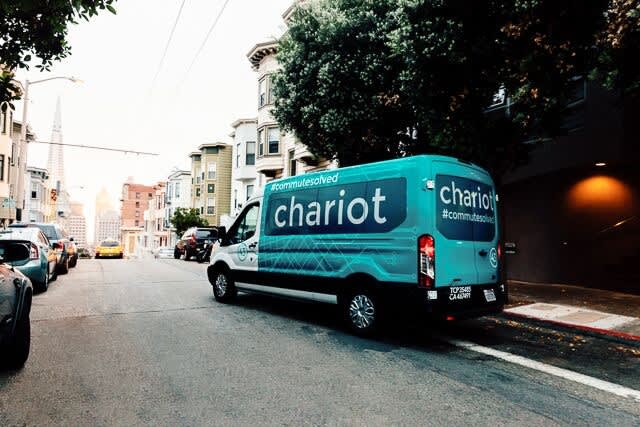
While Chariot’s permit was under review, the SFMTA successfully worked with the company to relocate more than 100 stops from illegal locations to safe and legal loading spaces.
Chariot
3 min to read
While Chariot’s permit was under review, the SFMTA successfully worked with the company to relocate more than 100 stops from illegal locations to safe and legal loading spaces.
Chariot
The San Francisco Municipal Transportation Agency (SFMTA) issued the first private transit operator permit under the city’s recently adopted private transit vehicle regulations to Chariot Transit Inc., a subsidiary of Ford Smart Mobility. While Chariot is currently the only private transit operator in San Francisco, the SFMTA’s private transit program was created with the future in mind.
The permit program applies to privately-operated transportation services that are open to the public, charge individual fares and generally operate on fixed routes in San Francisco.
Prior to the SFMTA’s adoption of the private transit program, private transit services operated in San Francisco with limited governance and oversight. As a result, the city heard and observed concerns about private transit vehicles stopping in unauthorized locations such as crosswalks, traffic lanes, and Muni stops.
Through the private transit program, the SFMTA established new requirements to ensure that private transit services operate safely, have minimal impact on public transit, implement business practices consistent with city policies, and respond more effectively to the needs of the communities. Important permit conditions include: ensuring that vehicles stop in safe and legal loading zones, disability access requirements are met, and vehicle age standards have stronger emission standards. They also require that drivers undergo training and allow the city to collect data from private transit operators to better understand their impact on San Francisco’s transportation system.
Companies with a private transit permit are allowed to load and unload passengers in any legal curb space, including white passenger loading zones and yellow commercial loading zones.
Chariot is the only private transit service in San Francisco, operating 12 private transit routes in the morning and nine in the evening. It is also the only company that has submitted a permit application to the SFMTA.
As part of its application, the company proposed to operate the same service it provided at the time of the board’s adoption of the permit program, with some minor adjustments to ensure compliance with existing Transportation Code regulations. The SFMTA will continue to enforce San Francisco’s transportation laws and will target permit enforcement efforts as appropriate. In addition to parking control officers on the street, taxi investigator resources will be dedicated to enforcing the terms of the program.
While Chariot’s permit was under review, the SFMTA successfully worked with the company to relocate more than 100 stops from illegal locations to safe and legal loading spaces. Chariot’s conditional permit requires that the company identify safe and legal alternatives for the remaining 9% of their approximately 204 stop locations by the end of August 2018.
Under the permit terms, the SFMTA would review any new or altered routes and stops to ensure compliance with permit conditions and traffic laws. Private transit permits are granted on an annual basis and Chariot’s permit would be valid through April 20, 2019, at which point they could reapply for a new permit.
More New Mobility

From Hardware to Digital Partner: Luminator Charts Its Next Chapter
CEO Magnus Friberg discusses Luminator’s shift toward becoming a digital partner, the growing importance of software and interoperability, and how AI can help agencies improve operations and passenger experience.
Read More →
Biz Briefs: Alstom Lands Canadian Contract, LYT to Supply California TSP, and More
In METRO's latest installment, we take a look at recent news from Complete Coach Works, Beep, FlixBus, and more partnerships making headlines across the transportation sector.
Read More →
CharterUP’s Armir Harris on Technology, AI, and the Future of Group Mobility
In a recent episode of METROspectives, CharterUP Founder/CEO Armir Harris discussed the company’s evolution from an online charter bus marketplace into a technology platform supporting public- and private-sector mobility and much more.
Read More →
Jacksonville’s NAVI Project Charts a New Course for Autonomous Public Transportation
Through its NAVI program, JTA is showing how autonomous vehicles, intelligent infrastructure, and coordinated operations can work together to deliver everyday public transportation.
Read More →
Biz Briefs: Luminator Marks Milestone and More
From manufacturers and suppliers to transit agencies and motorcoach operators, these updates offer a snapshot of the projects, partnerships and business moves driving the industry forward.
Read More →
New Tricks for Old Bureaucracies: Joshua Schank on Making Transit Innovation Stick
Former LA Metro Chief Innovation Officer Joshua Schank discusses why good ideas aren't enough, how transit agencies can overcome resistance to change, and why today's challenges demand more innovation.
Read More →
How DART's GoPass Is Redefining Regional Mobility
Serving 14 transit agencies, GoPass simplifies multimodal travel by allowing riders to plan, pay for, and manage an entire trip through one app.
Read More →
Biz Briefs: OCTA Taps Clean Energy for Hydrogen Station, Stadler to Supply Via Rail Vehicles, and More
From manufacturers and suppliers to transit agencies and motorcoach operators, these updates offer a snapshot of the projects, partnerships and business moves driving the industry forward.
Read More →CharterUP Expands Into New Mobility and Autonomous Transportation
Vice President of New Mobility Stephen Joos discusses how CharterUP is leveraging its nationwide transportation network, technology platform, and autonomous vehicle partnerships to expand into workforce mobility, campus shuttles, and transit solutions.
Read More →
METRO Magazine Announces 2026 Innovative Solutions Awards Winners
Projects Recognized for Advancing Mobility Through Technology, Accessibility, Workforce Innovation, and Operational Excellence
Read More →