



Seattle's Sound Transit 2014 ridership up
It was the busiest first three months of the year in Sound Transit history. Link light rail ridership grew 15%, with 2.3 million first quarter boardings and an average of almost 30,000 on weekdays.

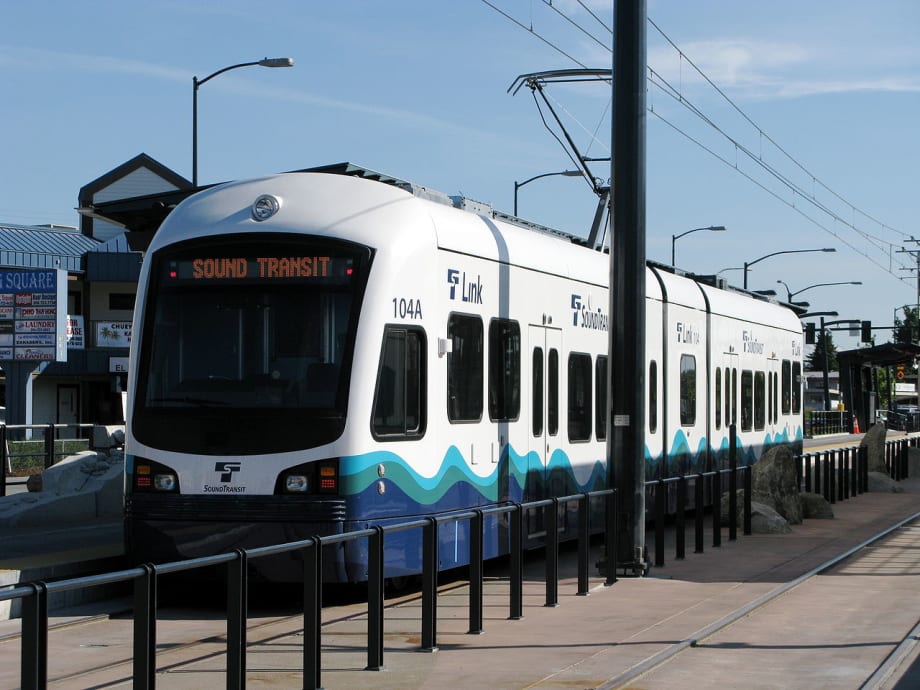
Photo courtesy Oran Viriyincy
Photo courtesy Oran Viriyincy
Seattle’s Sound Transit ridership got off to another strong start in 2014 with 7.5 million boardings in the first quarter, a jump of more than 8% compared to the same quarter in 2013.
It was the busiest first three months of the year in Sound Transit history. Link light rail ridership grew 15%, with 2.3 million first quarter boardings and an average of almost 30,000 on weekdays.
The ridership figures come amid recent headlines saying Seattle is the nation’s fastest-growing city.
“Transit is the future for moving our region’s commuters and economy,” said Sound Transit Board Chair and King County Executive Dow Constantine. “The demand for both buses and congestion-free light rail will keep growing. The good news is that Sound Transit remains on track to expand the region’s light rail system from 16 miles to 50 miles by 2023.”
Recently-released U.S. Census Bureau statistics show Seattle had the highest growth rate in the nation — 2.8% — from July 2012 to July 2013. Seattle added nearly 18,000 residents during the one year period to bring its population up to about 652,000. The Seattle Office of Economic Development says the city also added nearly 15,000 new jobs between 2012 and 2013.
The first quarter ridership increases included:
Central Link light rail: 29,919 average weekday boardings and 2.3 million boardings for the quarter.
ST Express regional buses: 58,659 average weekday boardings and 4.1 million boardings for the quarter.
Sounder commuter rail: 11,843 average weekday boardings and 759,942 boardings for the quarter.
In the coming months the Sound Transit Board will continue a process to plan for the projected 30% population growth the region will see by 2040 by updating the region’s Long-Range Plan. Updating the plan will set the stage for considering where light rail and other regional transit services should expand after current voter-approved projects are complete.
Sound Transit is continuing its strong track record of delivering voter-approved projects. The University Link light rail extension is set to open six to nine months early in the first quarter of 2016 and is tracking more than $100 million below budget.
The agency remains on target to deliver more than 30 miles of light rail expansions by 2023 despite a cumulative 29% reduction in funding for the 15-year Sound Transit package due to the impact of that national recession.
More Bus

New York MTA Plans Largest Bus Fleet Upgrade in More Than a Decade
The agency is seeking manufacturers for 650 new CNG buses to replace aging vehicles, improve reliability, and advance its broader fleet modernization strategy.
Read More →
Building a Flexible Path to Transit Electrification
John Hroncich discusses BAE Systems’ modular and scalable approach, lessons learned from decades of real-world operations, and how agencies can identify electrification strategies that fit their fleets.
Read More →
Bus Tech Talk: Keeping Transit Technicians Ahead of the Technology Curve
LA Metro’s Obed Mejia discusses technician training, evolving maintenance technology, fleet replacement, and strategies for getting the most out of today’s transit fleets.
Read More →
Biz Briefs: RIPTA Unveils New Frontrunners, Clevland RTA Adds New Siemens, and More
In METRO's latest installment, we take a look at recent news from Siemens, Prevost, Dodge, and more partnerships making headlines across the transportation sector.
Read More →
People Movement: Holly Arnold Joins Transdev and More
In this edition, we also cover recent appointments and announcements at Pace, CamTran, MCI, and more, showcasing the individuals helping to shape the future of transportation.
Read More →
The High Cost of Transit Buses: Industry Leaders Look to Procurement Reform
Transit leaders and policymakers examine how standardized bus designs, streamlined procurement, and predictable funding could help agencies stretch budgets and deliver better service.
Read More →
The Business Voice Behind Public Transportation
As chair of APTA’s Business Members Board of Governors, Ray Melleady explains how more than 850 business members are partnering with transit agencies to advance funding, innovation, and industry-wide collaboration.
Read More →
From Surviving to Thriving: Building Stronger Transportation Organizations
Bus Business Consultants founder Brian Dickson shares lessons on leadership, organizational health, and creating options for long-term success in a changing transportation industry.
Read More →
Finding the ‘Happy Medium’: Optimizing Maintenance Without Sacrificing Reliability
The key to maintenance optimization isn’t doing less work—it’s doing the right work at the right time on the right assets.
Read More →
LA Metro, City of West Hollywood, and Partners Advance Smarter Bus Lane Enforcement
The award-winning partnership combines AI-powered detection with human oversight to improve bus reliability, accessibility, and enforcement efficiency.
Read More →