



Seattle’s Sound Transit Adopts Updated ST3 System Plan
The updated system plan incorporates cost savings across the agency, including new revenue sources and financial policies, to set the agency on a sustainable path for the future.

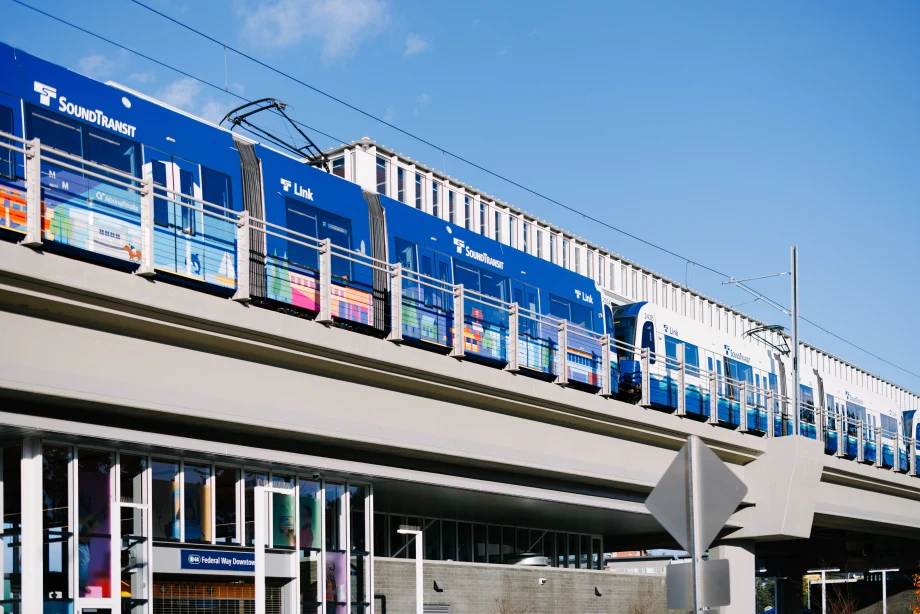
Sound Transit officials said the agency is committed to delivering the ST3 projects as efficiently as possible and will continue to seek cost efficiencies and ways to make projects more affordable and move them forward in the delivery pipeline.
Photo: Sound Transit
- Seattle's Sound Transit has updated its ST3 System Plan to incorporate significant cost savings.
- The plan includes new revenue sources aimed at enhancing financial stability.
- The agency is implementing fresh financial policies to ensure a sustainable future.
*Summarized by AI
A year after launching the Enterprise Initiative to address rapidly rising capital and operating costs and affordably deliver the objectives of the ST3 program voters approved in 2016, Seattle’s Sound Transit board adopted an updated system plan, which will keep light rail projects moving by building projects that are ready for construction and advancing projects already in the planning process.
The updated system plan incorporates cost savings across the agency, including new revenue sources and financial policies, to set the agency on a sustainable path for the future.
What’s Next?
Sound Transit officials said the agency is committed to delivering the ST3 projects as efficiently as possible and will continue to seek cost efficiencies and ways to make projects more affordable and move them forward in the delivery pipeline.
Sound Transit said it will also aggressively compete for federal and state funding, pursue additional legislative tools to increase available debt and bonding capacity, and partner with local jurisdictions to improve permitting and construction to accelerate timelines.
“This resolution reflects both realism and optimism — addressing today’s financial pressures while preserving our long-term commitment to delivering the regional transit system voters approved,” said Sound Transit Board Chair and Snohomish County Executive Dave Somers. “While the financial challenges facing Sound Transit are significant, this action creates a responsible path forward that keeps critical projects moving, protects the long-term health of the system, and positions us to advance more of the ST3 vision as economic conditions improve and new opportunities emerge.”
In developing an updated system plan, the board considered extensive public feedback gathered through an online survey, public comments at board and committee meetings, and more than 30 community events and town halls throughout the region.
“The level of engagement during this process demonstrates the passionate support for transit throughout the region,” said Sound Transit CEO Dow Constantine. “Following the board’s action, the direction to the agency is clear: Deliver more of the frequent, reliable transit people have come to rely on, and do it as quickly and as efficiently as possible. We are resolute in our commitment to do just that.”
The ST3 Vision
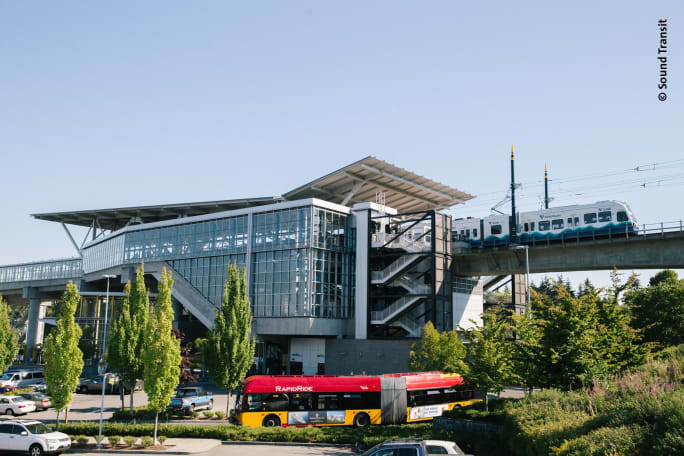
The Sound Transit board directed agency staff to develop and implement an adaptive program management plan and a project delivery framework by the end of 2026.
Photo: Sound Transit
To address the estimated $34.5 billion funding gap over the next 20 years, the updated system plan identifies projects that are affordable within existing resources, including those that can be fully funded and constructed, and those that can be partially funded through the planning and design phases, to be constructed when additional funding is identified.
The plan also includes projects that are not currently affordable within existing resources, which will be re-evaluated as uncertainties in costs and agency revenue are resolved, and projects that will be deferred until additional funding from other sources becomes available.
The board directed agency staff to develop and implement an adaptive program management plan and a project delivery framework by the end of 2026.
This encompasses transparent program management at an enterprise scale to build in a disciplined accountability approach. The goal of program management will be to identify and incorporate cost savings in capital projects, keep the board informed about project risks, schedule risks, and project contingencies, and oversee them. It formalizes specific activities to enable cost savings, accelerate project delivery, and secure additional financial resources to deliver the full ST3 program, Sound Transit officials said.
The project delivery framework will work to ensure that each project remains affordable and that the board retains clear visibility and decision-making authority at key project milestones.
Quick Answers
The primary focus of the updated ST3 System Plan is to incorporate cost savings across the agency and to establish new revenue sources and financial policies for long-term sustainability.
*Summarized by AI
More Management

Indian River Transit’s Community-Focused Approach Earns National Recognition
Named APTA’s 2026 Outstanding Public Transportation System in its size category, Florida’s Indian River County transit system continues to grow ridership through fare-free service and a focus on evolving community needs.
Read More →
ENC Lands MATA Contract and More in Biz Briefs
In this edition of Biz Briefs, we spotlight the latest developments shaping the future of mobility.
Read More →
From Surviving to Thriving: Building Stronger Transportation Organizations
Bus Business Consultants founder Brian Dickson shares lessons on leadership, organizational health, and creating options for long-term success in a changing transportation industry.
Read More →

Everett Transit, Community Transit Outline Consolidation Agreement
The proposed agreement calls for a 50% increase in bus service in Everett, a new microtransit zone, continued paratransit service, and the transfer of Everett Transit operations to Community Transit.
Read More →
Strada360’s Steve Lassey on Turning Transit Data Into Better Decisions
From breaking down data silos to preparing for AI, Strada360 CEO Steve Lassey discusses how transit agencies can use technology to improve operations, customer information, and long-term decision-making.
Read More →
People Movement: Phil Washington Joins HNTB, Denver RTD Launches CEO Search, and More
In this edition, we also spotlight recent personnel moves at STV, the Eno Center for Transportation, and more, highlighting the people taking on new roles across the transportation industry.
Read More →
SEPTA Details Accelerate Vision for Transit System
The plan outlines investments in trolley modernization, new Metro and Regional Rail vehicles, accessible stations, and more frequent bus and rail service.
Read More →
FTA Ends Direct Oversight of MBTA Safety Actions
The federal agency closed its remaining special directive to the Massachusetts Department of Public Utilities following a safety review that began in 2022.
Read More →
Report: Transit Bus Manufacturing Supports 34,100 Jobs, $5.1B in GDP
The “Buses Mean Business” report examines the transit bus manufacturing industry’s economic footprint, supply chain, and rising demand for vehicle replacements.
Read More →
LIT Marks 10-Year Milestone at Annual Summit
Hosted by the COTA from September 10 to 13, the Summit carried the theme “Celebrating 10 Years of Excellence, Leadership, and Impact,” with every part of the program honoring the people, agencies, and partners who built LIT over its first decade.
Read More →