



SEPTA celebrates modernized, ADA accessible rail station
Constructed at the turn of the 20th century, the Wayne Junction transit rail station has been a fixture in North Philadelphia since it was opened by the Reading Railroad in 1881.

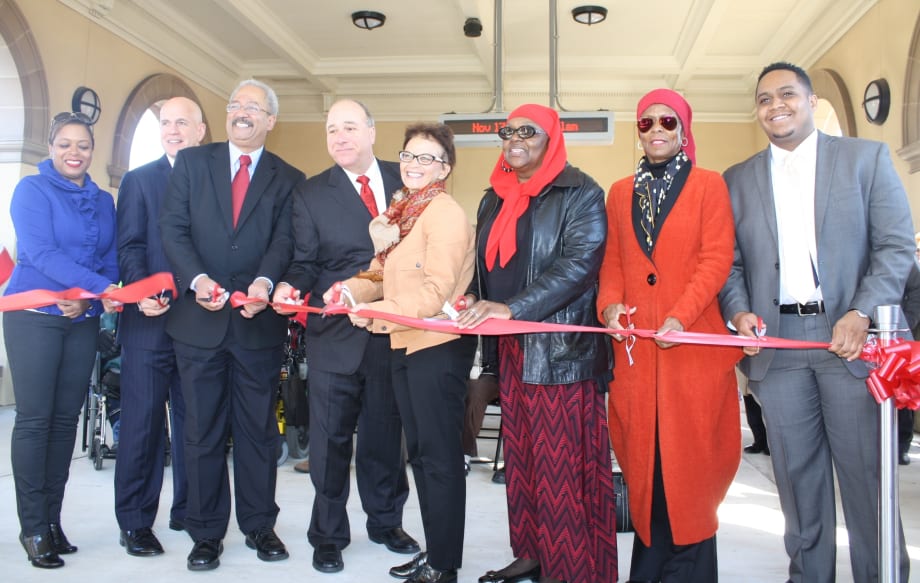
Pictured (left to right): Councilwoman Cindy Bass,; SEPTA GM Jeffrey D. Knueppel; U.S. Rep. Chaka Fattah; SEPTA Board Chairman Pasquale T. “Pat” Deon Sr.; FTA Acting Administrator Therese McMillan; Majeedah Rashid, Executive Director, Nicetown CDC; Faatimah Gamble, co-founder of Universal Companies; Joe Hill, of U.S. Sen. Robert Casey’s office. They were among the dignitaries who gathered on Friday, Nov. 13 to celebrate the reconstruction of SEPTA’s historic Wayne Junction Station.
Pictured (left to right): Councilwoman Cindy Bass,; SEPTA GM Jeffrey D. Knueppel; U.S. Rep. Chaka Fattah; SEPTA Board Chairman Pasquale T. “Pat” Deon Sr.; FTA Acting Administrator Therese McMillan; Majeedah Rashid, Executive Director, Nicetown CDC; Faatimah Gamble, co-founder of Universal Companies; Joe Hill, of U.S. Sen. Robert Casey’s office. They were among the dignitaries who gathered on Friday, Nov. 13 to celebrate the reconstruction of SEPTA’s historic Wayne Junction Station.
Federal Transit Administration (FTA) Acting Administrator Therese McMillan attended a ribbon-cutting ceremony for the newly modernized Wayne Junction station — a busy transit rail station in suburban Philadelphia’s Nicetown and Germantown neighborhoods that is part of the Southeastern Pennsylvania Transportation Authority (SEPTA) system.
Constructed at the turn of the 20th century, the Wayne Junction transit rail station has been a fixture in North Philadelphia since it was opened by the Reading Railroad in 1881. Designed by the renowned architect Frank Furness, the station was rebuilt in 1901 but had fallen into a state of disrepair over its more than 100 years of use. The facility is considered a major transit hub, serving more than 161,011 riders annually via six regional rail lines. Three bus routes connect the station to the surrounding community and the city of Philadelphia.
“The modernization of the Wayne Junction transit rail station makes it more inviting for people to take the train, and that will make these neighborhoods, and others throughout metro Philadelphia, more livable and more sustainable,” said McMillan. “For residents and businesses in Nicetown, the completion of this project means they will benefit from safer, more accessible and environmentally friendly access to SEPTA transportation services."
The extensive, four-year project began in fall 2011. Renovations included: making the station compliant with the Americans with Disabilities Act (ADA) with the construction of new station platforms and new elevators and an ADA compliant egress throughout the station; upgrading power, signal and track infrastructure; restoring passenger tunnels and stairways; and improving passenger amenities including signage, lighting, the Audio Visual Public Announcement system; and new HVAC systems, shelters, canopies and benches.
The U.S. Department of Transportation contributed $24.6 million toward the construction of the $31.5 million project. Federal funds included $3.9 million through an FTA competitive livability grant, and $17.16 million through FTA’s Section 5309 Fixed Guideway Modernization and 5337 State of Good Repair Programs.
More Rail

New York MTA Advances Final Contract for Second Avenue Subway Expansion
Contract Four is the largest in the Second Avenue Subway Phase 2 project and includes construction of station infrastructure, tracks, and signals for the subway expansion, MTA officials said. Work on Contract Four will begin in 2027.
Read More →
San Diego MTS Breaks Monthly Trolley Ridership Record
Agency officials said July’s ridership indicates MTS’s continued recovery from the pandemic.
Read More →
Report Examines NJ TRANSIT Reliability, Funding Challenges
The Garden State Initiative analysis examines the roles of Amtrak infrastructure, fleet management, and agency operations while recommending a more performance-based approach to improving reliability.
Read More →
Stadler, CapMetro Sign Long-Term Rail Fleet Support Agreement
Beginning in 2027, Stadler will provide on-site technical expertise, spare parts support, training, and obsolescence management to help extend the reliability and longevity of CapMetro’s GTW fleet.
Read More →
Biz Briefs: Alstom Lands Canadian Contract, LYT to Supply California TSP, and More
In METRO's latest installment, we take a look at recent news from Complete Coach Works, Beep, FlixBus, and more partnerships making headlines across the transportation sector.
Read More →
CATS Gold Line Marks 5 Years of Service, 2.8M Passenger Trips
With a six-mile expansion planned, the Charlotte streetcar is positioned to connect more neighborhoods and major transit hubs across the region.
Read More →
Why Simulating Pedestrian Movement Has Become Essential for Modern Rail Stations
Pedestrian microsimulation is helping rail planners identify bottlenecks, test station designs, and prepare complex transit hubs for growing passenger volumes.
Read More →
Amtrak Begins Major Construction at New York’s Sunnyside Yard
The new maintenance facility will support Amtrak’s Airo trainsets while improving maintenance efficiency and turnaround times in New York.
Read More →
Chicago Leaders Unveil Plans for O’Hare Airport Express Train
The privately developed project would offer a 15-minute trip between downtown and O’Hare’s Terminal 2, with trains operating every 15 minutes on a dedicated track. The service would use battery-electric trains and three existing freight rail rights-of-way.
Read More →
OCTA Maps Out 30-Year Strategy to Protect Coastal Rail Corridor
The draft feasibility report identifies strategies to protect the coastal rail line for decades as the agency continues near-term stabilization and sand placement efforts.
Read More →