



Sound Transit moving ahead with 2016 ballot measure to extend light rail
ST3 will expand congestion-free light rail farther and deeper into King, Snohomish and Pierce counties. The areas Sound Transit serves are home to more than 40% of Washington's residents, 70% of its economic activity and 97% of its traffic congestion.

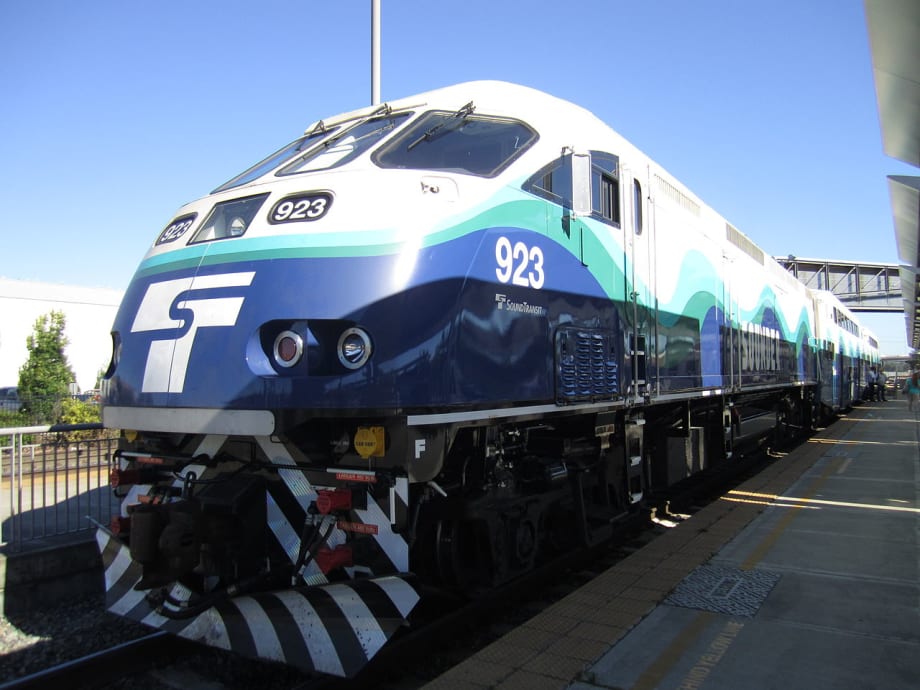
SounderBruce
SounderBruce
Seattle’s Sound Transit announced the agency will move forward with sending a Sound Transit 3 (ST3) ballot measure to regional voters in November 2016. The measure can move forward following last week's adoption by the State Legislature of a transportation package with the full ST3 revenue authority requested by the Sound Transit Board and supported by Gov. Jay Inslee.
"Today, as Chair of the Sound Transit Board, I ask my colleagues for their support to put Sound Transit 3 on the ballot in November of 2016. We should create a ballot measure to extend light rail to Everett, Redmond, Tacoma, West Seattle, Ballard, and many communities between, to link even more destinations with bus rapid transit and to fully integrate regional and local transit service for maximum impact," said Sound Transit Board Chair Dow Constantine.
ST3 will expand congestion-free light rail farther and deeper into King, Snohomish and Pierce counties. The areas Sound Transit serves are home to more than 40% of Washington's residents, 70% of its economic activity and 97% of its traffic congestion. By 2040 the area's population is set to grow by one million people, equivalent to the current populations of Seattle, Everett and Tacoma combined.
Expanding high-capacity transit services is the best way to dramatically expand the capacity of the region's most congested corridors and to channel growth around vibrant transit hubs where people will rely less on cars and move easily between trains and buses. A light rail line can move up to 12,000 people per hour in each direction, while a congested freeway lane occupying the same space moves as few as 700 cars.
The Sound Transit Board is currently seeking input on which projects should be studied as final candidates for the ST3 measure. Public input will help shape a final list of priority projects to be studied this fall. Results of those studies will support further narrowing by the Board to shape the draft ST3 measure for public input early next year before adopting a final measure in June for a November 2016 vote.
More Rail

New York MTA Advances Final Contract for Second Avenue Subway Expansion
Contract Four is the largest in the Second Avenue Subway Phase 2 project and includes construction of station infrastructure, tracks, and signals for the subway expansion, MTA officials said. Work on Contract Four will begin in 2027.
Read More →
San Diego MTS Breaks Monthly Trolley Ridership Record
Agency officials said July’s ridership indicates MTS’s continued recovery from the pandemic.
Read More →
Report Examines NJ TRANSIT Reliability, Funding Challenges
The Garden State Initiative analysis examines the roles of Amtrak infrastructure, fleet management, and agency operations while recommending a more performance-based approach to improving reliability.
Read More →
Stadler, CapMetro Sign Long-Term Rail Fleet Support Agreement
Beginning in 2027, Stadler will provide on-site technical expertise, spare parts support, training, and obsolescence management to help extend the reliability and longevity of CapMetro’s GTW fleet.
Read More →
Biz Briefs: Alstom Lands Canadian Contract, LYT to Supply California TSP, and More
In METRO's latest installment, we take a look at recent news from Complete Coach Works, Beep, FlixBus, and more partnerships making headlines across the transportation sector.
Read More →
CATS Gold Line Marks 5 Years of Service, 2.8M Passenger Trips
With a six-mile expansion planned, the Charlotte streetcar is positioned to connect more neighborhoods and major transit hubs across the region.
Read More →
Why Simulating Pedestrian Movement Has Become Essential for Modern Rail Stations
Pedestrian microsimulation is helping rail planners identify bottlenecks, test station designs, and prepare complex transit hubs for growing passenger volumes.
Read More →
Amtrak Begins Major Construction at New York’s Sunnyside Yard
The new maintenance facility will support Amtrak’s Airo trainsets while improving maintenance efficiency and turnaround times in New York.
Read More →
Chicago Leaders Unveil Plans for O’Hare Airport Express Train
The privately developed project would offer a 15-minute trip between downtown and O’Hare’s Terminal 2, with trains operating every 15 minutes on a dedicated track. The service would use battery-electric trains and three existing freight rail rights-of-way.
Read More →
OCTA Maps Out 30-Year Strategy to Protect Coastal Rail Corridor
The draft feasibility report identifies strategies to protect the coastal rail line for decades as the agency continues near-term stabilization and sand placement efforts.
Read More →