Damaged Southern California Rail Line Set to Resume Service
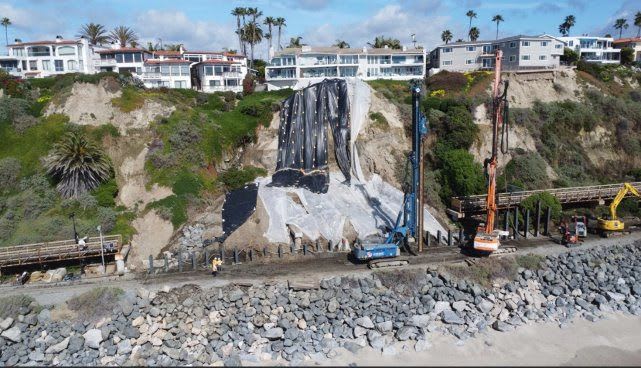
The OCTA, which owns the track through San Clemente, worked in partnership with Metrolink, which operates regional passenger rail service, to build a 200-foot-long wall at Mariposa Point, to safely re-establish service on the track.
Metrolink and the LOSSAN Rail Corridor Agency, operator of Pacific Surfliner, are each planning to resume full service on March 25.
2 min to read
The rail line serving Amtrak and Metrolink through San Clemente, Calif., is set to reopen for regular passenger rail service March 25 as emergency work to build a catchment wall to protect the track is wrapping up.
The Orange County Transportation Authority (OCTA), which owns the track through San Clemente, worked in partnership with Metrolink, which operates regional passenger rail service, to build a 200-foot-long wall at Mariposa Point, to safely re-establish service on the track.
Ad Loading...
Metrolink and the LOSSAN Rail Corridor Agency, operator of Pacific Surfliner, are each planning to resume full service. Passengers are being updated through social media, station messages, and direct communication.
Restoring Pacific Surfliner Service
Full passenger service is being restored ahead of the initial schedule because of expedited work made possible with strong cooperation between the transportation agencies and the State, including the California State Transportation Agency (CalSTA).
In the past week, the construction team working at the San Clemente site finished the catchment wall and have continued to work on a more comprehensive drainage system and trenching along the rail right of way.
The team also worked in coordination with the City of San Clemente to adjust a sewer access point. This week, additional tie replacement and track resurfacing will take place.
The emergency construction work was necessitated by a Jan. 24 landslide from a privately-owned hillside that littered the rail right of way below with soil and debris halting rail service.
Ad Loading...
After extensive work, limited Pacific Surfliner passenger service resumed in early March, but the re-opening of the line will mark the first time regular passenger service has resumed through the area since the initial slide.
For the longer term, OCTA and its rail partners will continue to work with local, state, and federal stakeholders on both near-term and long-term solutions for protecting rail movement along this critical corridor.
Photo: OCTA
Working on Longer-Term Solutions
For the longer term, OCTA and its rail partners will continue to work with local, state, and federal stakeholders on both near-term and long-term solutions for protecting rail movement along this critical corridor.
Work is already under way on the first of two studies. Listening sessions with stakeholders and the public have begun on the OCTA-led Orange County Coastal Rail Resiliency Study, which aims to protect the rail line in place for the next 10 to 30 years.
Contract Four is the largest in the Second Avenue Subway Phase 2 project and includes construction of station infrastructure, tracks, and signals for the subway expansion, MTA officials said. Work on Contract Four will begin in 2027.
The Garden State Initiative analysis examines the roles of Amtrak infrastructure, fleet management, and agency operations while recommending a more performance-based approach to improving reliability.
Beginning in 2027, Stadler will provide on-site technical expertise, spare parts support, training, and obsolescence management to help extend the reliability and longevity of CapMetro’s GTW fleet.
In METRO's latest installment, we take a look at recent news from Complete Coach Works, Beep, FlixBus, and more partnerships making headlines across the transportation sector.
Pedestrian microsimulation is helping rail planners identify bottlenecks, test station designs, and prepare complex transit hubs for growing passenger volumes.
The privately developed project would offer a 15-minute trip between downtown and O’Hare’s Terminal 2, with trains operating every 15 minutes on a dedicated track. The service would use battery-electric trains and three existing freight rail rights-of-way.
The draft feasibility report identifies strategies to protect the coastal rail line for decades as the agency continues near-term stabilization and sand placement efforts.