



Study: Buses better option for Maryland than light rail
World Resources Institute’s analysis confirms that BRT is the only option that would work locally to fight global warming, with a medium-investment system cutting carbon dioxide emissions by almost 9,000 metric tons per year, equivalent to taking about 1,600 cars off the road.

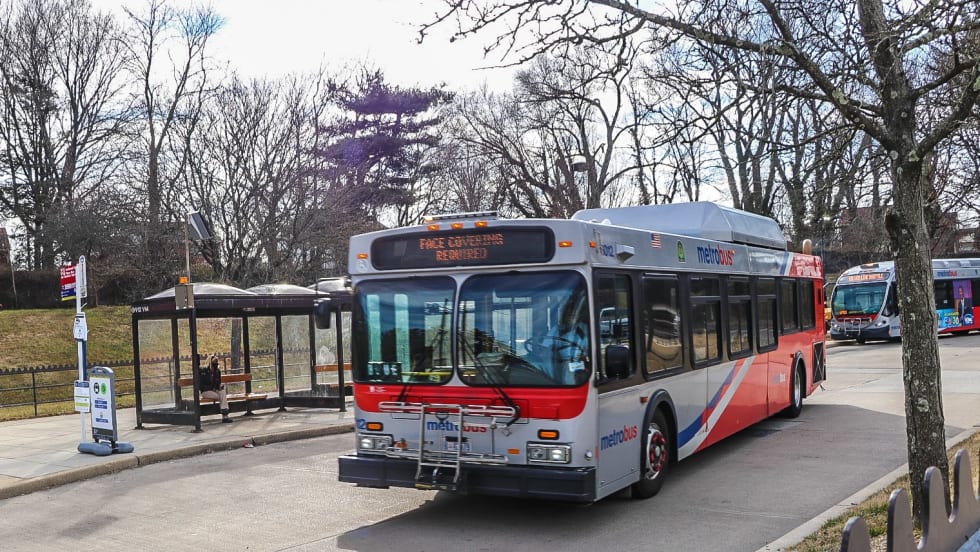
Enhanced buses along the proposed Purple Line in Maryland’s D.C. suburbs would cost less, offer similar services and fight global warming better than light-rail cars, according to an analysis released today by the World Resources Institute (WRI).
“The effort to create any kind of sustainable transit solution in the D.C. area is commendable, but it should be done the right way,” said Greg Fuhs, lead author of the WRI analysis. “We aren’t opposed to light rail in general, but we just don’t think it’s the best option for this particular project.”
The Purple Line is a proposed 16-mile, east-west transit corridor running parallel to the Capital Beltway in Maryland, and is intended to ease congestion and improve area mass-transit options. The two primary modes under consideration are light rail transit (LRT), featuring electric streetcars on rails, or bus rapid transit (BRT), which features designated lanes and other enhancements to make trips faster and more comfortable for riders than conventional buses.
WRI submitted its analysis to the Maryland Transit Administration (MTA) this week. It compares BRT and LRT in the “medium investment” range, and confirms that BRT would be more cost-effective and lower-risk. In addition, WRI’s analysis confirms that BRT is the only option that would work locally to fight global warming, with a medium-investment system cutting carbon dioxide emissions by almost 9,000 metric tons per year, equivalent to taking about 1,600 cars off the road.
Unlike a conventional bus system, BRT would provide high-capacity express buses with multiple doorways and pre-paid ticketing, as well as frequent pick-ups from permanent bus stations with elevated platforms similar to a rail station.
MTA estimates that medium investment BRT would require $580 million in capital investment and $17 million in yearly operational costs. In comparison, an equivalent LRT system would cost more than double, requiring $1.2 billion in capital and an annual $25 million for operations. But WRI’s analysis found that MTA’s cost and ridership estimates are likely to be off target.
“Our analysis shows a 79 percent chance that medium investment light rail will exceed $1.5 billion. On the other hand, the probability of reaching such high costs for BRT is negligible,” said Dario Hidalgo, WRI’s senior transport engineer. “Ridership is also likely to be smaller than projected for all the options, but the impact on cost effectiveness is much smaller for BRT than LRT.”
MTA officials are expected to make a final decision on the choice between BRT and LRT in March or April, after reviewing public comments.
More Bus
Report: Transit Bus Manufacturing Supports 34,100 Jobs, $5.1B in GDP
The “Buses Mean Business” report examines the transit bus manufacturing industry’s economic footprint, supply chain, and rising demand for vehicle replacements.
Read More →
Biz Briefs: New Flyer Delivers in Columbus, Houston, Beep and Freebee Merge, and More
In this edition of Biz Briefs, we spotlight the latest developments shaping the future of mobility.
Read More →
People Movement: Dan Dipert Coaches Adds Third-Generation Leader, Keolis Names New Valley Metro VP/GM, and More
In this edition, we also cover recent appointments and announcements at the Wabtec, SilverRide, HNTB, and more, showcasing the individuals helping to shape the future of transportation.
Read More →
New York MTA Plans Largest Bus Fleet Upgrade in More Than a Decade
The agency is seeking manufacturers for 650 new CNG buses to replace aging vehicles, improve reliability, and advance its broader fleet modernization strategy.
Read More →
Building a Flexible Path to Transit Electrification
John Hroncich discusses BAE Systems’ modular and scalable approach, lessons learned from decades of real-world operations, and how agencies can identify electrification strategies that fit their fleets.
Read More →
Bus Tech Talk: Keeping Transit Technicians Ahead of the Technology Curve
LA Metro’s Obed Mejia discusses technician training, evolving maintenance technology, fleet replacement, and strategies for getting the most out of today’s transit fleets.
Read More →
Biz Briefs: RIPTA Unveils New Frontrunners, Clevland RTA Adds New Siemens, and More
In METRO's latest installment, we take a look at recent news from Siemens, Prevost, Dodge, and more partnerships making headlines across the transportation sector.
Read More →
People Movement: Holly Arnold Joins Transdev and More
In this edition, we also cover recent appointments and announcements at Pace, CamTran, MCI, and more, showcasing the individuals helping to shape the future of transportation.
Read More →
The High Cost of Transit Buses: Industry Leaders Look to Procurement Reform
Transit leaders and policymakers examine how standardized bus designs, streamlined procurement, and predictable funding could help agencies stretch budgets and deliver better service.
Read More →
The Business Voice Behind Public Transportation
As chair of APTA’s Business Members Board of Governors, Ray Melleady explains how more than 850 business members are partnering with transit agencies to advance funding, innovation, and industry-wide collaboration.
Read More →