



Study could help riders find right place to stand in before train arrives
Passengers stood in the best possible position on the platform when they received continuous, mostly visual information.

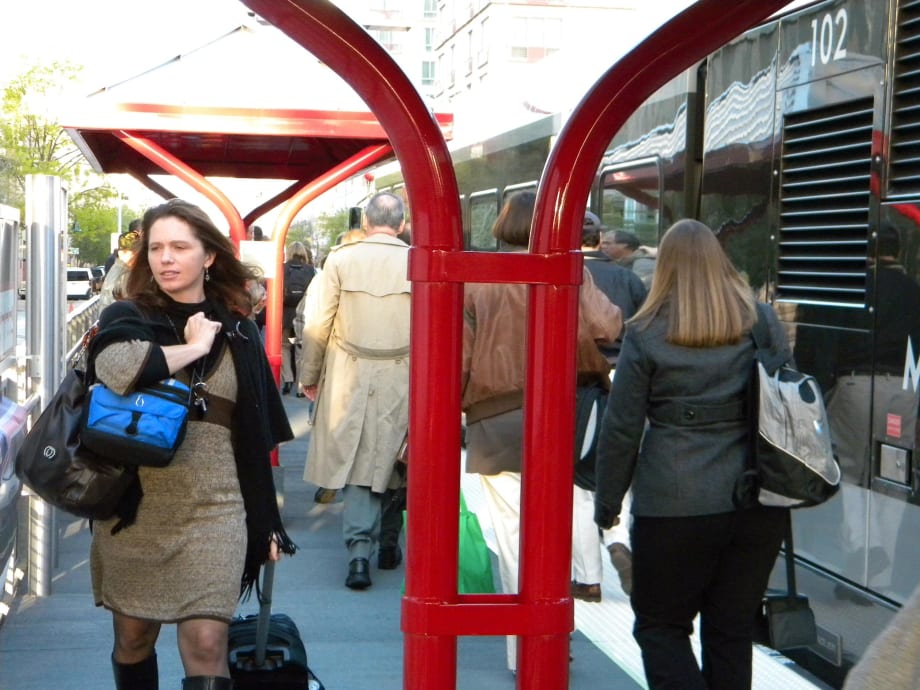
As information about an incoming train, such as the on-board facilities and the location of each railcar, is currently hard to come by and inconsistent, researchers developed a new approach that helped to fill this information gap.
Greg Griffin, AICP
As information about an incoming train, such as the on-board facilities and the location of each railcar, is currently hard to come by and inconsistent, researchers developed a new approach that helped to fill this information gap.
Greg Griffin, AICP
A project from the University of Surrey, Loughborough University and Pervasive Intelligence could save rail users precious time by giving them precise information that would allow them to be in the right place at the right time to board their train.
Passengers get very little information about an approaching train when they are on the platform beyond departure times, the destinations and, at times, the number of railcars available. This causes many people to hedge their bets by standing in the middle of the platform and rushing to find the right carriage when their train arrives. This can cause safety risks, slower boarding times, and can hamper the overall user experience.
As information about an incoming train, such as the on-board facilities and the location of each railcar, is currently hard to come by and inconsistent, researchers developed a new approach that helped to fill this information gap. The team used a scanning device that detected Wi-Fi signals from passing trains and developed a web-service to identify the order in which the railcars would arrive, as well as the facilities available on-board.
The team also placed passengers in a simulated environment to test how they would behave on a platform if they were presented with information currently available, enhanced information developed by the study and information that could feasibly be provided in the future with the addition of minor infrastructure change, such as platform zones and markings. The results of the tests found that passengers stood in the best possible position on the platform when they received information that was mostly visual and continuously available, such as from a platform-based display. They also found that passengers wanted that information to be supported by short audio announcements and an app that showed relevant coach information and recommended boarding points.
“We have demonstrated that passengers change their behavior based on enhanced information made possible by technology available today. This provides a compelling case for companies to integrate such technology to improve their existing services,” said Dr. David Williams, lecturer in secure systems at the University of Surrey. “We continue to work with the industry on a number of projects to improve passenger safety and experience.”
Researchers are taking this information and using it to develop new customer information systems for enableID and other upcoming projects.
More Rail
Amtrak, CN Reach Agreements to Strengthen Passenger Rail Service, Safety
The agreement resolves a more than decade-long proceeding before the Surface Transportation Board concerning the terms and conditions for Amtrak services, such as the City of New Orleans, Illini/Saluki, and Wolverine.
Read More →
New York MTA Advances Final Contract for Second Avenue Subway Expansion
Contract Four is the largest in the Second Avenue Subway Phase 2 project and includes construction of station infrastructure, tracks, and signals for the subway expansion, MTA officials said. Work on Contract Four will begin in 2027.
Read More →
San Diego MTS Breaks Monthly Trolley Ridership Record
Agency officials said July’s ridership indicates MTS’s continued recovery from the pandemic.
Read More →
Report Examines NJ TRANSIT Reliability, Funding Challenges
The Garden State Initiative analysis examines the roles of Amtrak infrastructure, fleet management, and agency operations while recommending a more performance-based approach to improving reliability.
Read More →
Stadler, CapMetro Sign Long-Term Rail Fleet Support Agreement
Beginning in 2027, Stadler will provide on-site technical expertise, spare parts support, training, and obsolescence management to help extend the reliability and longevity of CapMetro’s GTW fleet.
Read More →
Biz Briefs: Alstom Lands Canadian Contract, LYT to Supply California TSP, and More
In METRO's latest installment, we take a look at recent news from Complete Coach Works, Beep, FlixBus, and more partnerships making headlines across the transportation sector.
Read More →
CATS Gold Line Marks 5 Years of Service, 2.8M Passenger Trips
With a six-mile expansion planned, the Charlotte streetcar is positioned to connect more neighborhoods and major transit hubs across the region.
Read More →
Why Simulating Pedestrian Movement Has Become Essential for Modern Rail Stations
Pedestrian microsimulation is helping rail planners identify bottlenecks, test station designs, and prepare complex transit hubs for growing passenger volumes.
Read More →
Amtrak Begins Major Construction at New York’s Sunnyside Yard
The new maintenance facility will support Amtrak’s Airo trainsets while improving maintenance efficiency and turnaround times in New York.
Read More →
Chicago Leaders Unveil Plans for O’Hare Airport Express Train
The privately developed project would offer a 15-minute trip between downtown and O’Hare’s Terminal 2, with trains operating every 15 minutes on a dedicated track. The service would use battery-electric trains and three existing freight rail rights-of-way.
Read More →